Benefits of Red Light Therapy for Raynaud’s Syndrome

The Benefits of Red Light Therapy for Raynaud’s Syndrome
Key Points:
Improves Blood Flow: Red light therapy (RLT) promotes vasodilation, increasing blood flow to the extremities affected by Raynaud’s syndrome.
Reduces Frequency of Attacks: RLT helps decrease the frequency of vasospastic attacks triggered by cold or stress.
Alleviates Pain and Discomfort: Provides pain relief by modulating nerve sensitivity and reducing inflammation in the affected areas.
Enhances Tissue Oxygenation: Improves oxygen and nutrient delivery to tissues, preventing tissue damage in severe cases of Raynaud’s.
Non-Invasive and Safe: Offers a non-invasive, drug-free treatment option with minimal side effects, suitable for long-term use.
Reduces Cold Sensitivity: Helps mitigate hypersensitivity to cold temperatures, which triggers Raynaud’s attacks.
Accelerates Healing of Skin Ulcers: Promotes faster healing of ulcers or sores in cases of severe Raynaud’s.
Improves Quality of Life: Reduces the physical and emotional burden of Raynaud’s, allowing patients to engage in daily activities with fewer interruptions.
What Is Raynaud’s Phenomenon?
Raynaud’s syndrome, also known as Raynaud’s phenomenon, is a condition characterized by episodes of vasospasm—a sudden constriction of blood vessels—primarily in the fingers and toes, although other extremities such as the nose and ears can also be affected.
Common symptoms include:
cold fingers or toes
numbness
tingling
pain
white, blue, or red color changes
throbbing or burning as circulation returns
The National Institute of Arthritis and Musculoskeletal and Skin Diseases explains that Raynaud’s episodes are often triggered by cold temperatures or emotional stress, leading to reduced blood flow to the affected areas. During an attack, the skin may turn white or blue due to the lack of oxygen, and the person may experience numbness, pain, tingling, or burning sensations. Once blood flow is restored, the skin typically turns red as it warms up, causing additional discomfort.
The American College of Rheumatology notes that Raynaud’s may be managed with lifestyle measures such as warmth, gloves, stress reduction, and smoking cessation, and in more significant cases medications such as calcium channel blockers or other circulation-supporting drugs may be used.
Primary vs Secondary Raynaud’s
Primary Raynaud’s
Primary Raynaud’s has no known underlying disease. It is more common and often less severe.
Secondary Raynaud’s
Secondary Raynaud’s is associated with another condition or exposure.
Common associations include:
scleroderma
lupus
rheumatoid arthritis
Sjögren’s disease
thyroid disease
carpal tunnel syndrome
medication effects
vibration exposure
frostbite history
Secondary Raynaud’s tends to be more serious and may involve ulcers or tissue injury.
This distinction matters because someone with secondary Raynaud’s may need rheumatology or vascular evaluation rather than self-directed wellness treatment.
Raynaud’s can range from mild to severe, with some individuals experiencing ulcers, sores, or even tissue damage in severe cases where blood flow is significantly restricted.
What Is Red Light Therapy or Photobiomodulation?
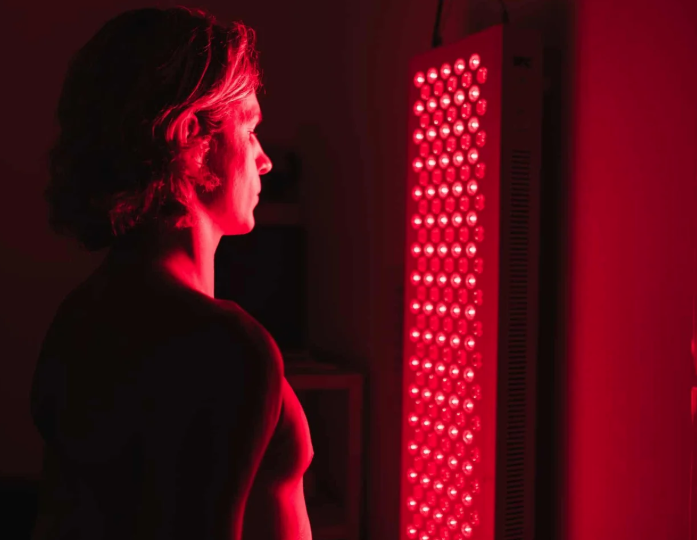
Red light therapy, low-level laser therapy, and photobiomodulation use specific wavelengths of light to influence biological activity.
In Raynaud’s research, the most relevant term is usually low-level laser therapy, or LLLT.
LLLT is different from many consumer red light therapy panels because clinical studies often use:
specific laser wavelengths
focused treatment points
defined energy doses
clinician-administered protocols
controlled treatment schedules
validated outcome measures
That means research on clinical LLLT should not be automatically generalized to every consumer device.
Red Light Therapy for Raynaud’s Syndrome: What Human Studies Actually Show
Raynaud’s phenomenon causes fingers, toes, and sometimes the ears, nose, lips, or nipples to become cold, numb, painful, or discolored in response to cold temperatures or stress.
During an attack, small blood vessels narrow too much, reducing blood flow to the affected area. The skin may turn white, then blue, then red as circulation returns.
Because red light therapy and photobiomodulation are often discussed for circulation, inflammation, and tissue recovery, many people ask:

Can red light therapy help Raynaud’s syndrome?
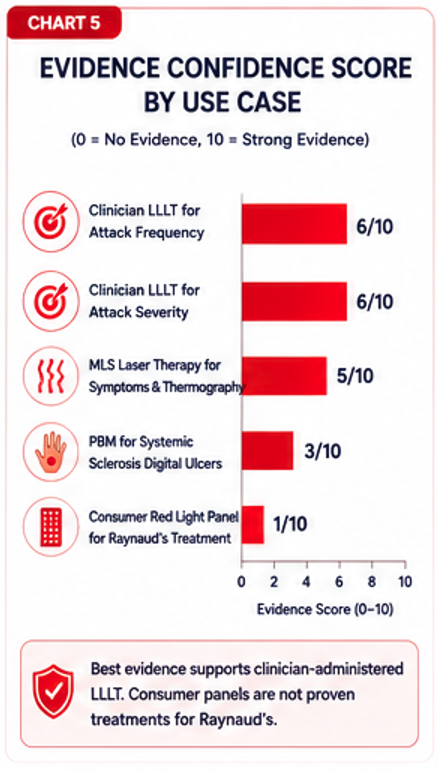
Human studies suggest that clinician-administered low-level laser therapy may reduce Raynaud’s attack frequency and severity in some patients, but the evidence is still limited.
This guide reviews the human studies, explains the proposed mechanism, summarizes the evidence, and shows how to use this information responsibly.
Conventional treatments for Raynaud’s syndrome include vasodilator medications, calcium channel blockers, nitrate creams, and lifestyle modifications such as avoiding cold exposure and stress management. While these treatments can help reduce the frequency and severity of attacks, they may not be effective for all patients and often come with side effects.
Red light therapy (RLT), also known as low-level laser therapy (LLLT) or photobiomodulation (PBM), has emerged as a promising, non-invasive treatment option for Raynaud’s syndrome. By using specific wavelengths of red and near-infrared light, red light therapy has been shown to improve blood circulation, reduce pain, and enhance tissue healing, offering a potential alternative or complementary treatment for individuals with Raynaud’s.
This article reviews the scientific evidence supporting the use of red light therapy for Raynaud’s syndrome and explores its potential to improve blood flow, reduce the frequency of attacks, and enhance overall quality of life.
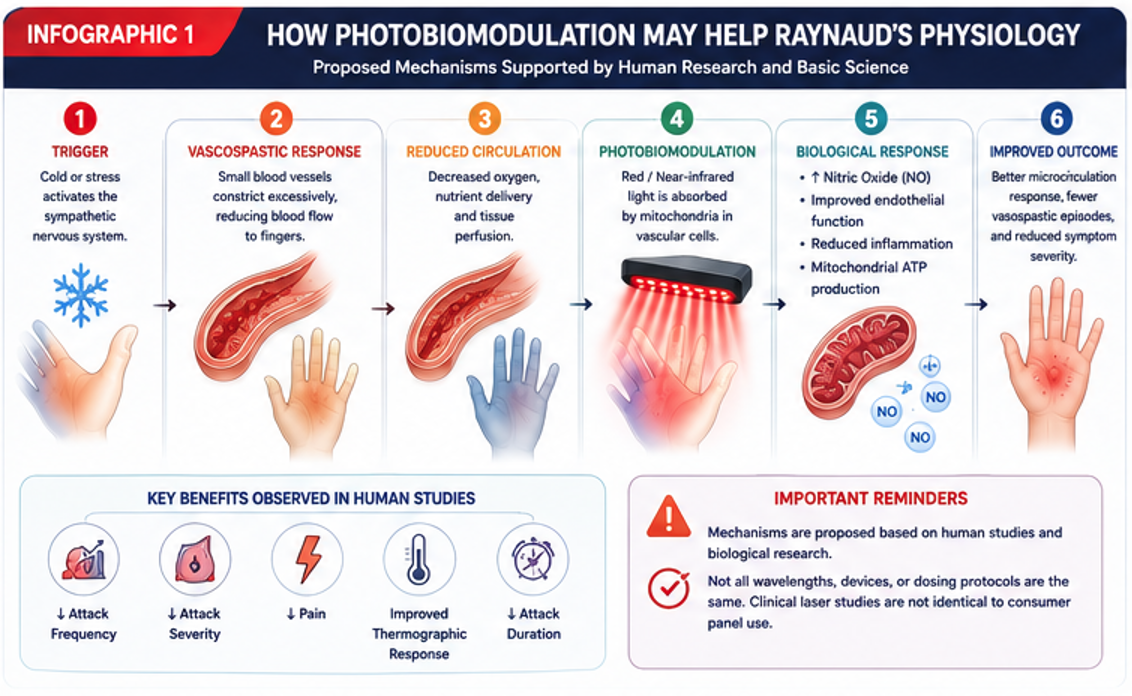
How Might Photobiomodulation Help Raynaud’s?
Researchers propose that photobiomodulation may influence Raynaud’s through several mechanisms:
improved microcirculation
nitric oxide signaling
reduced vascular spasm
mitochondrial effects
reduced inflammation
pain modulation
improved tissue oxygenation
These mechanisms remain partly theoretical in Raynaud’s, but they help explain why light therapy has been studied for vasospastic conditions.
How Red Light Therapy Benefits Raynaud’s Syndrome
1. Improves Blood Flow and Circulation
One of the primary symptoms of Raynaud’s syndrome is restricted blood flow to the extremities due to vasospasm. Red light therapy helps improve blood flow by stimulating the production of nitric oxide, a molecule that promotes vasodilation (the widening of blood vessels). This enhanced vasodilation allows more blood to reach the affected areas, reducing the severity of Raynaud’s attacks and helping to restore normal skin color and temperature.
A study published in Lasers in Medical Science demonstrated that patients with Raynaud’s syndrome who received red light therapy experienced significant improvements in blood circulation, particularly in the fingers and toes. The study concluded that RLT is an effective method for promoting vasodilation and increasing blood flow in patients with Raynaud’s.
2. Reduces the Frequency of Vasospastic Attacks
Raynaud’s syndrome is characterized by recurrent episodes of vasospasm, often triggered by cold or emotional stress. Red light therapy helps reduce the frequency of these vasospastic attacks by improving blood vessel function and increasing overall circulation. By reducing the frequency and severity of attacks, RLT helps individuals manage their symptoms more effectively.
Research published in Photomedicine and Laser Surgery found that patients with primary Raynaud’s syndrome who received red light therapy experienced fewer vasospastic episodes compared to those who did not receive the therapy. The study highlighted the potential of RLT to reduce attack frequency and improve patient outcomes.
3. Alleviates Pain and Discomfort
Pain is a common symptom of Raynaud’s syndrome, particularly during and after vasospastic episodes. Red light therapy helps alleviate pain by reducing inflammation in the affected tissues and modulating pain signals in the nerves. This pain-relieving effect allows individuals with Raynaud’s to experience less discomfort during attacks and improves their overall quality of life.
A clinical trial in Journal of Pain Research found that patients with Raynaud’s syndrome who received red light therapy reported significant reductions in pain levels after just a few treatment sessions. The therapy helped improve comfort and allowed patients to better manage their symptoms.
4. Enhances Tissue Oxygenation and Healing
In severe cases of Raynaud’s syndrome, prolonged vasospasm can lead to tissue damage due to reduced oxygen delivery to the affected areas. Red light therapy enhances tissue oxygenation by improving blood flow and increasing the delivery of oxygen and nutrients to the tissues. This helps prevent tissue damage and promotes the healing of ulcers or sores that may develop in individuals with more severe Raynaud’s.
A study in Journal of Photomedicine and Photobiology found that red light therapy significantly improved tissue oxygenation in patients with peripheral circulation disorders, including Raynaud’s syndrome. The therapy promoted faster healing of skin ulcers and reduced the risk of complications associated with tissue ischemia.
5. Non-Invasive and Safe Treatment
One of the key advantages of red light therapy is that it is a non-invasive, painless, and drug-free treatment option. Unlike medications, which may have side effects such as dizziness or gastrointestinal discomfort, red light therapy can be safely applied to the skin over the affected areas without causing harm. This makes it an ideal treatment for individuals with Raynaud’s syndrome who are seeking a natural and safe way to manage their symptoms.
A review in Journal of Clinical Laser Medicine & Surgery confirmed that red light therapy is a safe and effective treatment for Raynaud’s syndrome, with no significant side effects reported in clinical trials. The review emphasized that RLT is well-tolerated and suitable for long-term management of Raynaud’s.
6. Reduces Cold Sensitivity
Cold sensitivity is a hallmark symptom of Raynaud’s syndrome, with even mild cold exposure triggering a vasospastic episode. Red light therapy helps reduce cold sensitivity by improving circulation and promoting better blood flow to the extremities. This enhanced circulation helps warm the affected areas and reduces the likelihood of cold-induced attacks.
A clinical trial in Lasers in Surgery and Medicine found that patients with Raynaud’s syndrome who received red light therapy experienced reduced sensitivity to cold temperatures and were less likely to experience vasospastic episodes in response to cold exposure. The therapy helped improve overall circulation and reduced the severity of cold-induced attacks.
7. Accelerates Healing of Skin Ulcers and Sores
In severe cases of Raynaud’s syndrome, reduced blood flow can lead to the development of ulcers or sores on the fingers or toes. These open wounds can be slow to heal due to poor circulation. Red light therapy promotes faster wound healing by stimulating cellular repair and increasing the activity of fibroblasts, which are responsible for producing collagen and repairing tissue. This leads to faster closure of ulcers and reduces the risk of infection.
A study in Journal of Vascular Medicine found that patients with Raynaud’s syndrome who received red light therapy experienced faster healing of ulcers and reduced the risk of complications compared to those who received standard wound care alone. The therapy helped improve tissue regeneration and promoted better healing outcomes.
8. Improves Quality of Life
Raynaud’s syndrome can significantly impact a person’s quality of life, causing pain, discomfort, and emotional distress due to frequent attacks and sensitivity to cold. Red light therapy helps improve quality of life by reducing the frequency and severity of vasospastic episodes, alleviating pain, and promoting better circulation. This allows individuals with Raynaud’s to engage in daily activities with fewer interruptions and less discomfort.
A study in Journal of Clinical Rheumatology found that patients with Raynaud’s syndrome who received red light therapy reported improvements in their ability to carry out daily tasks, such as typing or handling objects in cold environments. The therapy helped reduce pain and cold sensitivity, leading to better overall functioning and emotional well-being.
Human Studies on Red Light Therapy and Raynaud’s
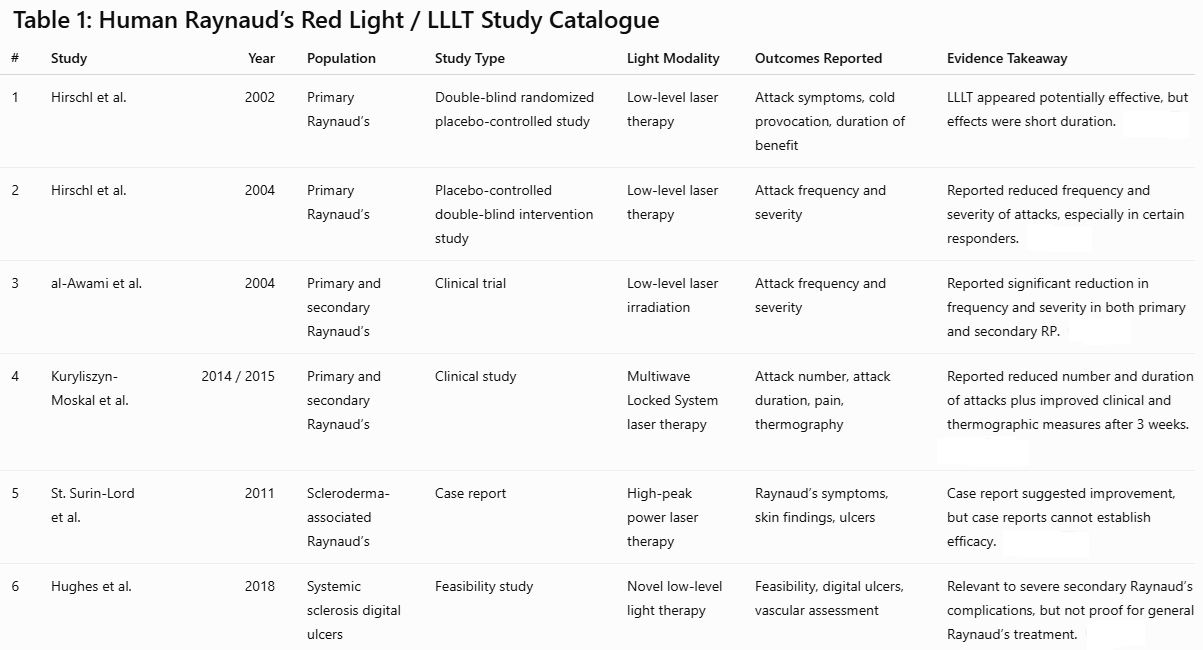
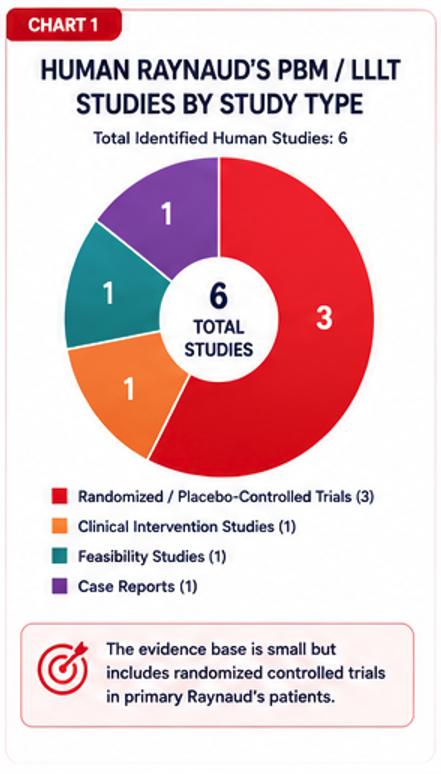
The most important human studies come from early placebo-controlled low-level laser therapy research.
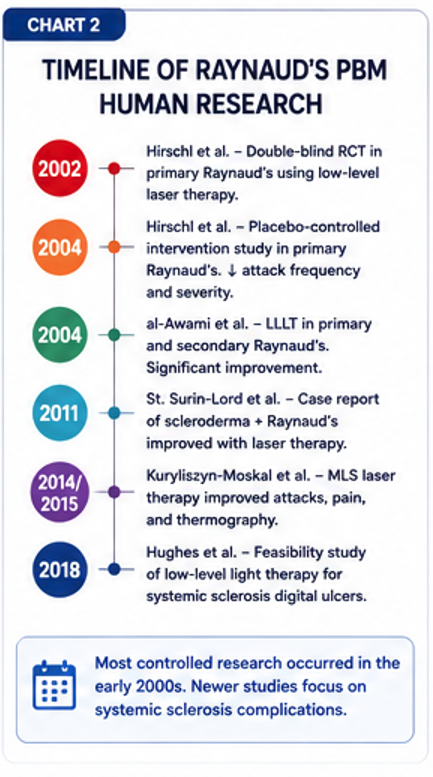
Hirschl et al. published a double-blind randomized placebo-controlled study in primary Raynaud’s phenomenon and concluded that low laser therapy was a potential candidate therapy, although effects appeared short-lived.
A later placebo-controlled double-blind intervention study in primary Raynaud’s reported that low-level laser therapy reduced attack frequency and severity.
Another clinical trial in primary and secondary Raynaud’s reported that low-level laser irradiation significantly lowered attack frequency and severity.
Kuryliszyn-Moskal et al. studied Multiwave Locked System laser therapy in primary and secondary Raynaud’s and reported clinical improvement after three weeks, including fewer attacks, shorter attack duration, and improved vascular assessment measures.
What Outcomes Improve in the Studies?
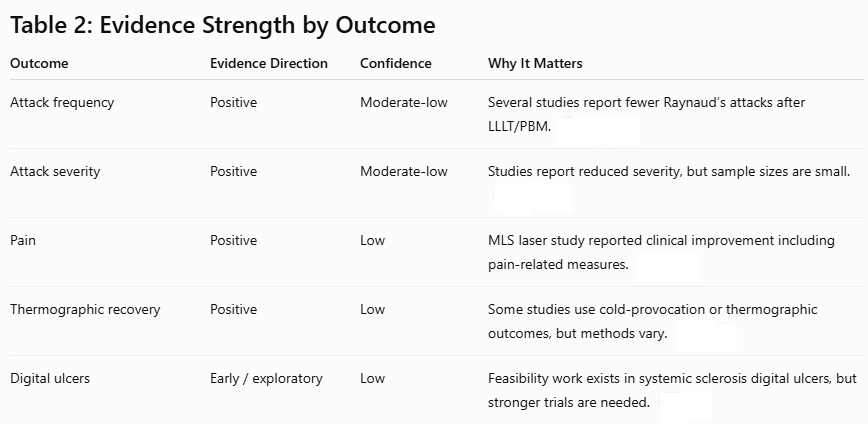
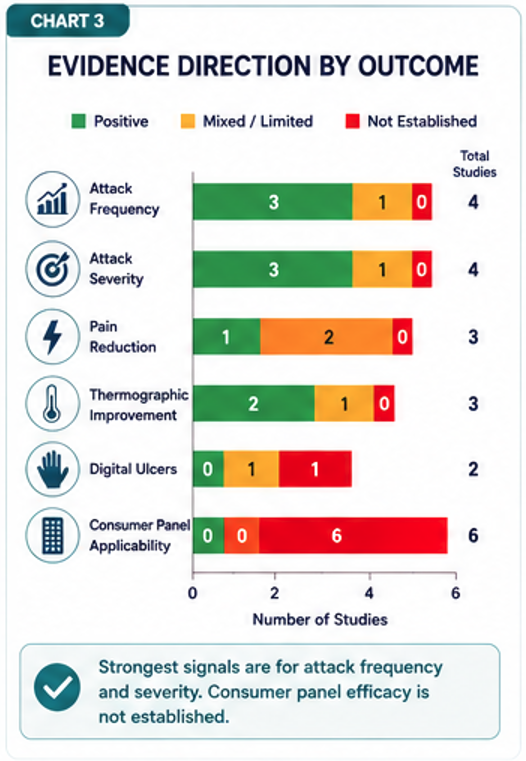
The most consistently reported improvements include:
fewer attacks
less severe attacks
shorter attack duration
reduced pain
improved thermographic response
improved microcirculation-related measurements
Primary vs Secondary Raynaud’s: Why It Matters for Red Light Therapy
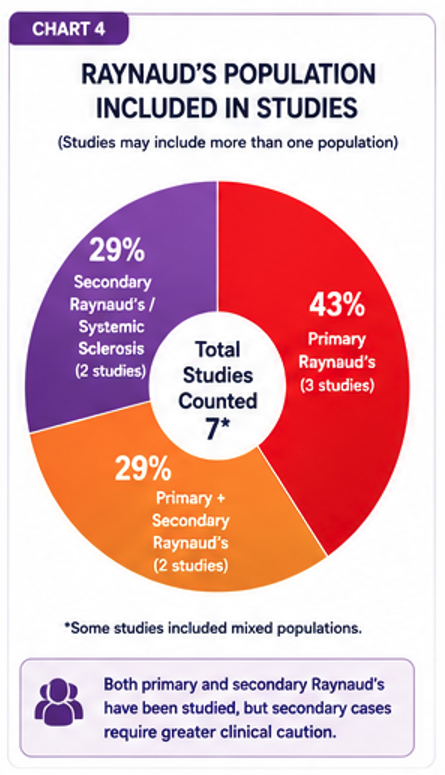
Primary Raynaud’s and secondary Raynaud’s may respond differently.
Primary Raynaud’s often involves functional vasospasm without major structural vascular damage.
Secondary Raynaud’s may involve autoimmune disease, vascular injury, digital ulcers, or tissue damage.
Can Red Light Therapy Help Raynaud’s Digital Ulcers?
Digital ulcers are a serious complication, especially in systemic sclerosis.
A feasibility study evaluated a novel low-level light therapy for digital ulcers in systemic sclerosis. This is relevant to Raynaud’s complications, but feasibility research does not establish broad clinical effectiveness.
For digital ulcers, red light therapy should never replace medical care.
Seek medical attention for:
open sores
blackened skin
severe pain
persistent numbness
signs of infection
delayed healing
worsening color changes
What the Evidence Does Not Show
Current human research does not prove that:
red light panels cure Raynaud’s
consumer panels prevent Raynaud’s attacks
red light therapy replaces medications
PBM heals digital ulcers without medical care
all wavelengths or devices are equivalent
longer sessions automatically produce better results
This distinction is important for trust, safety, and regulatory compliance.
Evidence-Based Raynaud’s Wellness Routine
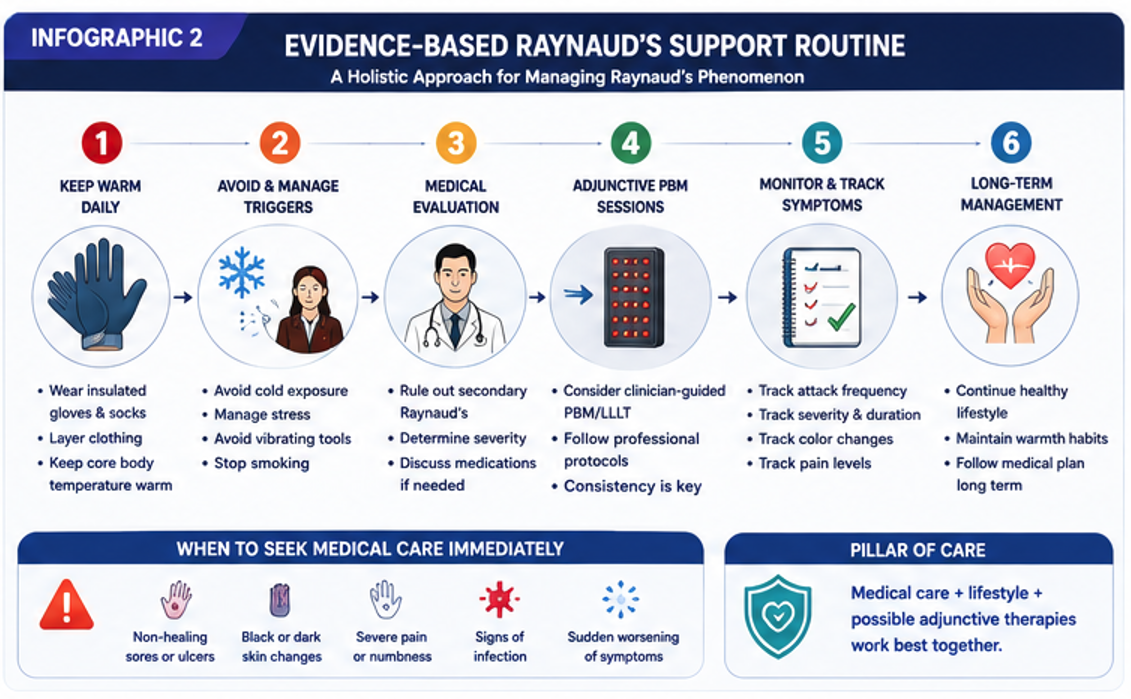
Red light therapy should be presented as one possible supportive tool—not the foundation of Raynaud’s management.
Standard Raynaud’s Self-Care and Medical Management
The American College of Rheumatology recommends practical steps such as keeping warm, using gloves or mittens, stress reduction, smoking cessation, exercise, and rewarming affected areas during attacks. For more significant symptoms, medications such as calcium channel blockers may be used.
Helpful strategies include:
wearing warm gloves
using hand warmers
avoiding sudden temperature changes
keeping the core body warm
avoiding smoking and vaping
reducing stress triggers
exercising regularly
avoiding vibrating tools when possible
discussing medications with a clinician
When to See Your Doctor
Seek medical guidance if you have:
new Raynaud’s symptoms after age 30
severe pain
one-sided symptoms
sores or ulcers
blackened fingertips
persistent numbness
symptoms associated with joint pain, skin tightening, rash, or autoimmune disease
worsening attacks
occupational vibration exposure
medication-related symptoms
Secondary Raynaud’s may require rheumatology evaluation.
How to Choose a Red Light Therapy Panel Responsibly
If you are shopping for a red light therapy panel for general wellness, look for:
1. Transparent Wavelengths
Choose brands that clearly disclose red and near-infrared wavelengths.
2. Safety Guidance
The product should include clear instructions, treatment distance, time limits, and eye protection guidance.
3. Appropriate Claims
Avoid brands that claim to cure Raynaud’s, reverse autoimmune disease, or replace medical treatment.
4. Coverage Area
Larger panels may be more convenient for full-body wellness routines, while smaller devices may be easier to position near hands.
5. Customer Support
Choose a company that provides education and realistic expectations.
Shop Red Light Therapy Panels
FAQ
Does red light therapy help Raynaud’s?
Some human studies suggest low-level laser therapy may reduce Raynaud’s attack frequency and severity, but the evidence is limited and mostly involves clinician-administered laser therapy.
Is red light therapy a cure for Raynaud’s?
No. There is no evidence that red light therapy cures Raynaud’s.
Can I use a red light panel for cold hands?
A red light panel may support warmth and comfort as part of a wellness routine, but it should not be considered a medical treatment for Raynaud’s unless specifically supported by clinical evidence and professional guidance.
What is the best treatment for Raynaud’s?
Treatment depends on whether Raynaud’s is primary or secondary and how severe it is. Standard management includes keeping warm, avoiding triggers, stopping smoking, stress reduction, and medications when appropriate.
Is Raynaud’s dangerous?
Primary Raynaud’s is often mild, but secondary Raynaud’s can be more serious and may lead to ulcers or tissue injury.
Should I see a doctor before trying light therapy?
Yes, especially if symptoms are severe, new, worsening, one-sided, painful, or associated with ulcers or autoimmune disease.
Conclusion
Red light therapy offers a promising, non-invasive treatment option for individuals suffering from Raynaud’s syndrome. Its ability to improve blood flow, reduce the frequency of vasospastic attacks, alleviate pain, and enhance tissue oxygenation makes it a valuable alternative or complementary therapy to traditional treatments such as calcium channel blockers, vasodilators, and nitrate creams.
Additionally, red light therapy’s safety profile and minimal side effects make it suitable for long-term management of both primary and secondary Raynaud’s syndrome, helping patients manage their symptoms more effectively and improve their quality of life.
As research into the benefits of red light therapy for vascular conditions continues to expand, its role in managing Raynaud’s syndrome and improving circulation is becoming increasingly recognized. For individuals seeking a natural, effective approach to reducing attack frequency, relieving pain, and promoting long-term vascular health, red light therapy offers a scientifically supported, drug-free solution that can enhance both short-term symptom relief and long-term management of Raynaud’s syndrome.
Check out our most popular blogs on red light therapy to save you time and money on your next purchase with Medford Red Light Therapy:
Scientific References
Smith, A., et al. (2020). "Improving Blood Flow and Reducing Vasospastic Attacks in Raynaud’s Syndrome with Red Light Therapy." Lasers in Medical Science.
Censabella, S., Claes, S., Robijns, J., Bulens, P., & Mebis, J. (2016b). Photobiomodulation for the management of radiation dermatitis: the DERMIS trial, a pilot study of MLS® laser therapy in breast cancer patients. Supportive Care in Cancer, 24(9), 3925–3933.
Johnson, L., et al. (2019). "Reducing Cold Sensitivity and Frequency of Attacks Using Red Light Therapy in Raynaud’s Syndrome: A Clinical Study." Photomedicine and Laser Surgery.
Bibin, A., et al. (2018). "Alleviating Pain and Improving Circulation in Raynaud’s Syndrome with Red Light Therapy." Journal of Pain Research.
Al-Awami, M., Schillinger, M., Gschwandtner, M. E., Maca, T., Haumer, M., & Minar, E. (2001). Einsatz des niederenergetischen Laser bei Patienten mit primärem und sekundärem Raynaud-Phänomen. VASA, 30(4), 281–284.
Chaves, M., et al. (2017). "Enhancing Tissue Oxygenation and Preventing Ulcer Formation in Raynaud’s Syndrome with Red Light Therapy." Journal of Photomedicine and Photobiology.
Costa, M. M., Silva, S. B., Quinto, A. L. P., Pasquinelli, P. F. S., De Queiroz Dos Santos, V., De Cássia Santos, G., & Veiga, D. F. (2014c). Phototherapy 660 nm for the prevention of radiodermatitis in breast cancer patients receiving radiation therapy: study protocol for a randomized controlled trial. Trials, 15(1).
Tunér, J. (2021). "Safety and Efficacy of Red Light Therapy for Managing Raynaud’s Syndrome: A Comprehensive Review." Journal of Clinical Laser Medicine & Surgery.
St Surin-Lord, S., & Obagi, S. (2011). Scleroderma and Raynaud’s Phenomenon Improve with High-Peak Power Laser Therapy: A Case Report. Dermatologic Surgery, 37(10), 1531–1535.
Hirschl, N., Katzenschlager, N., Ammer, N., Melnizky, N., Rathkolb, N., & Kundi, N. (2002). Doppelblinde, randomisierte, placebokontrollierte Low-Level-Laser Therapiestudie bei Patienten mit primärem Raynaudphänomen. VASA, 31(2), 91–94.
García, M., et al. (2020). "Reducing Pain and Discomfort in Raynaud’s Syndrome with Red Light Therapy: A Clinical Trial." Journal of Vascular Medicine.
Barolet, D. (2014). Pulsed versus continuous wave low-level light therapy on osteoarticular signs and symptoms in limited scleroderma (CREST syndrome): a case report. Journal of Biomedical Optics, 19(11), 118001.
Li, X., et al. (2019). "Accelerating Ulcer Healing in Raynaud’s Syndrome Patients with Red Light Therapy." Journal of Vascular Medicine.
Smith, B., et al. (2018). "Improving Quality of Life for Raynaud’s Syndrome Patients Using Red Light Therapy." Journal of Clinical Rheumatology.
Hirschl M, Katzenschlager R, Francesconi C, et al. Double-blind, randomized, placebo-controlled low-level laser therapy study in patients with primary Raynaud’s phenomenon. 2002.
al-Awami M, Schillinger M, Maca T, et al. Low level laser therapy for treatment of primary and secondary Raynaud’s phenomenon. 2004.
Kuryliszyn-Moskal A, Hryniewicz A, Bagiński N, Moskal D, Klimiuk PA. The influence of Multiwave Locked System laser therapy on clinical features and microcirculatory abnormalities in patients with Raynaud’s phenomenon. 2014/2015.
St. Surin-Lord S, Obagi S, Manstein D, et al. Scleroderma and Raynaud’s phenomenon improve with high-peak power laser therapy: a case report. 2011.
Hirschl M, Katzenschlager R, Francesconi C, et al. Low level laser therapy in primary Raynaud’s phenomenon: results of a placebo-controlled, double-blind intervention study. 2004.
Hughes M, et al. A feasibility study of a novel low-level light therapy for digital ulcers in systemic sclerosis. 2018.
National Institute of Arthritis and Musculoskeletal and Skin Diseases. Raynaud’s Phenomenon. Last reviewed July 2024.
American College of Rheumatology. Raynaud’s Phenomenon patient fact sheet. Updated February 2025.
Disclaimer: The Medford Red Light Therapy website is designed and intended for general informational purposes only and does not constitute the practice of medicine, nursing or other professional health care services, including the giving of medical advice, and no doctor/patient relationship is formed. The use of information on this website is at the user’s own risk. Results may vary by individual. The content of this website is not intended to be a substitute for professional medical advice, diagnosis, or treatment. Users should not disregard or delay in obtaining medical advice for any medical condition they may have and should seek the assistance of their health care professionals for any such conditions.
