How Often Should You Do Red Light Therapy?
A Science-Backed Guide to Frequency, Results & Safe Dosing
Top Level Summary:
For most people:
General wellness: 3–5 times per week
Pain or inflammation: 4–7 times per week
Skin rejuvenation: 3–5 times per week
Athletic recovery: 4–6 times per week
Maintenance phase: 2–3 times per week
But frequency depends on your goal, device power, treatment area, and tissue depth.
This guide explains exactly how to dose red light therapy for maximum results without overdoing it.
What Determines How Often You Should Do Red Light Therapy?
Red light therapy (RLT), also called photobiomodulation, works by stimulating mitochondria to produce more ATP (cellular energy). The response follows a biphasic dose curve, meaning:
Too little = minimal results
Optimal dose = therapeutic benefit
Too much = diminished returns
This is why photobiomodulation frequency matters.
Key Variables That Affect Frequency
Treatment Goal (pain vs. skin vs. performance)
Device Irradiance (power output)
Distance from the panel
Session duration
Tissue depth targeted (skin vs. joint vs. muscle)
The Science Behind Red Light Therapy Dosing
Red light therapy typically uses:
630–660nm (red light) → skin-level benefits
810–850nm (near-infrared) → deeper tissue penetration
Research shows benefits occur within specific energy ranges (measured in joules/cm²). More is not always better.
Because red light therapy influences cellular metabolism, consistency matters more than intensity spikes. This is consistent with the biphasic dose response Arndt-Schulz law.
Medical-related guidance should be based on established evidence and avoid exaggerated claims, especially in health-related topics.
Recommended Red Light Therapy Frequency by Goal
Pain & Inflammation
Best frequency: 4–7 times per week
Session length: 10–20 minutes per area
Pain conditions such as:
Knee pain
Arthritis
Tendonitis
Lower back pain
Often respond best to consistent near-daily exposure during the initial 2–4 week phase.
After improvement:
Reduce to 3–4 times weekly for maintenance
2. Skin Rejuvenation & Anti-Aging
Best frequency: 3–5 times per week
Session length: 8–15 minutes
Red light stimulates collagen production and improves skin tone over time.
Results typically appear:
Weeks 3–4: improved glow
Weeks 6–8: visible texture changes
Maintenance:
2–3 sessions per week
3. Muscle Recovery & Athletic Performance
Best frequency: 4–6 times per week
Session length: 10–20 minutes
Athletes often use red light therapy:
Post-workout
Before competition
During heavy training blocks
Consistency enhances circulation and tissue repair signaling.
4. General Wellness & Energy
Best frequency: 3–5 times per week
Session length: 10–15 minutes
Users often report:
Improved sleep quality
Better mood
Increased daytime energy
These effects are cumulative which follows the dose response curve.

Can You Do Red Light Therapy Every Day?
Yes — in most cases.
Daily use is generally safe when:
Sessions remain within 10–20 minutes
You use a properly designed medical-grade panel
You follow manufacturer guidelines
However:
If you experience:
Skin sensitivity
Headaches
Fatigue
Reduce frequency temporarily.
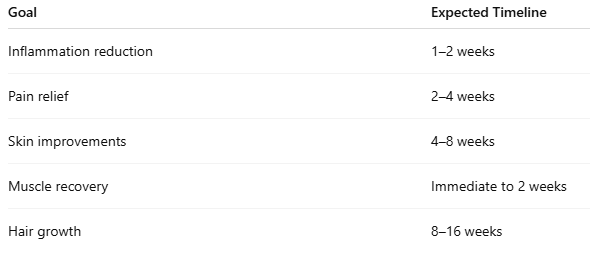
How Long Before You See Results?
Clinic vs At-Home Frequency Differences
In-Clinic Systems:
Higher irradiance
Larger treatment area
May require fewer weekly sessions
At-Home Panels:
Lower power output
Smaller coverage
Require consistent use
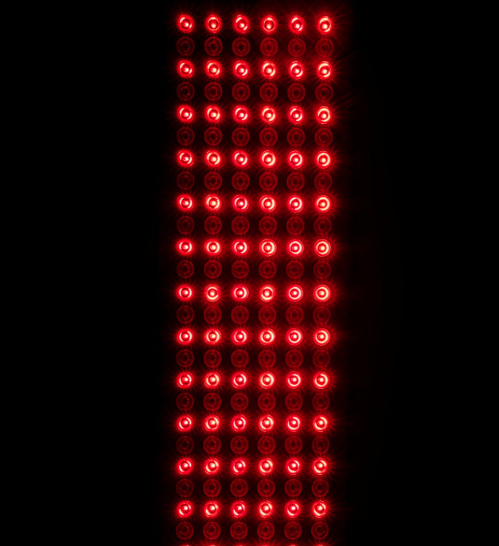
This is why owning a high-irradiance full-body panel can provide faster cumulative benefits compared to small handheld devices.
SHOP red light therapy panels now.
Are you Using Red Light Therapy Correctly
Signs You are Using it Correctly
✔ Mild warmth
✔ No burning
✔ Gradual improvement over weeks
✔ No skin damage
✔ Improved recovery metrics
Red light therapy should feel gentle — not aggressive.
Signs You are Overdoing It
Excess redness
Dryness
Fatigue after sessions
Irritation
If this happens:
Reduce session time
Increase distance from panel
Skip 1–2 days
Frequently Asked Questions
Should you take breaks from red light therapy?
After 8–12 weeks of consistent use, many people shift to a maintenance phase (2–3 sessions weekly).
Is more frequent better?
No. The biphasic response means excessive exposure can reduce benefits.
Can you combine red light therapy with other treatments?
Yes, but consult a healthcare professional if you:
Have autoimmune disease
Use photosensitizing medications
Have active cancer
Have severe skin conditions
The Ideal Beginner Schedule (Simple Plan)
Weeks 1–4:
5 sessions per week, 10–15 minutes
Weeks 5–8:
4 sessions per week
After 8 weeks:
Maintenance at 2–3 sessions per week
Why Device Quality Changes Everything
Clinical studies suggest that frequency recommendations are:
True 660nm red light
True 850nm near-infrared
Sufficient irradiance (≥100mW/cm² at treatment distance)
Flicker-free LEDs
Low EMF output
Low-quality panels may require more sessions and deliver inconsistent results as measured in joules per cm2 dosing.
Want Faster, More Consistent Results?
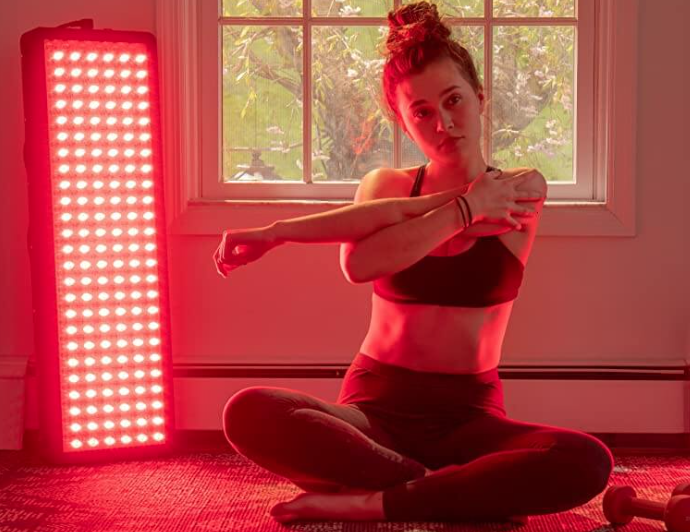
If you’re relying on small handheld devices, you may be underdosing your tissue.
A high-output full-body red light therapy panel allows:
✔ Shorter sessions
✔ Better tissue penetration
✔ Larger treatment coverage
✔ More efficient weekly protocol
Upgrade Your Red Light Therapy Routine
If you’re serious about:
Faster recovery
Reduced inflammation
Improved skin tone
Better energy
It’s time to invest in a medical-grade red light therapy panel designed for consistent, optimized dosing.
Shop Professional Red Light Therapy Panels Now
Experience:
Dual 660nm + 850nm wavelengths
High irradiance output
Large coverage area
Safe, home-use design
Backed by science-based protocol
Click HERE to find the right panel for your goals and start seeing results in weeks — not months.
For Additional Reading:
Check out our most popular blogs on red light therapy to save you time and money on your next purchase with Medford Red Light Therapy:
References:
Calderhead RG, Vasily DB. Low level light therapy with light-emitting diodes for the aging face. Clin Plast Surg. 2016;43(3):541–50.
Calderhead RG. The photobiological basics behind light-emitting diode (LED) phototherapy. Laser Therapy. 2007;16(2):97–108.
Opel DR, Hagstrom E, Pace AK, Sisto K, Hirano-Ali SA, Desai S, et al. Light-emitting diodes: a brief review and clinical experience. J Clin Aesthet Dermatol. 2015;8(6):36–44.
Nouri K. Lasers in dermatology and medicine: dermatologic applications. Springer International Publishing; 2018.
Goldman MP. Cutaneous and cosmetic laser surgery. Philadelphia: Mosby Elsevier; 2006.
Jagdeo J, Austin E, Mamalis A, Wong C, Ho D, Siegel DM. Light-emitting diodes in dermatology: a systematic review of randomized controlled trials. Lasers Surg Med. 2018.
Ohshiro, T. Low reactive-level laser therapy: practical application. John Wiley and Sons, Ltd, Chichester (United Kingdom), 1991
Huang, Y.Y. ∙ Sharma, S.K. ∙ Carroll, J. ... Biphasic dose response in low level light therapy - an update. Dose Response. 2011; 9:602-618. PubMed
Karu, T. Primary and secondary mechanisms of action of visible to near-IR radiation on cells. J Photochem Photobiol B. 1999; 49:1-17
Ohshiro, T. A new effect-based classification of laser applications in surgery and medicine Laser Ther. 1996; 8:233-239
Whelan, H.T. ∙ Houle, J.M. ∙ Whelan, N.T. ... The NASA light-emitting diode medical program- progress in space flight and terrestrial applications. Space Tech. & App. Int’l. Forum. 2000; 504:37-43
Whelan, H.T. ∙ Smits, Jr., R.L. ∙ Buchman, E.V. ... Effect of NASA light-emitting diode (LED) irradiation on wound healing. J Clin Laser Med Surg. 2001; 19:305-314 PubMed
Smith, K.C. Laser (and LED) therapy is phototherapy Photomed Laser Surg. 2005; 23:78-80
Karu, T.I. Identifying the photoreceptors. Karu, T.I. (Editor), Ten lectures on basic science of laser phototherapyPrima Books AB, Grängesberg (Sweden), 2007; 115-142.
Kim, W.S. ∙ Calderhead, R.G. Is light-emitting diode low level light therapy (LED-LLLT) really effective?Laser Ther. 2011; 20:205-215
Calderhead, R.G. ∙ Goo, B.C.L. Lasers and lights in wound healing. Nouri, K. (Editor), Handbook of lasers in dermatology. Springer Medical, New York, 2014; 329-359
Calderhead, R.G. ∙ Inomata, K. A study on the possible haemorrhagic effects of extended infrared diode laser irradiation on encapsulated and exposed synovial membrane articular tissue in the rat Laser Ther. 1992; 4:65-68
Lee, S.Y. ∙ Park, K.H. ∙ Choi, J.W. ... A prospective, randomized, placebo-controlled, double-blinded, and split-face clinical study on LED phototherapy for skin rejuvenation: clinical, profilometric, histologic, ultrastructural, and biochemical evaluations and comparison of three different treatment settings. J Photochem Photobiol B. 2007; 88:51-67
Calderhead, R.G. ∙ Kim, W.S. ∙ Ohshiro, T. ... Adjunctive 830 nm light-emitting diode therapy can improve the results following aesthetic procedures. Laser Ther. 2015; 24(4):277-289
Trelles, M.A. ∙ Allones, I. ∙ Mayo, E. Combined visible light and infrared light-emitting diode (LED) therapy enhances wound healing after laser ablative resurfacing of photodamaged facial skin. Med Laser Appl. 2006; 28:165-175
Park, Y.J. ∙ Kim, S.J. ∙ Song, H.S. ... Prevention of thyroidectomy scars in Asian adults with low-level light therapy. Dermatol Surg. 2016; 42:526-534
Min, K.H. ∙ Byun, J.H. ∙ Heo, C.Y. ... Effect of low-level light therapy on human adipose-derived stem cells: in vitro and in vivo Studies Aesthetic Plast Surg. 2015; 39:778-782.
Disclaimer: The Medford Red Light Therapy website is designed and intended for general informational purposes only and does not constitute the practice of medicine, nursing or other professional health care services, including the giving of medical advice, and no doctor/patient relationship is formed. The use of information on this website is at the user’s own risk. Results may vary by individual. The content of this website is not intended to be a substitute for professional medical advice, diagnosis, or treatment. Users should not disregard or delay in obtaining medical advice for any medical condition they may have and should seek the assistance of their health care professionals for any such conditions.
