Is Red Light Therapy Safe for Tattoos?
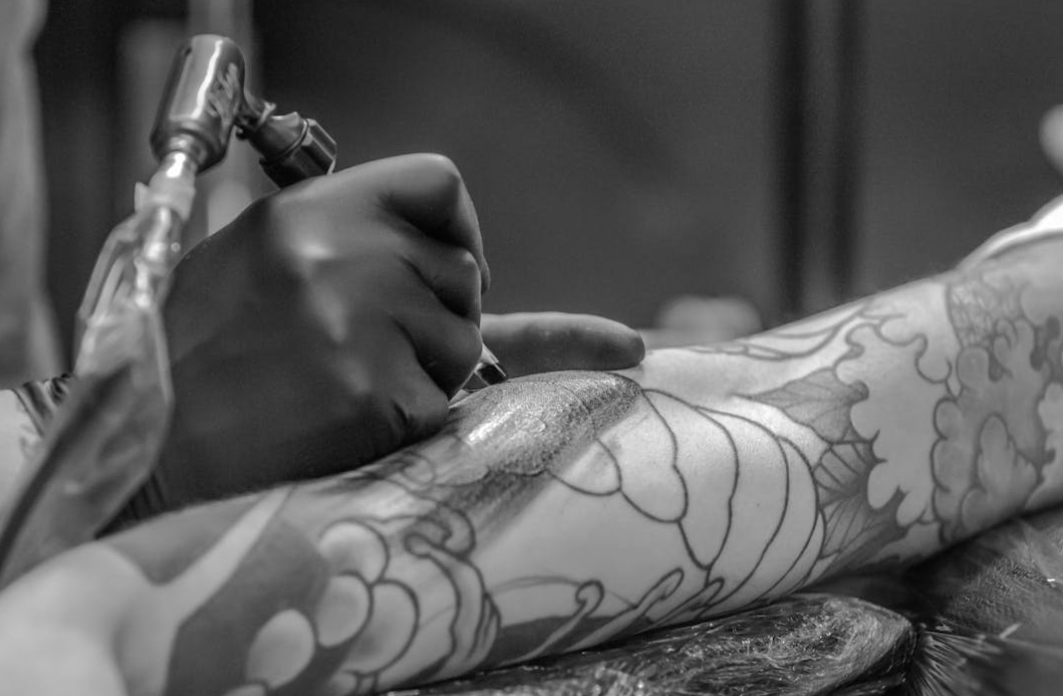
Red Light Therapy and Your Tattoos – Safe or Unsafe?
A Science-Backed, Dermatology-Informed Guide for Tattooed Skin
TL;DR – Is Red Light Therapy Safe for Tattoos?
Yes — red light therapy (RLT) is generally safe for healed tattoos.
Unlike laser tattoo removal, red light therapy does not break down ink pigments. Instead, it works at the cellular level to support skin repair, reduce inflammation, and enhance collagen production.
However, timing and device quality matter — especially if your tattoo is new.
What Is Red Light Therapy (RLT)?
Red light therapy (also called photobiomodulation) uses specific wavelengths of red (typically 630–660nm) and near-infrared light (typically 810–850nm) to stimulate cellular function.
At the cellular level, red and near-infrared light:
Stimulate mitochondrial ATP production
Support collagen synthesis
Reduce inflammation
Improve circulation
Accelerate tissue repair
Unlike UV light, red light therapy does not damage DNA or burn the skin when used appropriately.
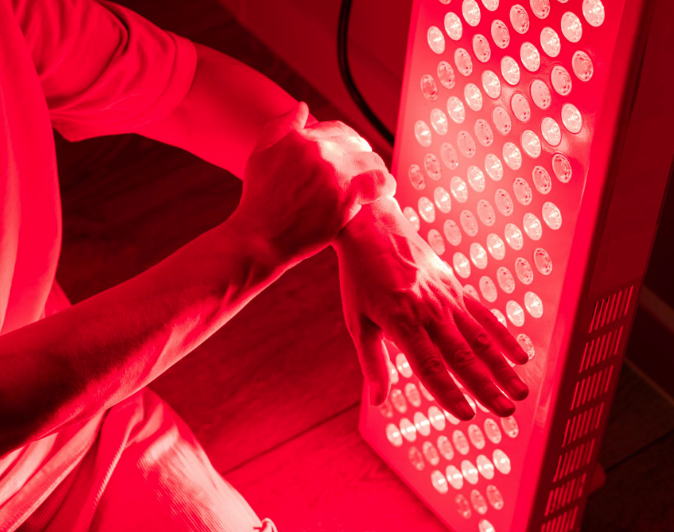
How Tattoos Interact with Light
Safety First - Tattoo Ink and Light
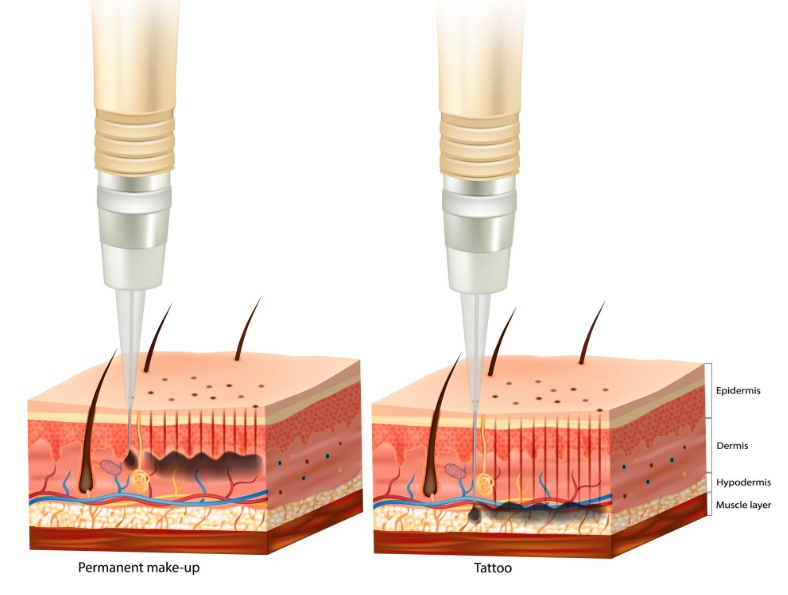
To understand safety, we need to understand tattoo structure.
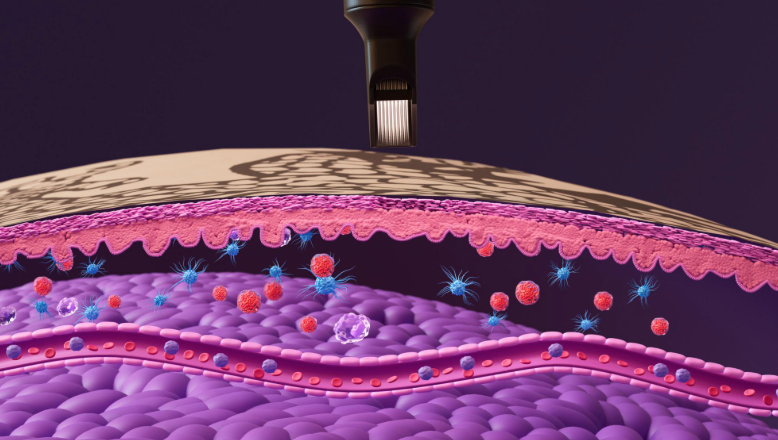
Tattoo ink is placed in the dermis layer, beneath the outer epidermis.
Ink particles are large enough that immune cells cannot fully remove them.
Laser tattoo removal works by using high-intensity, pigment-targeting lasers to shatter ink particles.
Red Light Therapy Wavelengths and You
Red light therapy is completely different:
It uses non-ablative, non-fragmenting wavelengths
It does not target pigment chromophores the way lasers do
It does not generate the energy required to break ink particles
Conclusion
The non-fragmenting, non-ablative wavelengths do not target pigment chromophores like a laser. In summary, Red Light Therapy does not fade, shatter, or remove tattoo ink.
Is Red Light Therapy Safe for Healed Tattoos?
✔ Yes — For Fully Healed Tattoos
If your tattoo is fully healed (typically 4–6+ weeks), red light therapy is considered safe because:
It does not penetrate in a way that disrupts ink
It does not overheat pigment
It does not cause structural ink breakdown
It may even support skin health around the tattoo
Many tattooed individuals use red light therapy for:
Muscle recovery
Joint pain
Skin rejuvenation
Inflammation reduction
Athletic performance
With no reported evidence of tattoo fading from red or near-infrared exposure.
When to Avoid Red Light Therapy
Do NOT Use Red Light Therapy On:
Fresh tattoos (less than 4 weeks old)
Peeling or scabbing tattoos
Open wounds
Infected tattoo sites
A Tattoo in Basically a Skin Injury
A new tattoo is essentially a controlled skin injury. During healing, the immune system is actively stabilizing pigment. Introducing stimulation too early could:
Increase irritation
Prolong inflammation
Interfere with healing
Wait until your tattoo is fully healed before starting red light therapy.
Can Red Light Therapy Fade Tattoos?
Short answer: No, not under normal use conditions.
Laser tattoo removal uses:
Extremely high-intensity pulses
Wavelengths tuned specifically to pigment absorption
Nanosecond or picosecond energy bursts
Red light therapy:
Uses continuous low-level light
Stimulates cells rather than targeting pigment
Does not create the photomechanical force needed to fragment ink
There is currently no clinical evidence showing that properly used red light therapy fades tattoos.
Potential Benefits of Red Light Therapy for Tattooed Skin
Interestingly, RLT may offer advantages:
1. Improved Skin Quality Around Tattoos
Red light therapy can increase collagen production, potentially improving skin elasticity and overall tone — which can enhance the appearance of tattooed areas.
2. Reduced Inflammation
For individuals prone to skin sensitivity, RLT may help regulate inflammatory response.
3. Muscle Recovery Under Tattooed Areas
If you have sleeve tattoos or large pieces, RLT can still penetrate through the skin to support underlying muscle recovery.
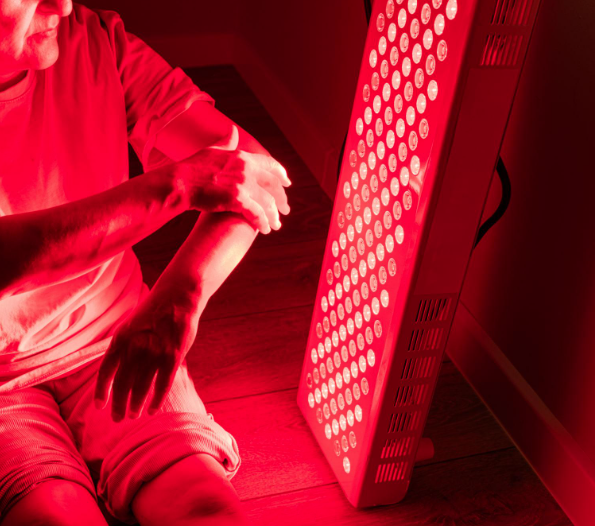
How to Safely Use Red Light Therapy with Tattoos
Step 1: Confirm Healing
Wait a minimum of 4–6 weeks post-tattoo. If itching, pain, or discomfort exists, wait longer than the typical recommendation to ensure your tattoo is properly healed.
Step 2: Use a High-Quality Device
Cheap devices with inconsistent wavelengths may overheat skin or deliver ineffective output.
Look for:
630–660nm red light
810–850nm near-infrared
Medical-grade irradiance
Proper cooling and certification
Step 3: Start With Short Sessions
Begin with 5–10 minutes
Monitor skin response
Gradually increase to 10–20 minutes
Step 4: Watch for Irritation
Discontinue if you notice:
Unusual redness
Swelling
Heat retention
Pigment distortion (rare)
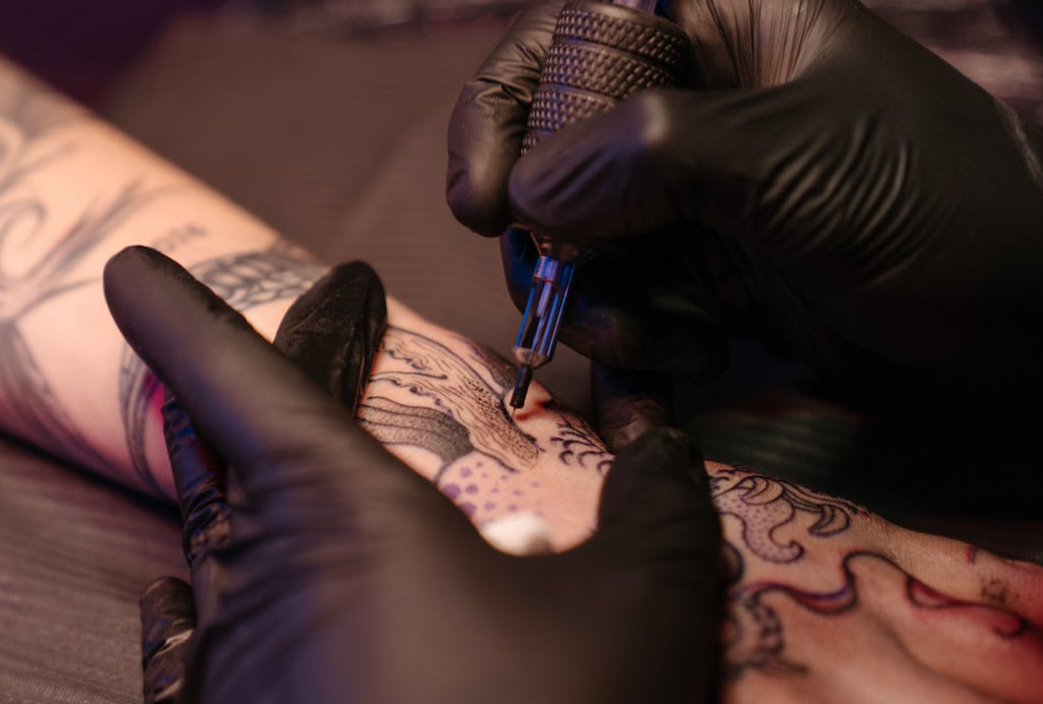
Medical Safety Note
This guide is based on:
Established photobiomodulation research
Dermatologic understanding of tattoo physiology
Mechanistic differences between low-level light therapy and laser removal
If you have:
Autoimmune conditions
Photosensitivity disorders
Active skin disease
Or a complicated healing history
Consult a licensed medical professional before starting therapy.
Frequently Asked Questions
Does near-infrared light penetrate tattoo ink?
Yes — near-infrared penetrates deeper than red light, but it passes through tissue without targeting pigment the way removal lasers do.
Will black ink react differently?
Black ink absorbs more light across wavelengths, but red light therapy intensity is too low to cause fragmentation.
Can red light therapy help tattoo healing?
Some individuals use RLT after the initial healing phase to support tissue repair. However, it should not replace proper aftercare during the first few weeks.
The Bottom Line: Safe or Unsafe?
Red light therapy is safe for healed tattoos when used correctly.
It does:
Support cellular repair
Improve skin quality
Enhance circulation
It does NOT:
Fade tattoos
Break ink particles
Act like laser removal
The key is:
Proper healing time
Proper device quality
Proper usage protocol
Ready to Experience Safe Red Light Therapy?
If you're looking for a high-output, medical-grade red light therapy panel designed for safe, effective at-home use, we recommend choosing a device built with:
✔ Dual red (660nm) and near-infrared (850nm) wavelengths
✔ High irradiance for deep penetration
✔ Flicker-free LEDs
✔ EMF-shielded design
✔ FDA-registered manufacturing standards
Upgrade Your Recovery Without Risking Your Ink
Explore our professional-grade red light therapy panels designed for:
Tattooed skin
Athletes
Biohackers
Skin optimization
Joint and muscle recovery
Shop now and protect your skin while maximizing results.
For Additional Reading:
Check out our most popular blogs on red light therapy to save you time and money on your next purchase with Medford Red Light Therapy:
Scientific References:
Red light therapy: What the science says. (2025, August 26). News Center. https://med.stanford.edu/news/insights/2025/02/red-light-therapy-skin-hair-medical-clinics.html
Chung M, Kim MI. Recent advances in research on organic-inorganic hybrid nanoflowers for biotechnological applications. KSBB J. 2018;33(2):57-62.
Kalajian TA, Aldoukhi A, Veronikis AJ, et al. Ultraviolet b light emitting diodes (leds) are more efficient and effective in producing vitamin D 3 in human skin compared to natural sunlight. Sci Rep. 2017;7:1-8.
Liberati A, Altman DG, Tetzlaff J, et al. The PRISMA statement for reporting systematic reviews and meta-analyses of studies that evaluate health care interventions: explanation and elaboration. J Clin Epidemiol. 2009;62:e1-e34.
Elman M, Lebzelter J. Light therapy in the treatment of acne vulgaris. Dermatol Surg. 2004;30:139-146.
Lian C, Piksa M, Yoshida K, et al. Flexible organic light-emitting diodes for antimicrobial photodynamic therapy. npj Flex Electron. 2019;3:1-6.
Rai R, Natarajan K. Laser and light based treatments of acne. Indian J Dermatol Venereol Leprol. 2013;79:300.
Geisler A, Siegel DM. Commentary on light emitting diode-based photodynamic therapy for photoaging, scars, and dyspigmentation. Dermatol Surg. 2020;46:1395-1396.
Moher D, Shamseer L, Clarke M, et al. Preferred reporting items for systematic review and meta-analysis protocols (PRISMA-P) 2015 statement. Syst Rev. 2015;4:1.
Higgins JPT, Thomas J, Chandler J, et al. Cochrane Handbook for Systematic Reviews of Interventions. John Wiley & Sons; 2019.
Peterson J, Welch V, Losos M, Tugwell P. The Newcastle-Ottawa Scale (NOS) for Assessing the Quality of Nonrandomised Studies in Meta-Analyses. Ottawa Hospital Research Institute; 2011:1-12.
Dougal G, Lee SY. Evaluation of the efficacy of low-level light therapy using 1072 nm infrared light for the treatment of herpes simplex labialis. Clin Exp Dermatol. 2013;38:713-718.
Nikolis A, Bernstein S, Kinney B, et al. A randomized, placebo-controlled, single-blinded, split-faced clinical trial evaluating the efficacy and safety of KLOX-001 gel formulation with KLOX light-emitting diode light on facial rejuvenation. Clin Cosmet Investig Dermatol. 2016;9:115.
Migliardi R, Tofani F, Donati L. Non-invasive peri-orbital rejuvenation: radiofrequency dual radiowave energy source (rf) and light emission diode system (LED). Orbit. 2009;28:214-218.
Stirling RJ, Haslam JD. A self-reported clinical trial investigates the efficacy of 1072 nm light as an anti-ageing agent. J Cosmet Laser Ther. 2007;9:226-230.
Lee SY, Park K-H, Choi J-W, et al. A prospective, randomized, placebo-controlled, double-blinded, and split-face clinical study on LED phototherapy for skin rejuvenation: clinical, profilometric, histologic, ultrastructural, and biochemical evaluations and comparison of three different tre. J Photochem Photobiol B, Biol. 2007;88:51-67.
Bhat J, Birch J, Whitehurst C, Lanigan SW. A single-blinded randomised controlled study to determine the efficacy of Omnilux revive facial treatment in skin rejuvenation. Lasers Med Sci. 2005;20:6-10.
Kleinpenning MM, Otero ME, Van Erp PEJ, et al. Efficacy of blue light vs. red light in the treatment of psoriasis: a double-blind, randomized comparative study. J Eur Acad Dermatol Venereol. 2012;26:219-225.
Trelles MA, Allones I, Mayo E. Combined visible light and infrared light-emitting diode (LED) therapy enhances wound healing after laser ablative resurfacing of photodamaged facial skin. Med Laser Appl. 2006;21:165-175.
de Freitas LF, Hamblin MR. Proposed mechanisms of photobiomodulation or low-level light therapy. IEEE J Sel Top Quantum Electron. 2016;22:348-364.
Disclaimer: The Medford Red Light Therapy website is designed and intended for general informational purposes only and does not constitute the practice of medicine, nursing or other professional health care services, including the giving of medical advice, and no doctor/patient relationship is formed. The use of information on this website is at the user’s own risk. Results may vary by individual. The content of this website is not intended to be a substitute for professional medical advice, diagnosis, or treatment. Users should not disregard or delay in obtaining medical advice for any medical condition they may have and should seek the assistance of their health care professionals for any such conditions.
