Is Red Light Therapy Worth the Hype?
An Evidence-Based Review of Human Studies, Benefits, Limits, and the Best At-Home Devices
Is Red Light Therapy Worth the Hype?
Red light therapy has moved far beyond dermatology clinics.
It now appears in face masks, hair-growth caps, full-body panels, sports-recovery rooms, toothbrushes, gloves, hats, shower products and increasingly specialized wearable devices. Fitt Insider reports that online interest is growing and that the technology is crossing into numerous consumer categories—but also concludes that companies will need to prove efficacy as the category expands. [1]
So, is red light therapy worth the hype?
The Evidence-Based Answer
Yes—for selected goals, when the device and treatment protocol match the research.
Maybe—for emerging uses where early human findings are encouraging but inconsistent.
No—for sweeping claims that one consumer panel can melt fat, optimize hormones, detox the body, prevent disease and extend lifespan.
Red light therapy is not one standardized treatment. “Photobiomodulation” covers a wide range of:
Wavelengths
Lasers and LEDs
Power densities
Treatment distances
Treatment areas
Session durations
Clinical conditions
Specialized versus consumer devices
A favorable clinical trial involving an intraoral oncology laser does not prove that a full-body panel prevents mouth sores. A study of an ophthalmic system does not mean it is safe to stare into wellness LEDs. A hair-growth cap trial does not validate a red light toothbrush.
The right question is therefore not:
—> Does red light therapy work?
It is:
—> Does this particular device and dose work for this specific goal?
Key Takeaways:
Red light therapy is a legitimate therapeutic category, not simply a wellness fad.
Evidence varies enormously by condition and device.
Clinical guidance is strongest for selected specialized applications, including prevention of oral mucositis in defined cancer-treatment settings.
Consumer-relevant evidence is most convincing for pattern hair loss, modest skin rejuvenation and some localized pain or recovery uses.
Sleep and cognitive applications are promising but remain less mature.
Claims involving major fat loss, testosterone, detoxification or guaranteed longevity are not supported by robust human evidence.
More power, more wavelengths and longer sessions do not automatically produce better results.
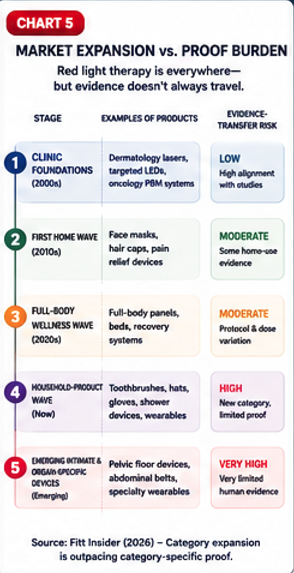
Results from clinical lasers, masks, caps and ophthalmic devices cannot automatically be transferred to full-body panels.
A high-quality panel may still be worthwhile when chosen for a realistic goal and used consistently.
The best brands disclose wavelengths, irradiance by distance, dosing instructions, safety information and the limits of their evidence.
What Is Red Light Therapy?
Red light therapy is a common consumer term for photobiomodulation, also historically called low-level laser therapy or low-level light therapy.
The American Society for Laser Medicine and Surgery (ASLMS) defines PBM as non-thermal treatment with non-ionizing light sources including lasers, LEDs and broadband light in the visible and near-infrared spectrum. The treatment produces photophysical and photochemical events rather than intentionally heating or destroying tissue.
Common wavelengths include:
visible red light, often approximately 630–680 nanometres;
near-infrared light, commonly approximately 800–900 nanometres; and
other wavelengths used in specialized devices.
The Country & Town House overview describes the commercial category as increasingly popular across masks, caps and full-body panels, and correctly notes that evidence and results depend on device quality and protocol.
How Red Light Therapy May Work
The most widely discussed PBM mechanism involves light absorption by cellular chromophores.
Researchers have proposed effects involving:
Cytochrome c oxidase and mitochondrial metabolism
Adenosine triphosphate
Nitric oxide
Transient reactive oxygen species
Calcium signaling
Inflammatory pathways
Downstream gene expression
These responses may influence tissue repair, blood flow, inflammation and cellular activity. [4]
However, a plausible mechanism does not prove every advertised benefit.
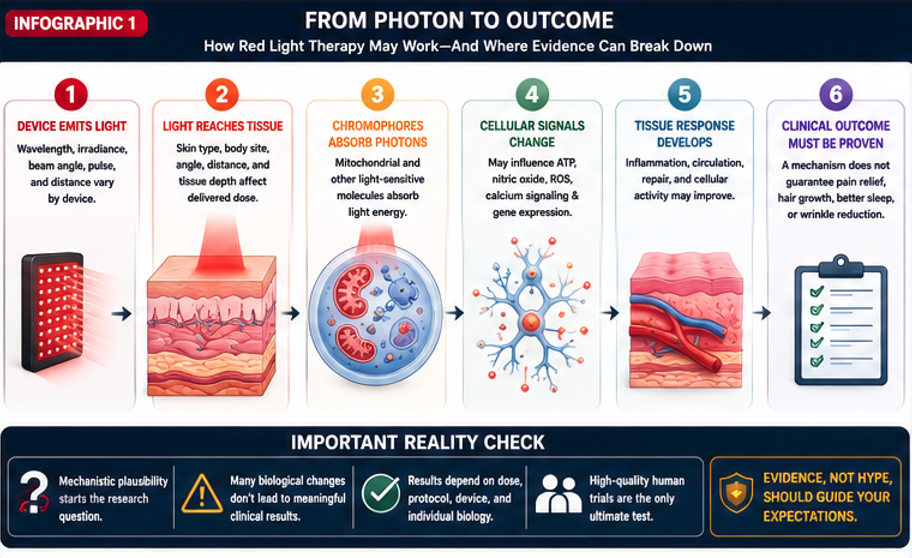
Many substances and interventions produce measurable changes in cells without producing useful clinical outcomes in people. The full pathway must be demonstrated:
Device output → delivered tissue dose → biological response → meaningful patient outcome
The Most Important Concept: Dose
Red light therapy is often marketed as if wavelength alone determines efficacy.
It does not. The delivered dose depends on:
Wavelength
Irradiance
Treatment time
Distance
Beam angle
Coverage
Pulsing
Skin & tissue characteristics
Total treatment schedule
Two panels that both advertise “660 nm and 850 nm” can deliver very different exposures.
Higher irradiance is not automatically better. PBM research is frequently discussed in terms of a biphasic response: too little exposure may do nothing, while too much may reduce or alter the desired response.
That is why a trustworthy company should publish not only wavelengths but also:
Irradiance at realistic distances
Recommended session duration
Treatment frequency
Coverage data
Safety guidance
Outcomes for which the protocol is intended
Human Evidence: Where Red Light Therapy Performs Best
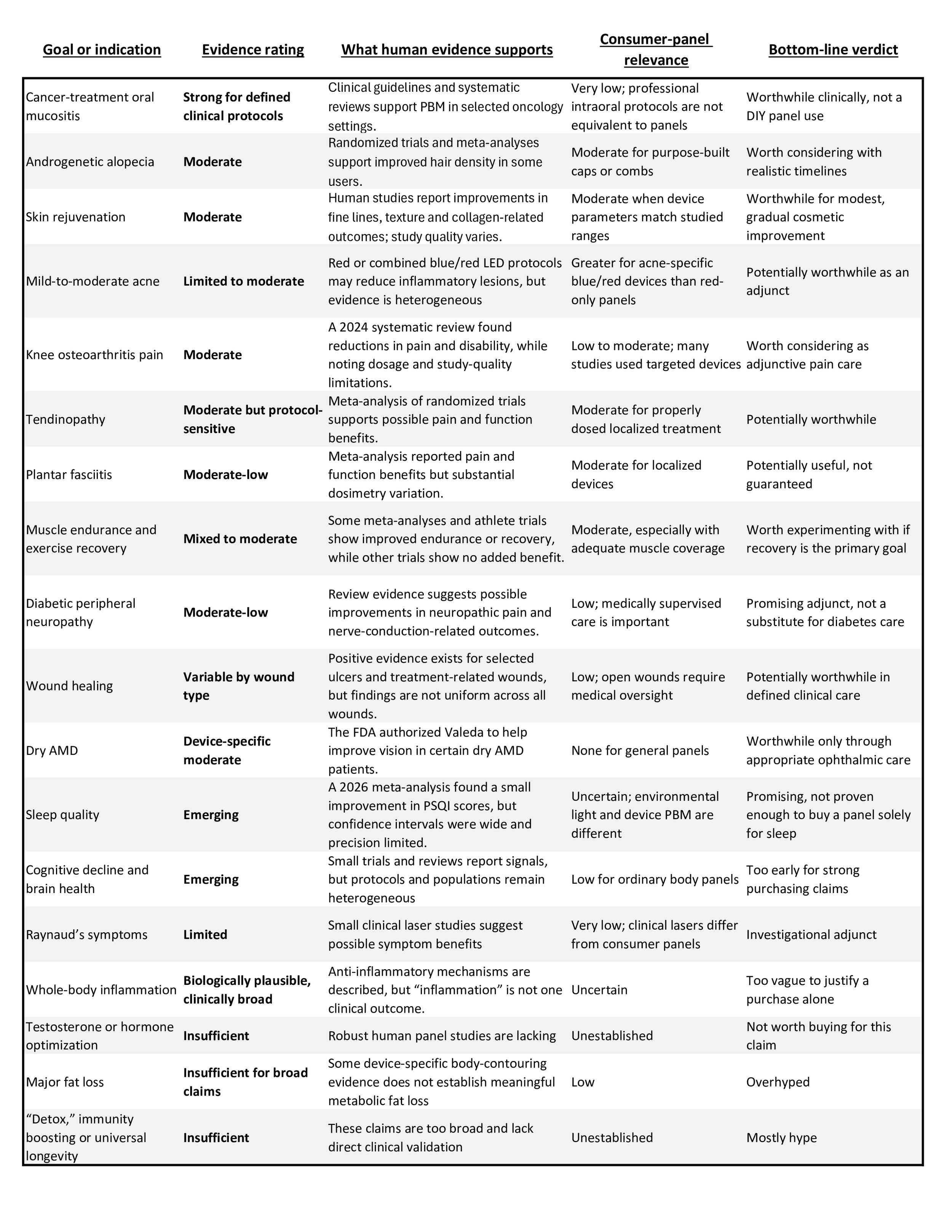
1. Oral Mucositis: Strong Evidence, but Not a Home-Panel Use
One of the most clinically established PBM applications is the prevention or management of oral mucositis in selected people receiving cancer treatment.
Oral mucositis can cause painful inflammation and ulceration of the mouth during chemotherapy, radiotherapy or stem-cell transplantation.
MASCC/ISOO guidelines were developed after reviewing a large body of mucositis literature, and PBM is included in defined treatment settings. Pediatric clinical guidance also recommends intraoral PBM in specific cancer and transplantation populations.
This is important because it proves a central point:
Photobiomodulation can be clinically meaningful.
It also proves the opposite of a common marketing shortcut:
Strong evidence for one professional protocol does not validate every consumer device.
An oncology PBM system involves controlled placement and dosing inside or around the mouth. A general panel is not a substitute.
Verdict
Worth the hype in appropriate clinical care. Not relevant as a DIY reason to buy a full-body panel.
2. Pattern Hair Loss: One of the Better Consumer Use Cases
Low-level red or near-infrared devices have been studied for androgenetic alopecia, commonly called male- or female-pattern hair loss.
Randomized trials and evidence reviews indicate that purpose-built caps, helmets or combs may improve hair density in some users. A 2022 meta-analysis found evidence supporting red light therapy and infrared PBM for androgenetic alopecia.
A double-blind randomized trial also reported improved hair growth in men using a visible-red-light device.
Important limitations include:
Improvements are generally modest
Treatment requires consistency over months
Devices vary
Pattern hair loss should be correctly diagnosed
Standard treatments may be more appropriate or complementary
Verdict
Worth considering for pattern hair loss—especially with a purpose-built, studied device.
3. Skin Rejuvenation: Real, but Usually Subtle
Skin rejuvenation is one of the most visible and commercially popular red light categories.
Clinical studies report improvements in outcomes such as:
Fine lines
Skin texture
Elasticity
Complexion
Collagen-related measurements
A broad clinical review concluded that a reasonable body of trial evidence supports low-energy red and near-infrared light for skin rejuvenation, while also warning about small cohorts, methodological limitations and industry funding.
A 2025 randomized, sham-controlled trial of a 660 nm LED mask enrolled 95 women and evaluated two- versus three-times-weekly treatment.
That is stronger evidence than testimonials or before-and-after photos, but it does not imply facelift-level results.
Realistic expectation
Think:
Subtle texture or tone changes
Consistent use over weeks
Maintenance rather than permanent reversal of aging
Do not expect:
Removal of deep wrinkles
Dramatic skin tightening
Replacement of sun protection
Equivalence to resurfacing lasers, injectables or surgery
Verdict
Worthwhile for users who value modest, non-invasive improvement and will use the device consistently.
4. Acne: Useful for Some People, but Device Spectrum Matters
Light therapy for acne often involves blue light, red light or a combination.
Blue light is commonly intended to affect acne-associated bacterial pathways, while red light is used for inflammation and healing support.
This means that a red-only full-body panel is not automatically the ideal acne device.
Evidence is most relevant to:
Mild-to-moderate inflammatory acne
Acne-specific LED systems
Blue-and-red combinations
Adjunctive use rather than replacement of appropriate dermatologic care
Severe, painful, cystic or scarring acne warrants professional evaluation.
Verdict
Potentially worthwhile with an acne-specific device. More uncertain for red-only panels.
5. Joint Pain and Knee Osteoarthritis
PBM has been studied for musculoskeletal pain, including knee osteoarthritis.
A 2024 systematic review concluded that photobiomodulation can reduce pain and improve disability in knee osteoarthritis, while noting that future research should compare isolated PBM with placebo and clarify dosage across different light emitters.
This illustrates a recurring pattern:
The clinical signal may be positive
The ideal dose remains unsettled
Many trials use targeted devices
Broad-panel transferability is uncertain
Verdict
Worth considering as an adjunct for localized pain—not as a cure for arthritis.
6. Tendinopathy and Plantar Fasciitis
A systematic review and meta-analysis of randomized trials evaluated low-level red and near-infrared PBM for tendinopathy.
A separate meta-analysis concluded that PBM may reduce pain and improve function in plantar fasciitis, while highlighting major discrepancies in dosimetry.
The practical lesson is that placement and dosing matter. Tendons and plantar fascia are localized targets; a precisely positioned handheld or targeted device may be easier to dose than a distant whole-body panel.
Verdict
Potentially worthwhile when used as part of a rehabilitation plan with appropriate dosing.
7. Muscle Recovery and Exercise Performance
Red and near-infrared light are heavily marketed to athletes.
Human trials and meta-analyses have evaluated:
Muscular endurance
Time to exhaustion
Strength
Creatine kinase
Soreness
Oxidative stress
Recovery between exercise sessions
A 2025 meta-analysis found an acute improvement in muscular endurance measured by maximum repetitions, with similar effects for laser and LED devices. The effects were more apparent in upper-limb muscles and in men, emphasizing that results are not uniform. [15]
A small randomized crossover trial in high-level rugby players also reported performance and recovery benefits.
Other trials have found no added benefit, particularly in trained populations or under different dosing conditions.
Verdict
One of the more reasonable full-body panel use cases, but still not guaranteed. Track your own recovery outcomes.
8. Wound Healing and Neuropathy
PBM is used or studied in several wound-care contexts, including diabetic foot ulcers, pressure ulcers and treatment-related wounds.
A 2025 dermatologic consensus identified PBM as effective for selected wound ulcers, pressure ulcers, peripheral neuropathy and pain related to diabetic foot ulcers. [17]
A systematic review of diabetic peripheral neuropathy reported improvements in neuropathic pain and nerve conduction velocity across included studies.
These are medically sensitive conditions.
Open wounds, diabetes-related foot problems and neuropathy require clinical assessment because delayed care can lead to infection, ulcer progression or amputation.
Verdict
Promising or useful in professional care. Not an appropriate reason to self-treat a serious wound with a consumer panel.
9. Dry Age-Related Macular Degeneration
In November 2024, the FDA authorized marketing of LumiThera’s Valeda Light Delivery System to help improve vision in certain patients with dry age-related macular degeneration. [19]
This is a significant PBM milestone—but it does not validate direct eye exposure from a consumer panel.
Valeda is:
An ophthalmic system
Used for a defined patient population
Administered under professional care
Evaluated with device-specific protocols
Verdict
Evidence-based for a specialized ophthalmic system. Never generalize this evidence to staring into panels.
10. Sleep and Circadian Health
Sleep-related PBM research is growing.
A 2026 systematic review and meta-analysis reported a statistically significant improvement in Pittsburgh Sleep Quality Index scores versus sham, but the estimated effect was small and the confidence interval was wide, indicating limited precision.
Sleep studies may involve:
Body PBM
Transcranial PBM
Dim red environmental lighting
Spectral comparisons involving melatonin
These are not equivalent interventions.
For circadian health, reducing total evening light and limiting blue-enriched screen exposure generally has a stronger evidence foundation than purchasing a high-output panel.
Verdict
Promising, but not yet a strong standalone reason to buy a panel.
11. Brain Health and Cognitive Performance
Transcranial PBM is being studied for:
Mild cognitive impairment
Dementia
Mood
Brain injury
Parkinson’s disease
Healthy cognitive performance
This category attracts intense attention because the potential benefits are significant.
It also attracts overstatement.
Small pilot studies can establish feasibility or generate hypotheses, but they cannot prove that an ordinary body panel prevents dementia or “upgrades the brain.”
The McGill Office for Science and Society has specifically criticized the gap between broad neuro-PBM claims and the quality of supporting evidence in some areas.
Verdict
Scientifically interesting and worth watching. Too early for strong consumer claims.
12. Fat Loss, Testosterone, Detox and Longevity
These are where the hype expands fastest.
Fat loss
Some low-level light systems have been studied for body contouring or circumference changes. That is not the same as:
Meaningful fat-mass loss
Improved metabolic health
Sustained weight loss
Replacement of diet and exercise
Testosterone
Strong human evidence showing that commercial red light panels reliably increase testosterone is lacking.
Detox
“Detoxification” is usually undefined in device marketing. A credible claim would need to identify:
The toxin
The biological pathway
The measured change
The clinical benefit
Longevity
Mechanistic evidence involving mitochondria or inflammation does not prove longer life in humans. Photobiomodulation (PBM) therapy, a form of low-dose light therapy, has been noted to be effective in several age-associated chronic diseases such as hypertension and atherosclerosis.
Verdict
The broadest hormone, detox and longevity claims remain largely hype.
Chart 1: Evidence Maturity by Goal
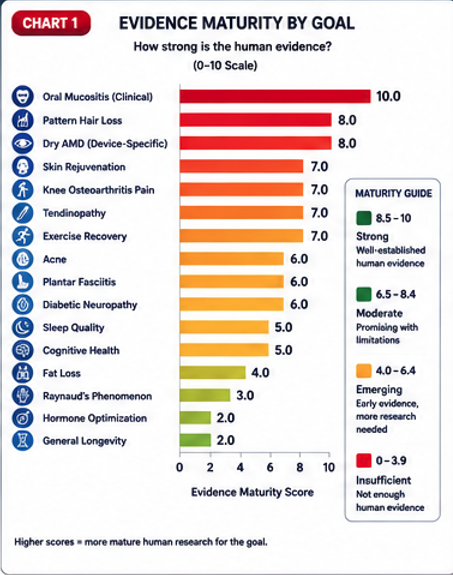
Chart 2: Clinical Evidence vs. Consumer Relevance
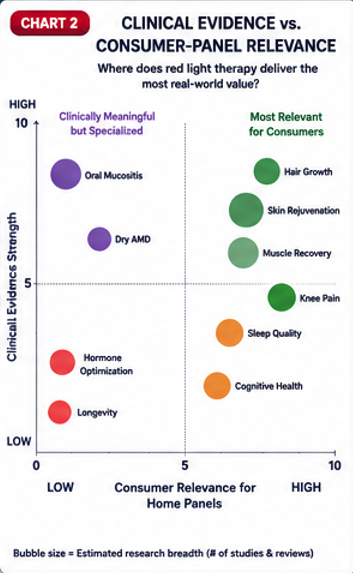
Chart 3: Evidence Quality Mix
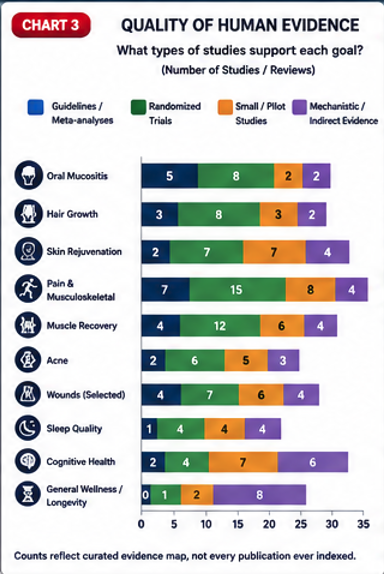
Chart 4: The Red Light Therapy Hype Gap
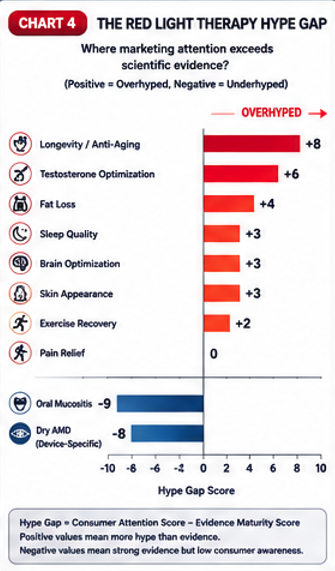
Chart 5: From Clinics to Household Products
Is Red Light Therapy Safe?
PBM is generally described as well tolerated when used appropriately.
However, “non-invasive” does not mean “risk-free.”
Potential concerns include:
Eye discomfort or retinal risk from inappropriate direct viewing
Headaches or temporary discomfort
Skin irritation
Photosensitizing medications or conditions
Using the device over a suspicious lesion
Inappropriate treatment near tumors
Poor electrical or thermal design
Delaying appropriate medical care
Excessive or poorly defined exposure
Memorial Sloan Kettering uses PBM for selected cancer-treatment complications but advises that treatment near tumors requires specific safety guidance because the evidence is not sufficient for casual use in that context.
Users should consult a qualified professional when:
They have cancer or are receiving cancer treatment
They use photosensitizing medication
They have an eye disease
They are treating an open wound
Pain or symptoms are unexplained
They have a seizure condition triggered by light
The device is being considered as a replacement for prescribed care
How Long Does Red Light Therapy Take to Work?
There is no universal timeline.
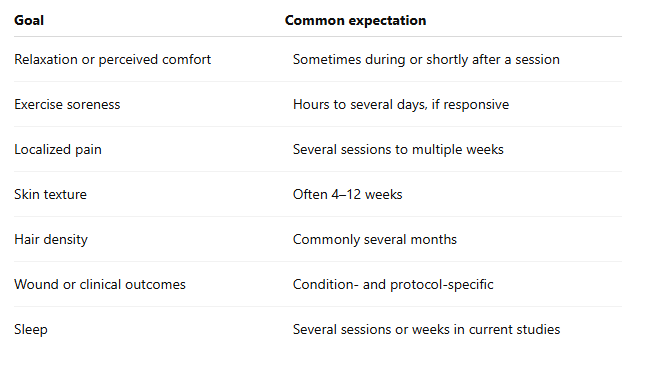
Consistency matters—but only after selecting an appropriate device and protocol.
Repeatedly applying an ineffective dose does not make it effective.
Panel, Mask, Cap or Handheld: Which Device Makes Sense?
Face Mask
Best suited to:
Facial skin
Convenient fixed-distance use
Defined facial protocols
Users who prioritize skincare
Hair Cap or Helmet
Best suited to:
Pattern hair loss
Consistent scalp coverage
Device-specific hair protocols
Handheld or Targeted Device
Best suited to:
Tendons
Joints
Localized pain
Small treatment areas
Precise positioning
Full-Body Panel
Best suited to:
Large muscle groups
Recovery routines
Broader skin exposure
Households with multiple use goals
users who value efficient coverage
A panel is not automatically superior. The best device is the one that fits the target tissue, evidence and routine.
Table 2: Evidence vs. Marketing
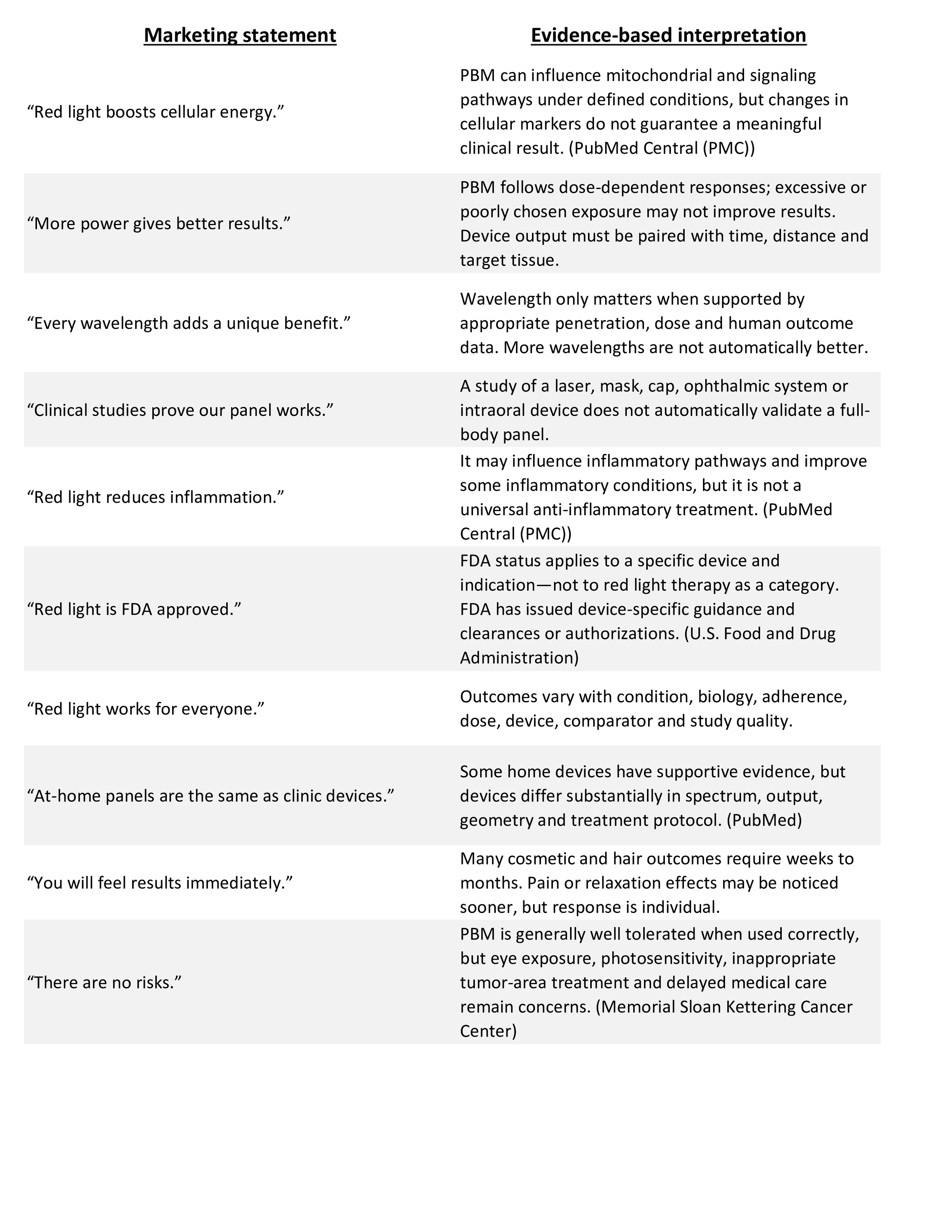
How to Choose a Red Light Therapy Panel
Start with One Primary Goal
Do not buy based on a list of 40 claimed benefits.
Choose the goal that would make the device worthwhile even if no other claim materializes.
Examples:
Muscle recovery
Broad skin exposure
Localized discomfort
A consistent wellness routine
Shared household use
Check Wavelengths
Common consumer-panel wavelengths include red and near-infrared bands, but wavelength is only one part of the treatment dose.
Ask for Irradiance by Distance
A maximum reading measured directly against the LED surface is not useful for someone treating at six or twelve inches.
Check Treatment Geometry
A high central reading with weak edges may produce uneven exposure.
Look for Independent Controls
Separate red and near-infrared controls increase flexibility.
Evaluate the Session Burden
A technically impressive device that is inconvenient will not produce consistent use.
Read the Claims Page
A trustworthy company explains:
What its device may support
What remains uncertain
Who should seek medical guidance
Which evidence applies directly to the product
Table 3: Device Buying Checklist
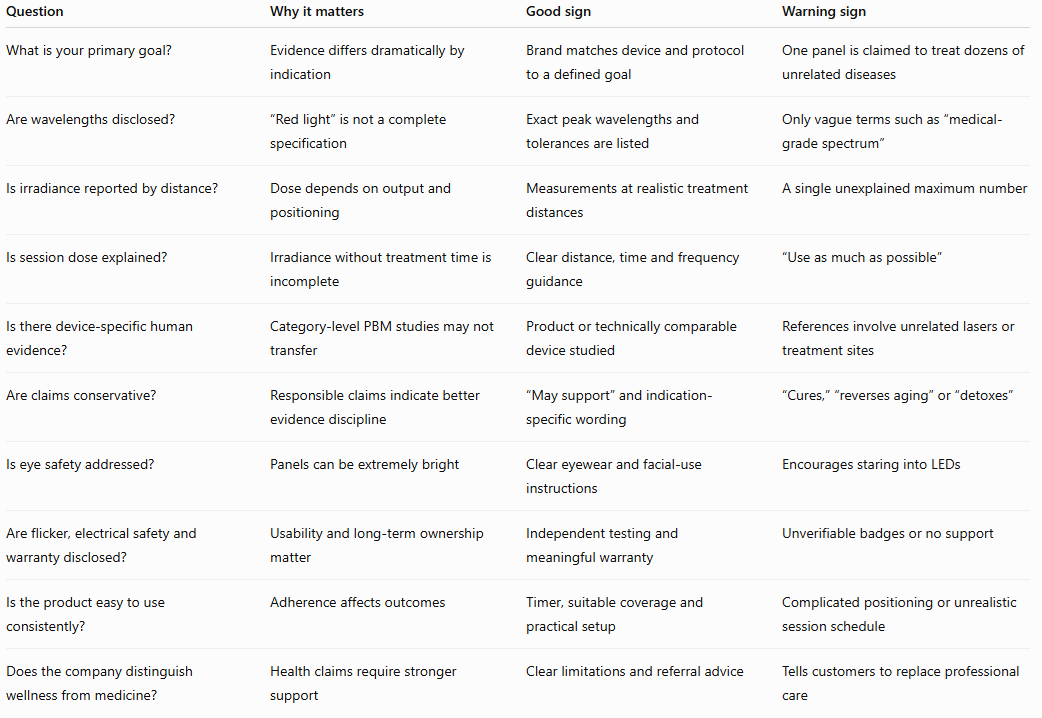
How to Run Your Own 8-Week Red Light Test
Consumers often struggle because they use several wellness interventions simultaneously and cannot tell what helped.
Use a simple personal experiment.
Step 1: Choose one Outcome
Examples:
Average post-workout soreness
Knee-pain score
Weekly training readiness
Skin-texture photographs
Sleep-quality score
Step 2: Establish a baseline
Track the outcome for one or two weeks before starting.
Step 3: Keep the protocol stable
Record:
Wavelength modes
Distance
Session time
Frequency
Treatment area
Other major changes
Step 4: Review after eight weeks
Continue only when the benefit justifies:
The cost
The time
The space
The inconvenience
This makes the purchase more rational and gives your brand an opportunity to provide a downloadable tracking template.
Infographic 2: Is Red Light Therapy Worth the Hype?
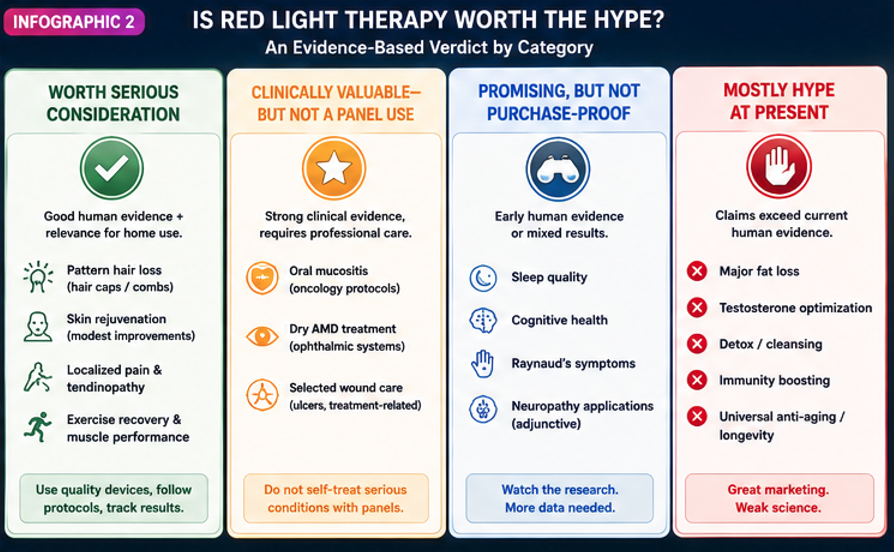
So, Is Red Light Therapy Worth the Money?
It is more likely to be worthwhile when:
You have a defined, evidence-aligned goal
The device format suits the treatment area
Specifications and dosing are transparent
You can use it consistently
Expectations are realistic
The cost fits your budget
You will track whether it helps
It is less likely to be worthwhile when:
You expect it to cure a disease
Tou are buying for vague “optimization”
The brand relies on celebrity testimonials
The studies involve unrelated devices
Specifications are hidden
You believe more power is always better
The purchase would replace appropriate medical care
Our Verdict
Red light therapy has earned a place between conventional clinical treatment and consumer wellness.
It is not snake oil.
It is not a universal cure.
It is a dose-dependent technology with meaningful evidence in some applications, preliminary evidence in others, and a fast-growing commercial industry that frequently moves faster than research.
For an informed consumer, a red light panel can be worth the investment—particularly for:
Muscle recovery;
Broad skin exposure
Selected comfort or pain routines
Households that will use it consistently
The purchase becomes harder to justify when the goal is:
Guaranteed weight loss
Testosterone optimization
Detoxification
Disease prevention
Life extension
Find a Panel That Matches Your Goal
Our red light therapy panels are designed for transparent, repeatable home wellness routines—not miracle claims.
Compare Red Light wavelengths, coverage and panel sizes
For Additional Reading:
Check out our most popular blogs on red light therapy to save you time and money on your next purchase with Medford Red Light Therapy:
How We Scored the Red Light Therapy Evidence
To add original analysis beyond summarizing individual studies, we created a proprietary evidence-scoring framework for major red light therapy applications.
The scores are intended to help readers compare the maturity, consistency, and consumer relevance of the human evidence. They are an editorial research tool—not a clinical guideline, treatment recommendation, or substitute for a formal risk-of-bias assessment.
The Four Scoring Dimensions
Each application received a score from 0 to 10 in three primary dimensions.
1. Research Maturity
The research-maturity score reflects the overall development of the human evidence base.
Factors considered included:
Availability of human clinical studies
Presence of randomized controlled trials
Availability of systematic reviews or meta-analyses
Inclusion in professional guidelines or consensus statements
Sample sizes and duration of follow-up
Replication by independent research groups
Use of clinically meaningful outcomes
A higher score indicates a larger or more mature body of human research. It does not necessarily mean that the intervention is appropriate for unsupervised home use.
2. Consistency of Findings
The consistency score reflects how reliably studies point in the same direction.
Factors considered included:
Agreement among randomized trials
Agreement between trials and systematic reviews
Frequency of positive, neutral, or contradictory findings
Similarity of results across populations
Stability of findings across devices and treatment protocols
Whether reported benefits were clinically meaningful or limited to laboratory markers
A lower consistency score may reflect mixed findings, high protocol variability, small studies, or positive results that have not been independently replicated.
3. Home-Device Transferability
The home-device transferability score reflects how reasonably the published evidence can be applied to consumer red light devices.
Factors considered included:
Whether studies used LEDs, lasers, or another light source
Whether the studied treatment resembled a panel, mask, cap, handheld device, or specialized medical system
Similarity of wavelength, irradiance, dose, treatment distance, and coverage
Whether treatment required professional placement or monitoring
Whether the target tissue can be reached effectively by a consumer device
Availability of studies involving home-use devices
Safety considerations for unsupervised use
A low transferability score does not mean that the clinical treatment is ineffective. It means that results from the studied intervention should not automatically be used to market a general consumer panel.
For example, oral mucositis and dry age-related macular degeneration have meaningful clinical evidence, but the treatments involve specialized intraoral or ophthalmic systems. Their findings therefore have limited relevance to full-body red light panels.
Overall Consumer-Confidence Score
The overall consumer-confidence score is the arithmetic mean of the three primary scores:
Consumer-confidence score =
(Research maturity + Consistency + Home-device transferability) ÷ 3
Scores are rounded to one decimal place.
Example:
Skin rejuvenation
Research maturity: 7
Consistency: 7
Home-device transferability: 7
Calculation:
(7 + 7 + 7) ÷ 3 = 7.0
The score estimates how confident an informed consumer might reasonably be that an appropriately selected home device could support the stated goal.
It does not estimate the size of the expected benefit or the probability that any individual will respond.
Evidence-Tier Definitions
Strong
Multiple good-quality human studies, systematic reviews, clinical guidance, or consistent replication support a clearly defined intervention.
A strong clinical rating does not automatically establish relevance to consumer panels.
Moderate
Repeated positive human evidence exists, but uncertainty remains because of protocol variation, sample size, study quality, or inconsistent replication.
Limited
Human evidence is preliminary, small, inconsistent, indirect, or dependent on highly specialized protocols.
Emerging
Early human findings justify additional research, but the evidence is not mature enough for confident consumer or medical claims.
Insufficient
Available human evidence does not support the broad claim commonly made in marketing.
What the Score Does Not Measure
The evidence score does not measure:
The expected effect size for an individual
Whether red light therapy is appropriate for a particular medical condition
Product quality
Regulatory clearance or authorization
Cost-effectiveness
Safety for every person
The quality of every study within a category
The likelihood that one specific commercial product will work
A category may receive a relatively high evidence score while producing only modest average improvements.
Likewise, a specialized clinical application may have strong evidence but little relevance to home red light panels.
Source-Selection Principles
Priority was given to:
Clinical guidelines and professional consensus statements
Systematic reviews and meta-analyses
Randomized, sham-controlled human trials
Controlled human clinical studies
Pilot and feasibility studies
Mechanistic human research
Preclinical research used only for biological context
Commercial articles, manufacturer pages, testimonials, and market reports were not treated as proof of medical effectiveness.
Important Limitations
This evidence map is a structured narrative review, not a registered PRISMA systematic review.
The scores involve editorial judgment. Different reviewers could reasonably assign somewhat different values, particularly when study quality or consumer-device transferability is uncertain.
The evidence base also changes as new trials are published. Scores should be reviewed at least annually and updated when major randomized trials, systematic reviews, clinical guidelines, or regulatory decisions become available.
Commercial Disclosure
Medford Red Light Therapy sells red light therapy products. This creates a potential commercial conflict of interest.
To reduce bias:
Clinical evidence and consumer-device relevance were scored separately.
Specialized medical uses were not presented as proof that consumer panels treat the same conditions.
Negative, neutral, and conflicting evidence was considered.
Unsupported hormone, detoxification, fat-loss, disease-treatment, and longevity claims were rated conservatively.
Readers are encouraged to review linked primary sources and consult qualified healthcare professionals when considering medical use.
Scientific Reference
Xu Y, Lin Y, Gao S, Shen J. Study on mechanism of release oxygen by photo-excited hemoglobin in low-level laser therapy. Lasers Med Sci 2018;33:135–9.
Buscone S, Mardaryev AN, Raafs B, Bikker JW, et al. A new path in defining light parameters for hair growth: discovery and modulation of photoreceptors in human hair follicle. Lasers Surg Med 2017;49:705–18.
Collier NJ, Allan D, Diaz PF, Sheridan L, et al. Systemic photodynamic therapy in folliculitis decalvans. Clin Exp Dermatol 2018;43:46–9.
Wikramanayake TC, Rodriguez R, Choudhary S, Mauro LM, et al. Effects of the Lexington LaserComb on hair regrowth in the C3H/HeJ mouse model of alopecia areata. Lasers Med Sci 2012;27:431–6.
Pontinen PJ, Aaltokallio T, Kolari PJ. Comparative effects of exposure to different light sources (He-Ne laser, InGaAl diode laser, a specific type of noncoherent LED) on skin blood flow for the head. Acupunct Electrother Res 1996;21:105–18.
Amer MA, El GA. Photochemotherapy and alopecia areata. Int J Dermatol 1983;22:245–
Bayramgurler D, Demirsoy EO, Akturk AS, Kiran R. Narrowband ultraviolet B phototherapy for alopecia areata. Photodermatol Photoimmunol Photomed 2011;27:325–7.
Al-Mutairi N. 308-nm excimer laser for the treatment of alopecia areata. Dermatol Surg 2007;33:1483–7.
Anqi L, Xianfu M, Xiaojing X, Hong T, et al. Efficacy and influence factors of 308-nm excimer lamp with minoxidil in the treatment of alopecia areata. Lasers Surg Med 2020;52:761–7.
Colombo M, Raposo G, Thery C. Biogenesis, secretion, and intercellular interactions of exosomes and other extracellular vesicles. Annu Rev Cell Dev Biol 2014; 30: 255–289.
Kalluri R, LeBleu VS. The biology, function, and biomedical applications of exosomes. Science 2020; 367: eaau6977.
Golan K, Kumari A, Kollet O, Khatib-Massalha E, Subramaniam MD, Ferreira ZS, et al. Daily onset of light and darkness differentially controls hematopoietic stem cell differentiation and maintenance. Cell Stem Cell 2018; 23: 572–585e577.
Pelizzo G, Avanzini MA, Icaro Cornaglia A, De Silvestri A, Mantelli M, Travaglino P, et al. Extracellular vesicles derived from mesenchymal cells: perspective treatment for cutaneous wound healing in pediatrics. Regen Med 2018; 13: 385–394.
Ferreira ADF, Cunha PDS, Carregal VM, da Silva PC, de Miranda MC, Kunrath-Lima M, et al. Extracellular vesicles from adipose-derived mesenchymal stem/stromal cells accelerate migration and activate AKT pathway in human keratinocytes and fibroblasts independently of miR-205 activity. Stem Cells Int 2017; 2017: 9841035.
Phinney DG, Pittenger MF. Concise review: MSC-derived exosomes for cell-free therapy. Stem Cells 2017; 35: 851–858.
Lai RC, Yeo RW, Lim SK. Mesenchymal stem cell exosomes. Semin Cell Dev Biol 2015; 40: 82–88.
Hopkins C, Fu S-C, Chua E, Hu X, Rolf C, Mattila VM, Qin L, Yung PSH, Chan KM. Critical review on the socio-economic impact of tendinopathy. Asia Pacific J Sports Med Arthrosc Rehabil Technol. 2016;4:9–20. doi: 10.1016/j.asmart.2016.01.002.
Khan KM, Cook JL, Taunton JE, Bonar F. Overuse tendinosis, not tendinitis: part 1: a new paradigm for a difficult clinical problem. Phys Sportsmed. 2000;28(5):38–48. doi: 10.3810/psm.2000.05.890.
Khan KM, Cook JL, Kannus P, Maffulli N, Bonar S. Time to abandon the “tendinitis” myth: painful, overuse tendon conditions have a non-inflammatory pathology. London: British Medical Journal Publishing Group; 2002.
Cook J, Purdam CR. Is tendon pathology a continuum? A pathology model to explain the clinical presentation of load-induced tendinopathy. Br J Sports Med. 2009;43(6):409–416. doi: 10.1136/bjsm.2008.051193.
Scott A, Squier K, Alfredson H, Bahr R, Cook JL, Coombes B, de Vos RJ, Fu SN, Grimaldi A, Lewis JS, Maffulli N, Magnusson SP, Malliaras P, Mc Auliffe S, Oei EHG, Purdam CR, Rees JD, Rio EK, Gravare Silbernagel K, Speed C, Weir A, Wolf JM, Akker-Scheek I, Vicenzino BT, Zwerver J. Icon 2019: international scientific tendinopathy symposium consensus: clinical terminology. Br J Sports Med. 2020;54(5):260–262. doi: 10.1136/bjsports-2019-100885.
Cook J. The role of imaging in diagnosing and managing tendinopathy. Ultrasound Med Biol. 2019;45:S16–SS7. doi: 10.1016/j.ultrasmedbio.2019.07.464.
Ageborg Morsing J, Smith MG, Ögren M, Thorsson P, Pedersen E, Forssén J, Persson Waye K (2018) Wind turbine noise and sleep: Pilot studies on the influence of noise characteristics. Int J Environ Res Public Health 15(11):2573
Andreazza AC, Andersen ML, Alvarenga TA, de-Oliveira MR, Armani F, Ruiz FS, Tufik S (2010) Impairment of the mitochondrial electron transport chain due to sleep deprivation in mice. J Psychiatr Res 44(12):775–780
Barrett DW, Gonzalez-Lima F (2013) Transcranial infrared laser stimulation produces beneficial cognitive and emotional effects in humans. Neuroscience 230:13–23
Barrett DW, Beevers CG, Gonzalez-Lima F (2025a) Augmenting internet-based cognitive behavioral therapy for major depressive disorder with transcranial infrared laser stimulation. Biol Psychiatry Global Open Sci 5(2):100449
Barrett DW, Davis RE, Siegel-Ramsay JE, Bichlmeier A, Almeida JR, Gonzalez-Lima F (2025b) Cognitive improvement and prefrontal network interactions in individuals with remitted bipolar disorder after transcranial infrared laser stimulation. Front Psychiatry 16:1547230
Blanco NJ, Maddox WT, Gonzalez-Lima F (2017) Improving executive function using transcranial infrared laser stimulation. J Neuropsychol 11(1):14–25
Burns E. Red Light Therapy Crosses Categories. Fitt Insider. March 3, 2026.
American Society for Laser Medicine and Surgery. Photobiomodulation.
Pearson K. Is Red Light Therapy Worth the Hype? Country & Town House. 2026.
Hamblin MR. Mechanisms and applications of the anti-inflammatory effects of photobiomodulation. AIMS Biophysics. 2017;4(3):337–361.
Elad S, Cheng KKF, Lalla RV, et al. MASCC/ISOO clinical practice guidelines for the management of mucositis secondary to cancer therapy. Cancer. 2020.
Zadik Y, Arany PR, Fregnani ER, et al. Systematic review of photobiomodulation for the management of oral mucositis in cancer patients and clinical practice guidelines. Support Care Cancer. 2019.
Patel P, Robinson PD, Thackray J, et al. Clinical practice guideline for the prevention of oral and oropharyngeal mucositis in pediatric cancer and hematopoietic stem cell transplant patients. Eur J Cancer. 2021.
Zhang Y, et al. Photobiomodulation therapy with different wavebands for hair loss: systematic review and meta-analysis. Dermatol Surg. 2022.
Lanzafame RJ, Blanche RR, Bodian AB, Chiacchierini RP, Fernandez-Obregon A, Kazmirek ER. The growth of human scalp hair mediated by visible red light laser and LED sources in males. Lasers Surg Med. 2013.
Glass GE. The clinical applications of low-level light therapy. Aesthetic Plast Surg. 2021.
Bragato EF, et al. Effects of different photobiomodulation frequencies on facial rejuvenation: randomized, sham-controlled, double-blind clinical trial. Lasers Med Sci. 2025.
Oliveira S, et al. Effectiveness of photobiomodulation in reducing pain and disability in knee osteoarthritis: systematic review. 2024.
Tripodi N, Feehan J, Husaric M, et al. The effect of low-level red and near-infrared photobiomodulation on pain and function in tendinopathy: systematic review and meta-analysis of randomized controlled trials. 2021.
Dos Santos SA, et al. Parameters and effects of photobiomodulation in plantar fasciitis: systematic review and meta-analysis. 2019.
Aguirra P, et al. Acute effects of photobiomodulation on muscular endurance: systematic review and meta-analysis. 2025.
Pinto HD, Vanin AA, Miranda EF, et al. Photobiomodulation therapy improves performance and recovery of high-level rugby players. J Strength Cond Res. 2016;30(12):3329–3338.
Maghfour J, Ozog DM, Mineroff J, et al. Evidence-based consensus on the clinical application of photobiomodulation in dermatology. J Am Acad Dermatol. 2025.
Korada HY, et al. Effectiveness of photobiomodulation therapy on diabetic peripheral neuropathy: systematic review. 2023.
US Food and Drug Administration. FDA Roundup: November 5, 2024. Authorization of the Valeda Light Delivery System for certain dry AMD patients.
de Azevedo WMV, et al. Photobiomodulation and sleep quality: systematic review and meta-analysis. 2026.
McGill Office for Science and Society. The Hype Around Photobiomodulation. January 20, 2023.
Memorial Sloan Kettering Cancer Center. About Your Photobiomodulation Therapy. Updated May 16, 2025.
Gavish L, Houreld NN. Therapeutic efficacy of home-use photobiomodulation devices: a systematic literature review. 2019.
Avci P, Gupta A, Sadasivam M, et al. Low-level laser therapy in skin: stimulating, healing, restoring. Semin Cutan Med Surg. 2013;32(1):41–52.
Heiskanen V, Hamblin MR. Photobiomodulation: lasers versus light-emitting diodes. Photochem Photobiol Sci. 2018;17:1003–1017.
Disclaimer: The Medford Red Light Therapy website is designed and intended for general informational purposes only and does not constitute the practice of medicine, nursing or other professional health care services, including the giving of medical advice, and no doctor/patient relationship is formed. The use of information on this website is at the user’s own risk. Results may vary by individual. The content of this website is not intended to be a substitute for professional medical advice, diagnosis, or treatment. Users should not disregard or delay in obtaining medical advice for any medical condition they may have and should seek the assistance of their health care professionals for any such conditions.
