Red Light Therapy: What It Is, What It Can Do, and What the Science Says
Red light therapy has rapidly become one of the most talked-about wellness technologies in dermatology clinics, recovery centers, athletic training facilities, and homes around the world.
Supporters claim it can improve skin appearance, reduce visible signs of aging, support recovery after exercise, and promote overall wellness. At the same time, medical experts emphasize that not every claim circulating online is supported by strong scientific evidence.
So where does the truth lie?
The answer is somewhere in the middle.
Red light therapy is not a miracle treatment. However, growing research suggests it may offer meaningful benefits when used consistently and appropriately as part of a broader health and wellness routine.
This evidence-based guide explains what red light therapy is, how it works, what benefits have the strongest scientific support, how to use it safely, and how to choose a high-quality red light therapy panel for home use.
What Is Red Light Therapy?
Red light therapy (RLT), also known as photobiomodulation therapy, uses specific wavelengths of visible red light and near-infrared light to interact with cells in the body.
Most high-quality devices use wavelengths within the following ranges:
Red light: 630nm–670nm
Near-infrared light: 810nm–850nm
Unlike ultraviolet (UV) light from the sun, red light therapy does not damage skin cells through UV radiation.
Instead, researchers believe these wavelengths help stimulate cellular processes that support repair, recovery, and normal biological function.
Because of its non-invasive nature, red light therapy has become increasingly popular for individuals seeking wellness support without medications, injections, or surgical procedures.
How Does Red Light Therapy Work?
Scientists believe red and near-infrared light interact with mitochondria, often referred to as the "power plants" of cells.
Mitochondria produce adenosine triphosphate (ATP), which serves as the primary energy source for cellular activity.
When cells absorb specific wavelengths of light, researchers believe it may:
Support cellular energy production
Promote normal tissue repair processes
Encourage collagen synthesis
Support circulation
Help manage oxidative stress
While scientists continue studying the exact mechanisms, this cellular response forms the basis for many of the potential benefits associated with red light therapy.
Potential Benefits of Red Light Therapy
1. Support for Healthier-Looking Skin
Among the most researched applications of red light therapy is skin rejuvenation.
Studies suggest red light therapy may help improve:
Skin texture
Skin smoothness
Visible signs of aging
Fine lines and wrinkles
Skin firmness
Overall skin appearance
Researchers believe this occurs because red light may stimulate fibroblasts, the cells responsible for producing collagen and elastin.
Collagen is a critical structural protein that helps maintain skin strength and elasticity.
As collagen production naturally declines with age, skin may begin to develop wrinkles and lose firmness. Supporting collagen production is one reason red light therapy has become popular in cosmetic skincare.
Expert Insight
Board-certified dermatologists generally view red light therapy as a promising adjunctive treatment for skin appearance, though results vary among individuals and should be viewed as gradual rather than immediate.
2. Support for Exercise Recovery
Athletes, trainers, and sports medicine professionals increasingly incorporate red light therapy into recovery routines.
Potential recovery-related benefits may include:
Reduced post-exercise soreness
Enhanced muscle recovery
Improved circulation
Support for tissue repair
Near-infrared wavelengths are particularly valued because they penetrate deeper into tissues than visible red light.
Many professional sports organizations and elite athletes now include photobiomodulation therapies as part of broader recovery protocols.
3. Temporary Relief of Minor Muscle and Joint Discomfort
Research suggests red light therapy may support comfort and mobility by influencing inflammatory processes and circulation.
Users commonly apply red light therapy to areas including:
Neck
Shoulders
Back
Knees
Hips
Ankles
While red light therapy should never replace medical evaluation for persistent pain, many users report improved comfort when using it consistently.
4. Hair Growth Support
Low-level light therapy has been studied for individuals experiencing pattern hair loss and thinning hair.
Research suggests red light therapy may help:
Stimulate hair follicles
Improve scalp circulation
Support thicker-looking hair
Encourage healthier hair growth cycles
Results are typically gradual and require consistent use over several months.
5. Whole-Body Wellness Support
Many consumers invest in full-body red light therapy panels because they allow larger treatment areas to be addressed simultaneously.
Potential wellness-related uses include:
Recovery support
Skin health maintenance
Daily self-care routines
Relaxation practices
Healthy aging programs
Although research continues to evolve, many users incorporate red light therapy into long-term wellness strategies.
What Red Light Therapy Cannot Do
Consumers should approach exaggerated claims with caution.
Current evidence does not support claims that red light therapy:
Cures diseases
Replaces medical treatment
Produces dramatic overnight results
Instantly eliminates wrinkles
Causes massive weight loss without lifestyle changes
Trustworthy health information should always be grounded in realistic expectations and evidence-based claims.
Is Red Light Therapy Safe?
Red light therapy is generally considered safe when used according to manufacturer instructions.
Unlike tanning beds, properly designed red light therapy devices do not expose users to harmful UV radiation.
Most users experience little to no discomfort during treatment.
However, individuals should consult a healthcare professional before use if they:
Are pregnant
Have photosensitivity disorders
Take photosensitizing medications
Have active skin conditions requiring medical supervision
Have a history of eye disorders
Following device instructions and recommended treatment times is essential.
How Long Does It Take to See Results?
Results vary based on:
Treatment goals
Device quality
Session consistency
Individual biology
Many users report noticing changes after several weeks of consistent use.
Visible skin improvements often require:
Three to five sessions weekly
Multiple weeks of use
Continued maintenance sessions
Consistency typically produces better outcomes than occasional treatments.

How to Choose the Best Red Light Therapy Panel
Not all red light therapy devices are created equally.
When comparing products, consider the following features.
1.Clinically Relevant Wavelengths
Look for devices that include:
660nm red light
850nm near-infrared light
These wavelengths are among the most commonly used in photobiomodulation research.
2. High Irradiance Output
Higher-quality devices typically deliver more light energy efficiently, reducing treatment time.
3. Full Body Coverage
Larger panels allow treatment of multiple body areas simultaneously.
Benefits include:
Convenience
Faster sessions
Better consistency
Improved overall user experience
4. Quality Construction
Look for:
Low flicker technology
Reliable cooling systems
Transparent specifications
Third-party testing when available
5. Warranty and Customer Support
Established manufacturers often provide:
Product warranties
Educational resources
Usage guidance
Responsive customer service
Why More People Are Choosing Full-Body Red Light Therapy Panels
Consumers increasingly prefer full-body systems because they provide:
Greater treatment coverage
Improved convenience
More efficient sessions
Long-term value
Instead of treating one area at a time, full-body panels allow users to build a comprehensive wellness routine around a single device.
For many households, this makes a premium panel a more practical long-term investment than smaller handheld devices.
How to Maximize Results
To get the most from your red light therapy sessions:
Use Consistently
Consistency matters more than intensity.
Follow Manufacturer Guidelines
Avoid excessive exposure times.
Maintain Realistic Expectations
Benefits typically accumulate gradually.
Support Your Overall Health
Red light therapy works best alongside:
Quality sleep
Regular exercise
Good nutrition
Stress management
Frequently Asked Questions
Does red light therapy really work?
Research supports several applications of red light therapy, particularly for skin appearance, recovery support, and certain hair growth applications.
How often should I use red light therapy?
Many users perform sessions three to five times weekly, though protocols vary by device and treatment goals.
Can red light therapy damage skin?
Properly designed red light therapy devices do not emit harmful UV radiation and are generally considered safe when used as directed.
Is near-infrared light different from red light?
Yes. Near-infrared light penetrates deeper into tissues, while red light primarily affects more superficial layers.
Are home red light therapy panels effective?
High-quality home devices can provide meaningful light exposure when used consistently and according to manufacturer recommendations.
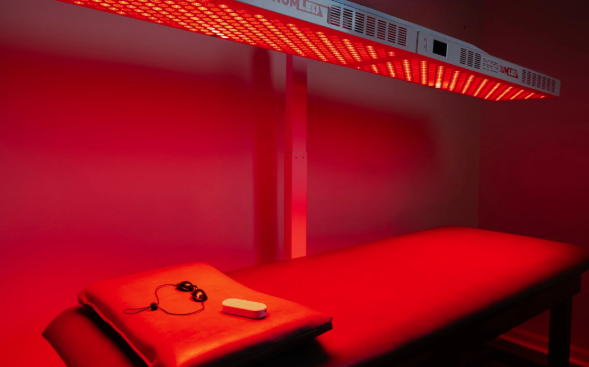
Ready to Experience Red Light Therapy at Home?
Invest in a Professional-Grade Red Light Therapy Panel
If you're looking for a convenient way to support:
✓ Skin health
✓ Recovery and performance
✓ Hair wellness
✓ Daily self-care
✓ Healthy aging routines
A premium red light therapy panel can help bring professional-quality light therapy into your home.
Why Customers Choose Our Panels
Clinically inspired wavelengths
Full-body treatment options
High-output LED technology
Designed for convenient home use
Trusted customer support
Shop Our Best-Selling Red Light Therapy Panels Today
Discover the difference a high-quality red light therapy system can make in your wellness routine.
Shop a full suite of high quality, reliable red light panels HERE.
For Additional Reading:
Check out our most popular blogs on red light therapy to save you time and money on your next purchase with Medford Red Light Therapy:
Scientific References:
Maghfour J, Ozog DM, et al. “Photobiomodulation CME Part I: Overview and mechanism of action.” J Am Acad Dermatol. 2024 Feb 1:S0190-9622(24)00186-5. doi: 10.1016/j.jaad.2023.10.073. Epub ahead of print. PMID: 38309304.
Mineroff J, Maghfour J, et al. “Photobiomodulation CME part II: Clinical applications in dermatology.” J Am Acad Dermatol. 2024 Feb 1:S0190-9622(24)00187-7.
Austin E, Geisler AN, et al. “Visible light. Part I: Properties and cutaneous effects of visible light.” J Am Acad Dermatol. 2021 May;84(5):1219-31.
Karu T. Primary and secondary mechanisms of action of visible to near‐IR radiation on cells. J Photochem Photobiol B, Biol. 1999;49(1):1–17. 10.1016/S1011-1344(98)00219-X
Takezaki S, Omi T, Sato S, Kawana S. Ultrastructural observations of human skin following irradiation with visible red light‐emitting diodes (leds): a preliminary in vivo report. Laser Ther. 2005;14:153–159.
López‐Otín C, Blasco MA, Partridge L, Serrano M, Kroemer G. Hallmarks of aging: an expanding universe. Cell. 2023;186(2):243–278.
Poyton RO, Ball KA. Therapeutic photobiomodulation: nitric oxide and a novel function of mitochondrial cytochrome c oxidase. Discov Med. 2011;11:154–159.
Avci P, Gupta A, et al. “Low-level laser (light) therapy (LLLT) in skin: Stimulating, healing, restoring.” Semin Cutan Med Surg. 2013 Mar;32(1):41-52.
Hernández-Bule ML, Naharro-Rodríguez J, et al. “Unlocking the power of light on the skin: A comprehensive review on photobiomodulation.” Int J MolSci. 2024 Apr 19; 25 (8):4483.
Glass GE. Photobiomodulation: the clinical applications of low‐level light therapy. Aesthetic Plast Surg. 2021;41(6):723–738. 10.1093/asj/sjab025
Ash C, Dubec M, Donne K, Bashford T. Effect of wavelength and beam width on penetration in light‐tissue interaction using computational methods. Lasers Med Sci. 2017;32(8):1909–1918. 10.1007/s10103-017-2317-4
Jagdeo J, Nguyen JK, et al. “Safety of light emitting diode-red light on human skin: Two randomized controlled trials.” J Biophotonics. 2020 Mar;13(3):e201960014.
Lee YS, Park KH, Choi JW, et al. A prospective, randomize, placebo‐controlled, double‐blinded, and split‐face clinical study on LED phototherapy for skin rejuvenation: clinical, profilometric, histologic, ultrastructural, and biochemical evaluations and comparison of three different. J Photochem Photobiol. 2007;88:51‐67.
Weiss RA, McDaniel DH, Geronemus RG, Weiss MA. Clinical trial of a novel non‐thermal LED array for reversal of photoaging: clinical, histologic, and surface profilometric results. Lasers Surg Med. 2005;36(2):85‐91.
Karu TI, Pyatibrat LV, Kolyakov SF, Afanasyeva NI. Absorption measurements of a cell monolayer relevant to phototherapy: reduction of cytochrome c oxidase under near IR radiation. J Photochem Photobiol B, Biol. 2005;81(2):98–106. 10.1016/j.jphotobiol.2005.07.002
Huang YY, Aaron C, Caroll J, Hamblin M. Biphasic dose response in low level light therapy. Dose Response. 2009;7:358–383.
Sinclair R, Murrell D, et al. “Clinical safety and efficacy of an at-home, dual wavelength red light hair growth system in subjects with androgenetic alopecia.” Published Jan 21, 2020, Last accessed July 17, 2024.
Narla S, Kohli I, et al. “Visible light in photodermatology.” Photochem Photobiol Sci. 2020 Jan 22;19(1):99-104.
Petronelli M. “Red light treatment proves safe, effective for androgenetic alopecia.” Dermatol Times. 2020 Apr 6.
Pillai JK, Mysore V. “Role of low-level light therapy (LLLT) in androgenetic alopecia.” J Cutan Aesthet Surg. 2021 Oct-Dec;14(4):385-91.
Pixley JN, Chandy RJ, et al. “Could red and near-infrared emitting fabric technology improve the severity of psoriasis, polymorphous light eruption, and alopecia areata? J Dermatolog Treat. 2023 Dec;34(1):2251619.
Couturaud V, Le Fur M, et al. “Reverse skin aging signs by red light photobiomodulation.” Skin Res Technol. 2023 Jul;29(7):e13391.
Wang JY, Austin E, et al. “Visible red light does not induce DNA damage in human dermal fibroblasts.” J Biophotonics. 2022 Nov;15(11):e202200023.
Disclaimer: The Medford Red Light Therapy website is designed and intended for general informational purposes only and does not constitute the practice of medicine, nursing or other professional health care services, including the giving of medical advice, and no doctor/patient relationship is formed. The use of information on this website is at the user’s own risk. Results may vary by individual. The content of this website is not intended to be a substitute for professional medical advice, diagnosis, or treatment. Users should not disregard or delay in obtaining medical advice for any medical condition they may have and should seek the assistance of their health care professionals for any such conditions.
