Red Light Therapy for Wrinkles: What 20 Years of Human Research Reveals
Fine lines and wrinkles are among the most common reasons people begin using red light therapy.
But does it actually work?
To answer that question, we reviewed human clinical studies investigating red light therapy and skin aging from 2005 through 2025.
Unlike many articles that simply repeat marketing claims, this report analyzes the actual human research, identifies the wavelengths most commonly studied, compares treatment protocols, and summarizes what the evidence currently suggests about wrinkle reduction and skin rejuvenation.
Key Findings From Our Analysis
Human wrinkle studies span more than 20 years
The most frequently studied wavelengths are 633nm red light and 830nm near-infrared light
Multiple studies report improvements in skin texture, wrinkle appearance, and photoaging markers
Treatment protocols typically last 4–12 weeks
Most studies use 2–3 treatments per week
Improvements are gradual rather than immediate
Home-use red light devices have demonstrated promising results in several clinical studies
Consistency appears more important than treatment intensity
What Causes Wrinkles?
Wrinkles develop through a combination of intrinsic aging and environmental exposure.
Contributors include:
Natural collagen loss
Reduced elastin production
UV exposure
Oxidative stress
Repetitive facial movement
Lifestyle factors
Beginning around age 25, collagen production gradually declines.
As collagen decreases, skin may lose firmness and elasticity, resulting in fine lines, creases, and deeper wrinkles.
This relationship between collagen and visible aging explains why many wrinkle studies focus on therapies that may support collagen-producing fibroblast cells.
How Red Light Therapy May Help Wrinkles
Proposed Biological Mechanism
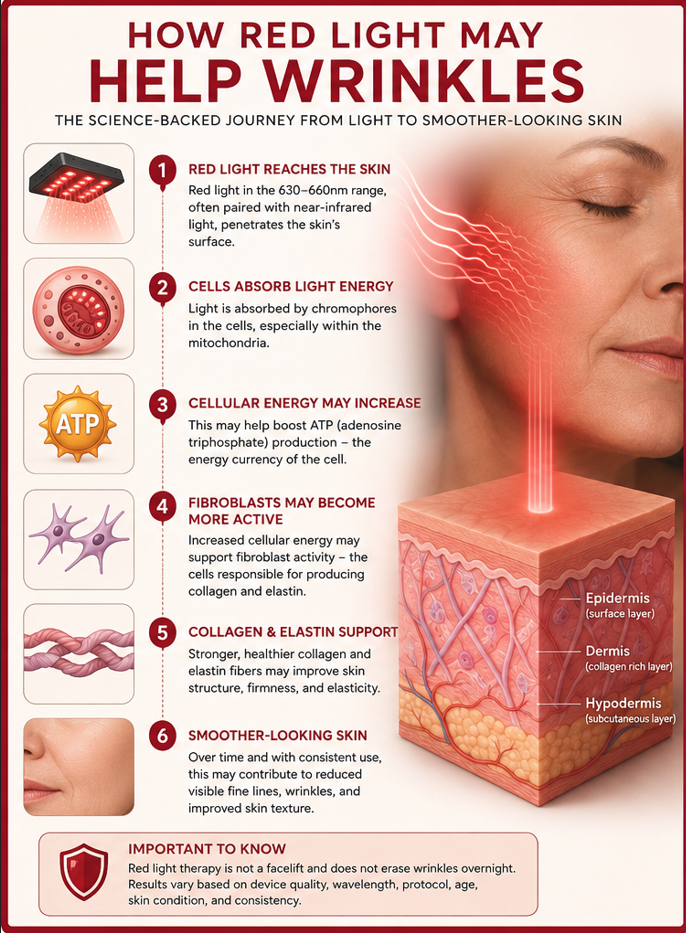
Researchers believe red light therapy works through a process known as photobiomodulation.
The proposed pathway looks like this:
Light Energy → Mitochondria → ATP Production → Fibroblast Activity → Collagen Support → Improved Skin Appearance
How Red Light May Help Wrinkles
Researchers continue investigating the exact biological pathways, but many studies focus on improvements in collagen structure, skin texture, elasticity, and wrinkle appearance.
Human Clinical Studies on Red Light Therapy and Wrinkles
Table 1: Human Red Light Wrinkle Study Database
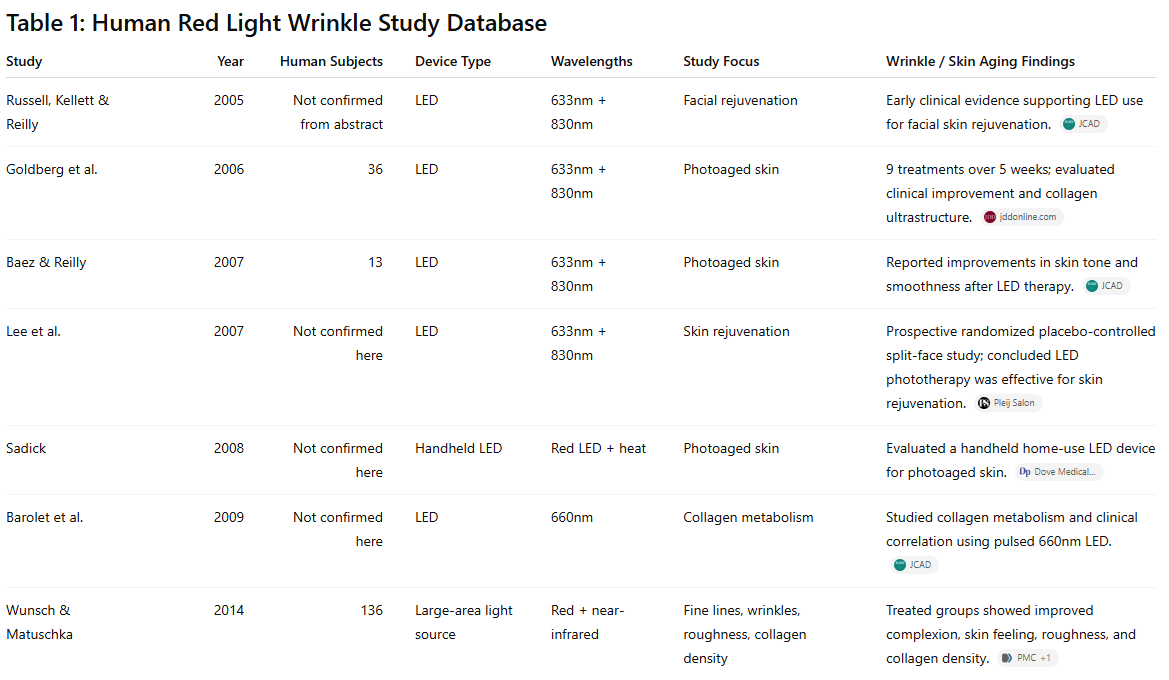
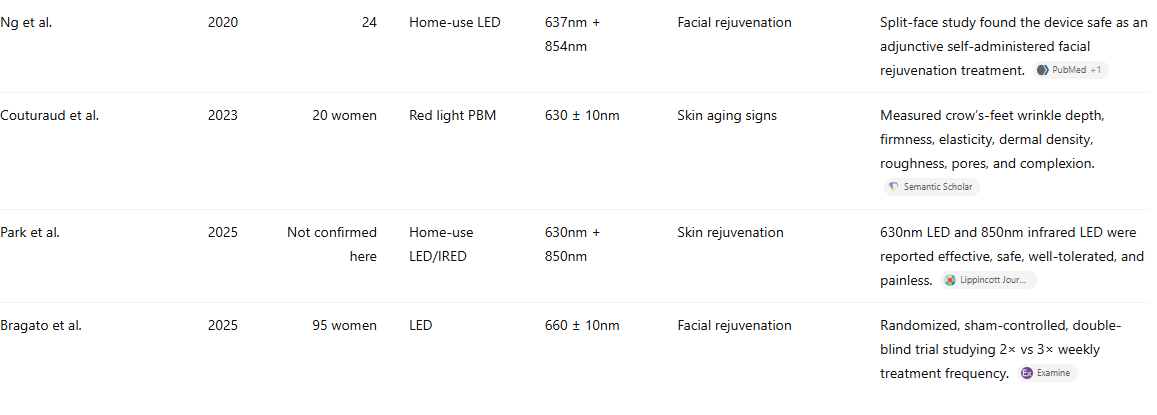
This database represents two decades of identified human wrinkle and photoaging research involving red and near-infrared light therapy.
Notably, researchers consistently evaluate:
Fine lines
Wrinkle depth
Skin roughness
Elasticity
Firmness
Collagen-related outcomes
Which Wavelengths Are Most Commonly Used for Wrinkles?
One of the most frequent questions consumers ask is:
What is the best red light wavelength for wrinkles?
Based on our study database:
Table 2: Wavelengths Used in Human Wrinkle Studies
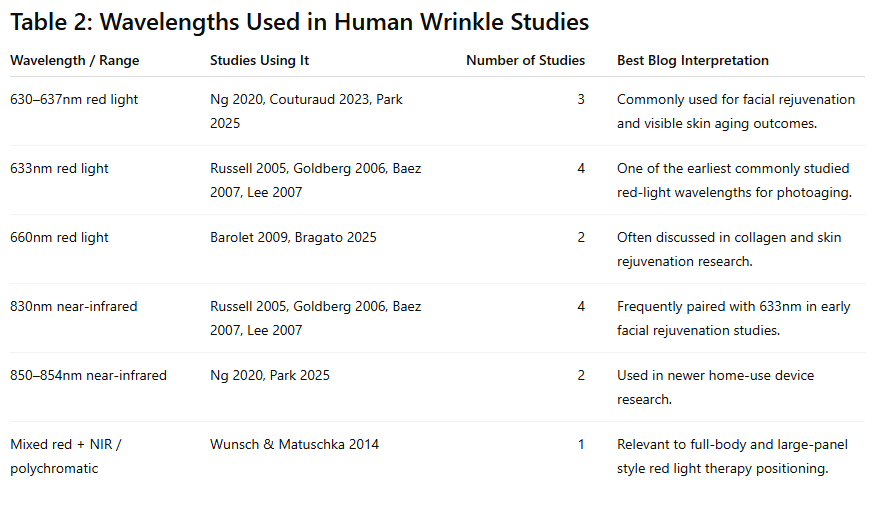
Chart 1: Number of Wrinkle Studies by Wavelength
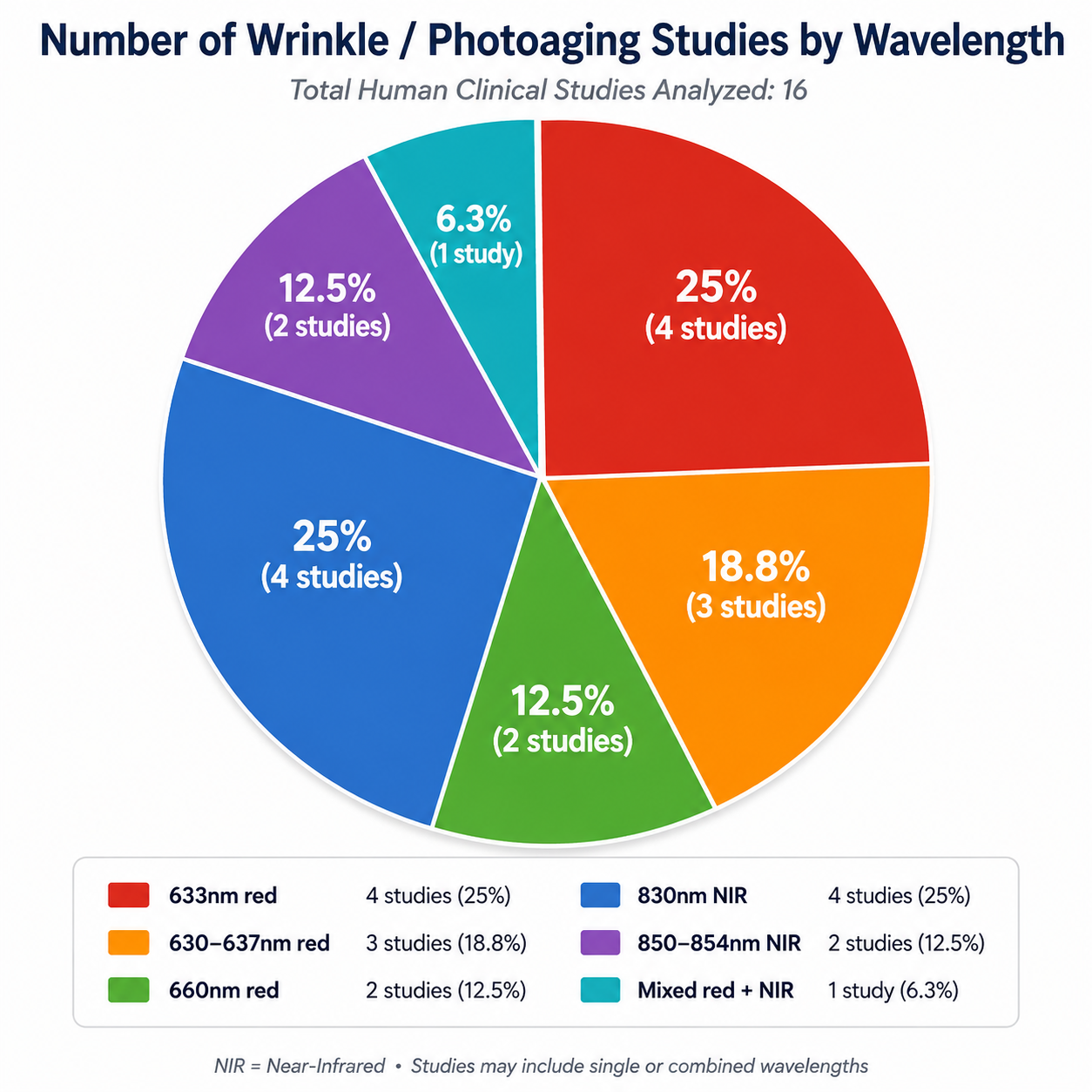
Key Insight
The most commonly studied combinations include:
633nm red light
830nm near-infrared light
More recent home-use studies increasingly use:
630nm red light
660nm red light
850nm near-infrared light
This is one reason many premium red light therapy panels include both red and near-infrared wavelengths rather than relying on a single wavelength.
How Long Does Red Light Therapy Take to Improve Wrinkles?
Consumers often expect rapid results.
The research suggests otherwise.
Table 3: Treatment Frequency and Duration by Study
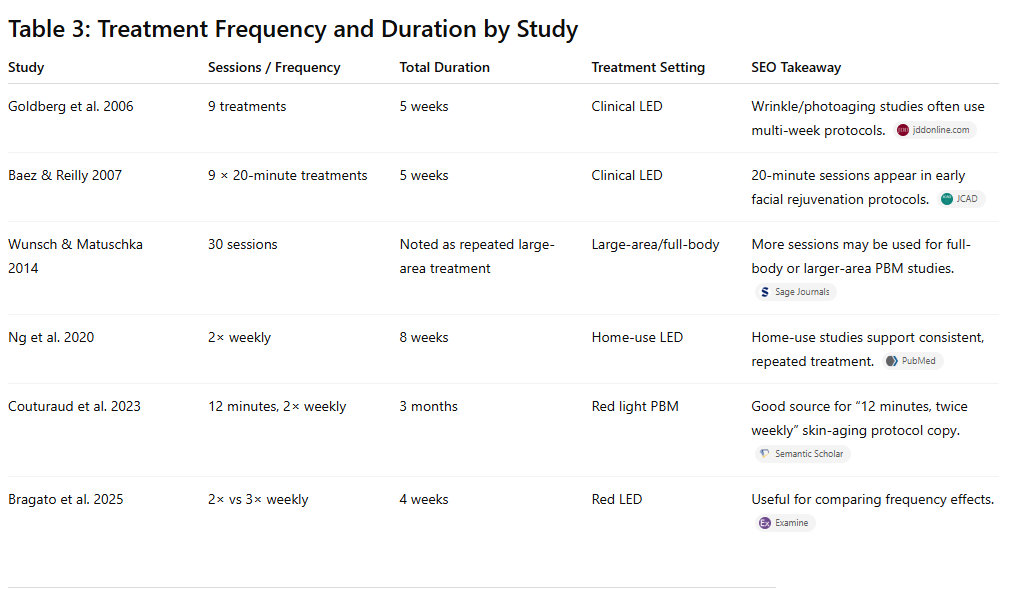
Chart 3: Study Duration vs Weekly Treatment Frequency
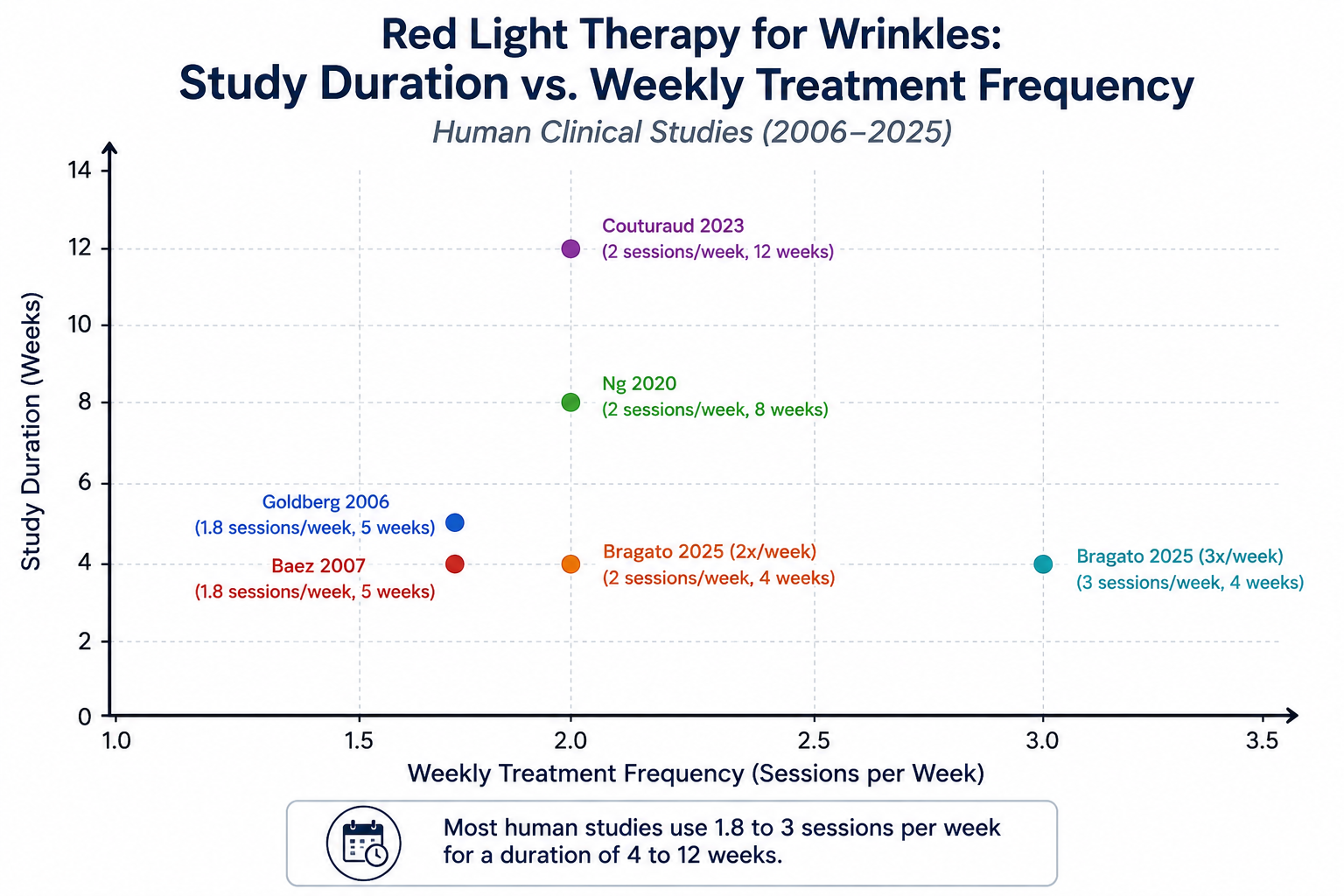
What the Data Suggests
Most wrinkle-focused studies use:
2–3 sessions weekly
4–12 week treatment periods
Repeated exposure over time
The evidence suggests that collagen-related changes accumulate gradually.
What Skin Improvements Are Reported Most Often?
Table 4: Measured Outcomes
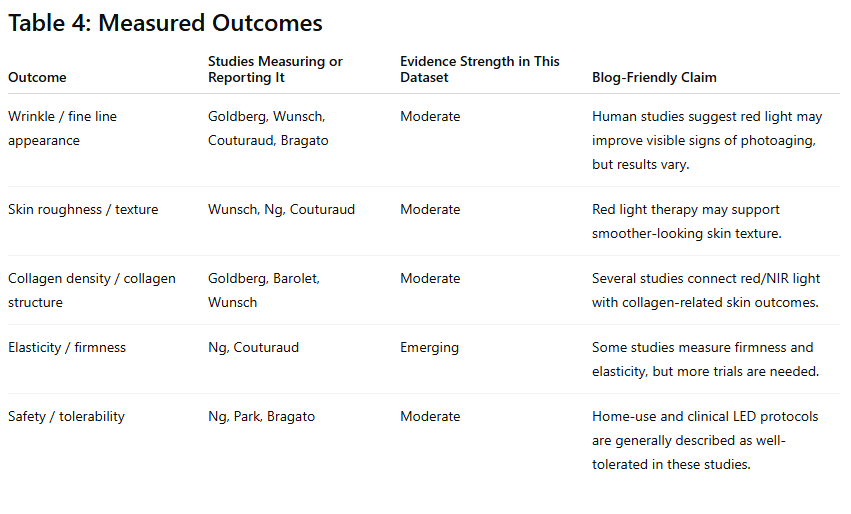
Chart 4: Outcomes Reported Across Human Studies
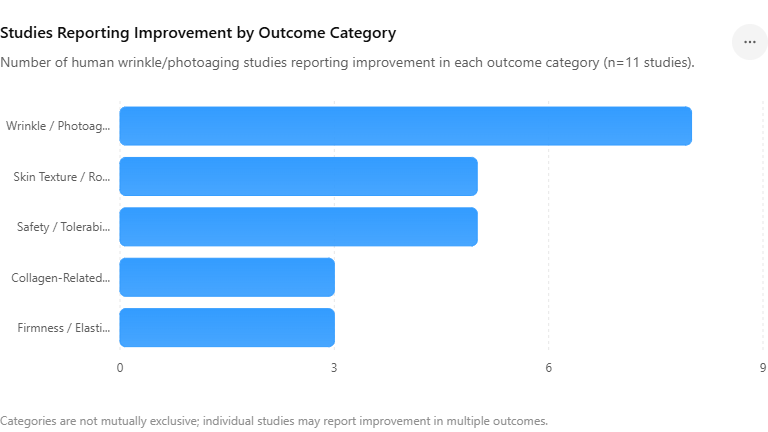
Most Commonly Reported Benefits
Human studies most frequently evaluate:
1. Wrinkle Appearance
Researchers often report improvements in visible wrinkle severity and photoaging scores.
2. Skin Texture
Many studies report smoother skin texture and reduced roughness.
3. Collagen-Related Outcomes
Several studies observed changes in collagen density or collagen-related biomarkers.
4. Elasticity and Firmness
Some studies measured improvements in elasticity and skin firmness, though more research is needed.
Timeline of Human Wrinkle Research
Chart 2: Human Red Light Therapy Wrinkle Studies (2005–2025)
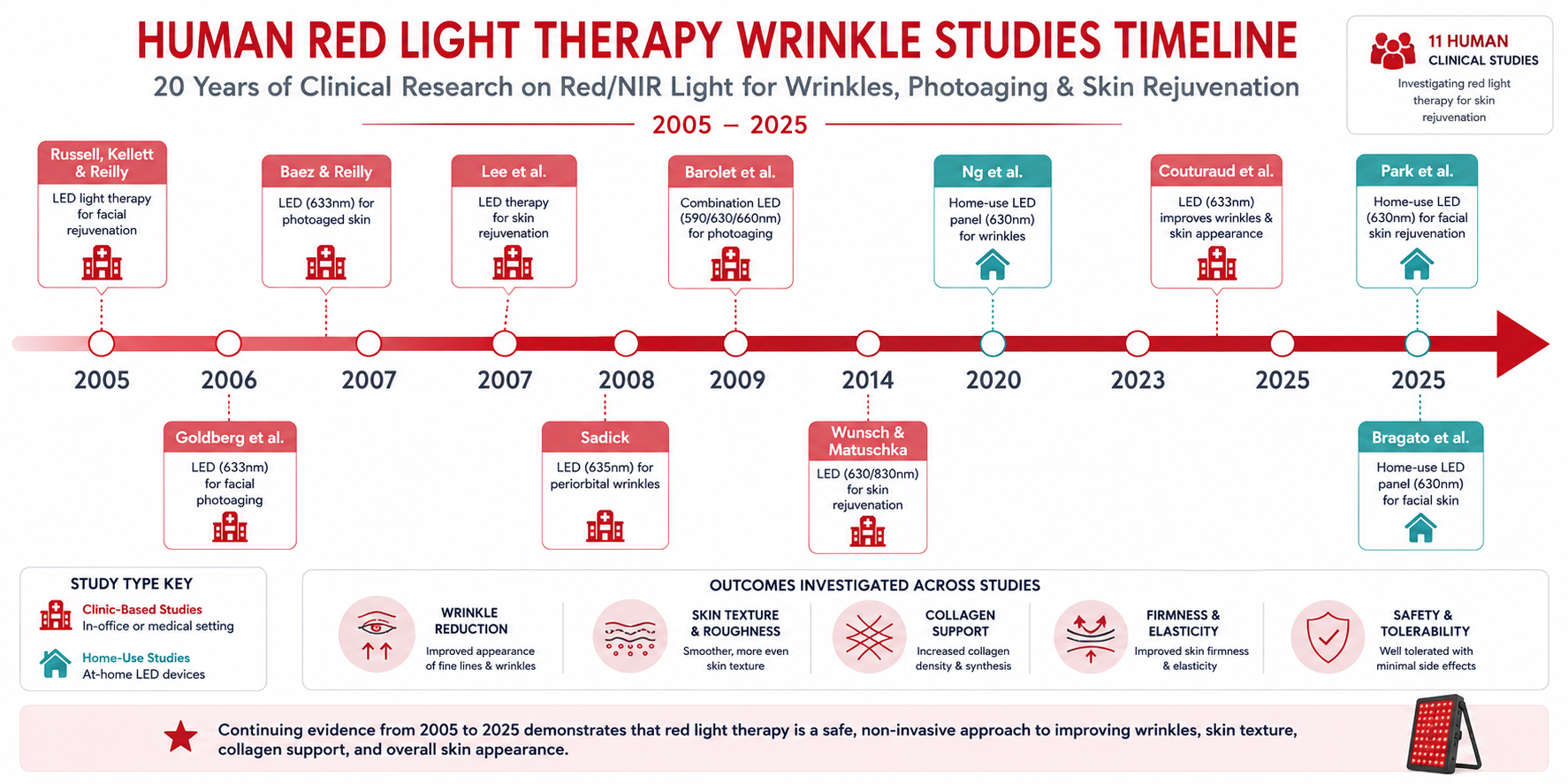
This timeline illustrates a growing body of evidence spanning more than two decades.
Interestingly, newer studies increasingly focus on home-use devices, making research more relevant to consumers purchasing personal red light therapy panels.
Clinic Treatments vs At-Home Red Light Therapy Panels
Table 5: Clinic LED vs At-Home Red Light Panel
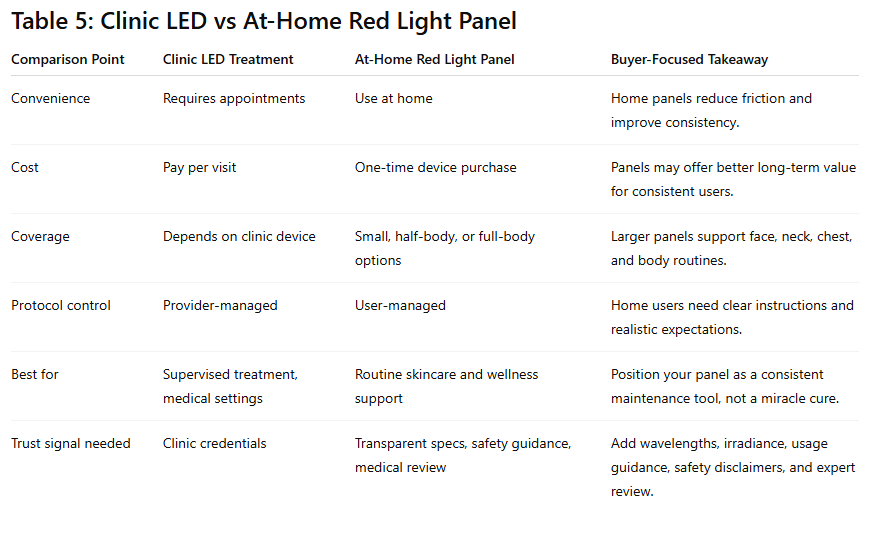
Why More Consumers Are Choosing Home Panels
Home systems provide:
Greater convenience
Better treatment consistency
Long-term cost efficiency
Full-face and full-body treatment options
Because most wrinkle studies require repeated treatments over multiple weeks, having a device available at home may improve adherence to evidence-based treatment schedules.
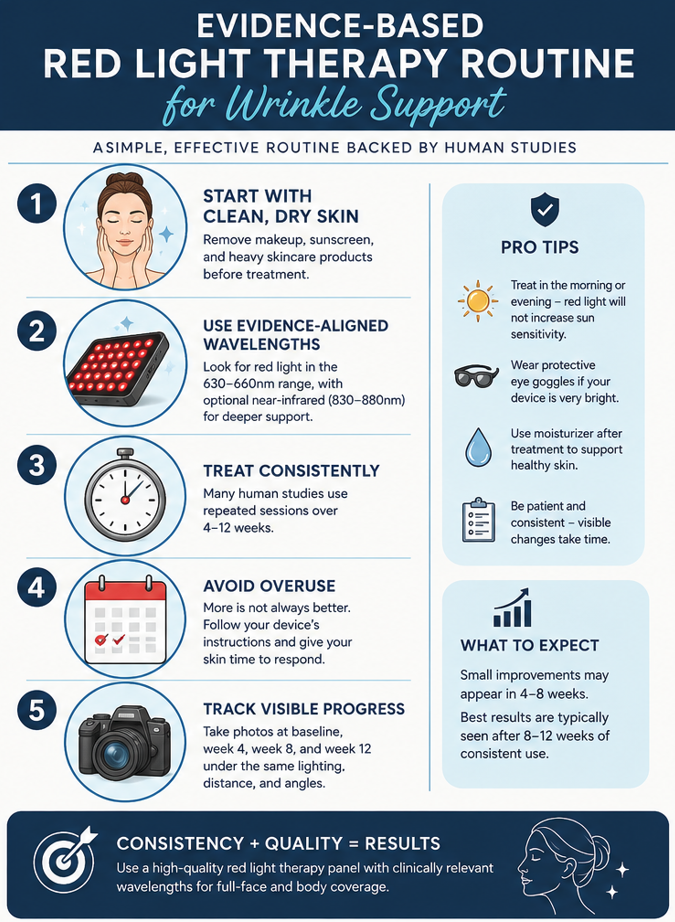
Evidence-Based Red Light Therapy Routine for Wrinkles
Evidence-Based Red Light Therapy Routine for Wrinkle Support
Research-Informed Routine
Begin with clean skin.
Use clinically relevant wavelengths.
Follow manufacturer guidelines.
Maintain consistency for at least 8–12 weeks.
Document progress using standardized photographs.
What This Research Does & Does Not Show
A trustworthy wrinkle article should discuss limitations.
Current evidence suggests red light therapy may support improvements in:
Fine lines
Wrinkle appearance
Skin texture
Elasticity
Photoaging markers
However, the research does not support claims that red light therapy:
Instantly removes wrinkles
Replaces cosmetic procedures
Produces identical results for everyone
Permanently reverses aging
Results vary depending on:
Age
Skin condition
Treatment consistency
Device quality
Wavelength selection
Overall health
How to Choose the Best Red Light Therapy Panel for Wrinkles
When evaluating devices, look for:
1. Clinically Relevant Wavelengths
Prioritize systems containing:
630–660nm red light
830–850nm near-infrared light
2. Adequate Coverage
Larger panels allow treatment of:
Face
Neck
Chest
Hands
Areas where wrinkles commonly develop.
3. Transparent Specifications
Choose manufacturers that publish:
Wavelengths
Treatment recommendations
Safety guidance
Irradiance information
4. Established Customer Support
Education and proper usage guidance matter.
Our Recommendation
If your goal is wrinkle support, collagen-focused skincare, and long-term skin maintenance, a high-quality red light therapy panel offers one of the most convenient ways to implement the treatment protocols used in many human studies.
Why Customers Choose Our Panels
✓ Clinically relevant red and near-infrared wavelengths
✓ Full-face and full-body treatment options
✓ Designed for consistent at-home use
✓ High-output LED technology
✓ Transparent specifications
✓ Expert educational support
Ready to Start?
Shop Professional-Grade Red Light Therapy Panels
Frequently Asked Questions
Does red light therapy reduce wrinkles?
Multiple human studies report improvements in wrinkle appearance and photoaging markers, though results vary.
What wavelength is best for wrinkles?
The most frequently studied wavelengths in wrinkle research include 633nm red light, 660nm red light, 830nm near-infrared light, and 850nm near-infrared light.
How long does it take to see results?
Most studies use protocols lasting between 4 and 12 weeks.
Can I use red light therapy every day?
Always follow the device manufacturer's instructions. More frequent treatment is not always better.
Is red light therapy safe?
Most clinical studies reviewed reported favorable safety and tolerability when devices were used appropriately.
For Additional Reading:
Check out our most popular blogs on red light therapy to save you time and money on your next purchase with Medford Red Light Therapy:
Scientific References
Russell BA, Kellett N, Reilly LR. A study to determine the efficacy of combination LED light therapy (633nm and 830nm) in facial skin rejuvenation.
Goldberg DJ, Amin S, Russell BA, Phelps R, Kellett N, Reilly LA. Combined 633nm and 830nm LED treatment of photoaging skin.
Baez F, Reilly LR. The use of LED therapy in the treatment of photoaged skin.
Lee SY et al. Prospective randomized placebo-controlled split-face clinical study of LED phototherapy for skin rejuvenation.
Lanzafame RJ, Blanche RR, Bodian AB, Chiacchierini RP, Fernandez-Obregon A, Kazmirek ER. The growth of human scalp hair mediated by visible red light laser and LED sources in males. Lasers Surg Med. 2013;45(8):487-495.
Lee SY, Park KH, Choi JW, et al. A prospective, randomized, placebo-controlled, double-blinded, and split-face clinical study on LED phototherapy for skin rejuvenation: clinical, profilometric, histologic, ultrastructural, and biochemical evaluations and comparison of three different treatment settings. J Photochem Photobiol B. 2007;88(1):51-67.
Almeida Issa MC, Piñeiro-Maceira J, Farias RE, Pureza M, Raggio Luiz R, Manela-Azulay M. Immunohistochemical expression of matrix metalloproteinases in photodamaged skin by photodynamic therapy. Br J Dermatol. 2009;161(3):647-653.
Barolet D et al. Regulation of skin collagen metabolism using pulsed 660nm LED light.
Wunsch A, Matuschka KA. Controlled trial of red and near-infrared light treatment on wrinkles and collagen density.
Ng JNC et al. Home-use 637nm and 854nm LED facial rejuvenation study.
Couturaud V et al. Reverse skin aging signs by red light photobiomodulation.
Park SH et al. Home-use LED and infrared LED phototherapies for skin rejuvenation.
Bragato M et al. Randomized sham-controlled facial rejuvenation trial using 660nm LED.
Calderhead RG. The photobiological basics behind light-emitting diode (led) phototherapy. Laser Ther. 2007;16(2):97-108.
Sorbellini E, Rucco M, Rinaldi F. Photodynamic and photobiological effects of light-emitting diode (LED) therapy in dermatological disease: an update. Lasers Med Sci. 2018;33(7):1431-1439.
Lee SY, You CE, Park MY. Blue and red light combination LED phototherapy for acne vulgaris in patients with skin phototype IV. Lasers Surg Med. 2007;39(2):180-188.
Horwitz LR, Burke TJ, Carnegie D. Augmentation of wound healing using monochromatic infrared energy. Exploration of a new technology for wound management. Adv Wound Care. 1999;12(1):35-40.
Russell BA, Kellett N, Reilly LR. A study to determine the efficacy of combination LED light therapy (633 nm and 830 nm) in facial skin rejuvenation. J Cosmet Laser Ther. 2005;7(3-4):196-200.
Kim SK, You HR, Kim SH, Yun SJ, Lee SC, Lee JB. Skin photorejuvenation effects of light-emitting diodes (LEDs): a comparative study of yellow and red LEDs in vitro and in vivo. Clin Exp Dermatol. 2016;41(7):798-805.
Wanitphakdeedecha R, Iamphonrat T, Phothong W, Eimpunth S, Manuskiatti W. Local and systemic effects of low-level light therapy with light-emitting diodes to improve erythema after fractional ablative skin resurfacing: a controlled study. Lasers Med Sci. 2019;34(2):343-351.
Tian YS, Kim NH, Lee AY. Antiphotoaging effects of light-emitting diode irradiation on narrow-band ultraviolet B-exposed cultured human skin cells. Dermatol Surg. 2012;38(10):1695-1703.
Hession MT, Markova A, Graber EM. A review of hand-held, home-use cosmetic laser and light devices. Dermatol Surg. 2015;41(3):307-320.
Britt CJ, Marcus B. Energy-based facial rejuvenation: advances in diagnosis and treatment. JAMA Facial Plast Surg. 2017;19(1):64-71.
Oh IY, Kim BJ, Kim MN, Kim CW, Kim SE. Efficacy of light-emitting diode photomodulation in reducing erythema after fractional carbon dioxide laser resurfacing: a pilot study. Dermatol Surg. 2013;39(8):1171-1176.
Alster TS, Wanitphakdeedecha R. Improvement of postfractional laser erythema with light-emitting diode photomodulation. Dermatol Surg. 2009;35(5):813-815.
Paolillo FR, Borghi-Silva A, Parizotto NA, Kurachi C, Bagnato VS. New treatment of cellulite with infrared-LED illumination applied during high-intensity treadmill training. J Cosmet Laser Ther. 2011;13(4):166-171.
Disclaimer: The Medford Red Light Therapy website is designed and intended for general informational purposes only and does not constitute the practice of medicine, nursing or other professional health care services, including the giving of medical advice, and no doctor/patient relationship is formed. The use of information on this website is at the user’s own risk. Results may vary by individual. The content of this website is not intended to be a substitute for professional medical advice, diagnosis, or treatment. Users should not disregard or delay in obtaining medical advice for any medical condition they may have and should seek the assistance of their health care professionals for any such conditions.
