Red Light Therapy for Muscle Recovery: Human Studies, Benefits & Best Protocols
Red Light Therapy for Muscle Recovery: Human Studies, Benefits, Best Wavelengths, and How to Use It
Quick Summary
Red light therapy, also called photobiomodulation therapy, has been studied in humans for muscle fatigue, soreness, strength recovery, and athletic performance.
Human studies commonly use red light, near-infrared light, low-level laser therapy, LED therapy, or combination devices.
The strongest evidence suggests PBMT may help reduce fatigue, improve recovery markers, support muscle performance, and reduce exercise-induced muscle damage in some settings.
Results vary depending on wavelength, dose, timing, muscle group, training status, and device type.
Near-infrared wavelengths around 808–850nm are especially relevant for muscle-focused applications.
A high-quality red light therapy panel may help active users apply recovery-focused light therapy more consistently at home.
What Is Red Light Therapy for Muscle Recovery?
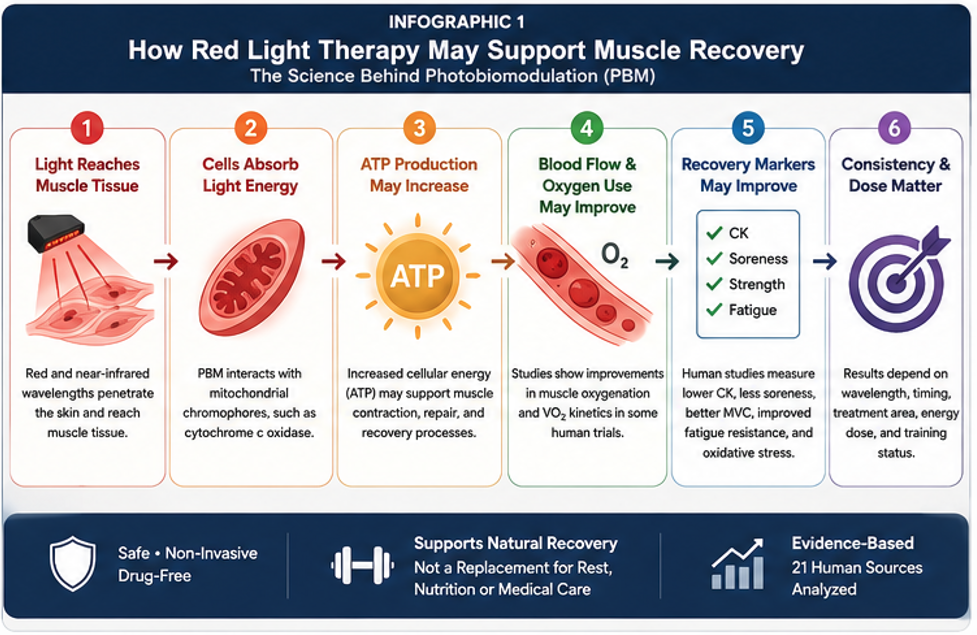
Red light therapy for muscle recovery uses red and near-infrared light to stimulate biological processes involved in energy production, blood flow, fatigue resistance, and tissue recovery.
In scientific literature, this is usually called photobiomodulation therapy, or PBMT.
Unlike heat lamps or tanning devices, red light therapy does not rely on UV light. Instead, it uses specific therapeutic wavelengths of light that may interact with cells and mitochondria.
Researchers have studied PBMT in:
Strength training
Eccentric exercise
Cycling
Running
Rugby
Volleyball
Delayed onset muscle soreness
Post-exercise recovery
Muscle performance
How Red Light Therapy May Help Muscles Recover
The proposed mechanism begins with light absorption inside cells.
Near-infrared and red light may interact with mitochondrial chromophores, supporting cellular energy production and oxygen use. In exercise studies, researchers have examined ATP-related pathways, oxidative stress, creatine kinase, blood lactate, muscle oxygenation, and fatigue resistance.
Human Research on Red Light Therapy and Muscle Recovery
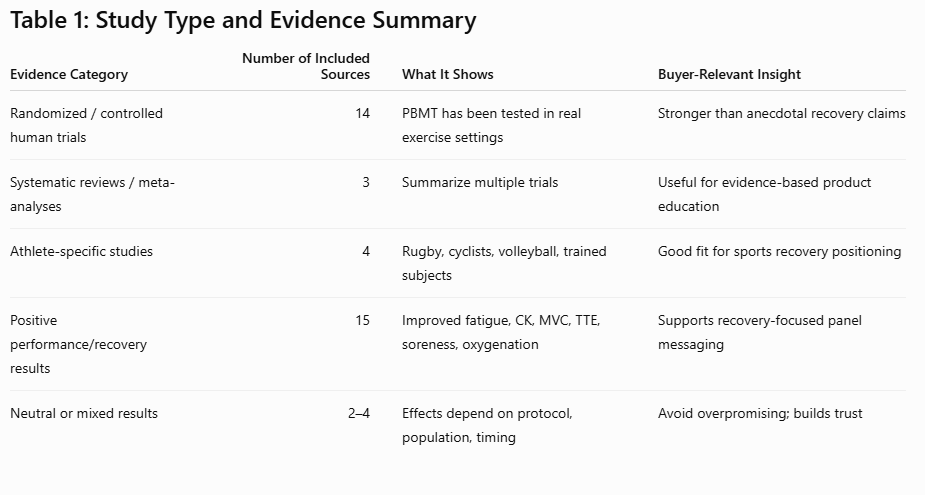
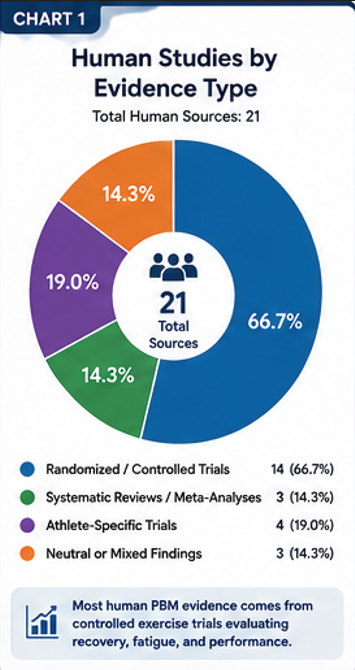
The human literature includes controlled trials, athlete studies, and systematic reviews.
A 2018 systematic review and meta-analysis found that PBMT was associated with improved muscular performance and reduced exercise-related fatigue in healthy people.
A 2021/2022 meta-analysis reported that low-level laser therapy applied before exercise significantly improved lower-limb strength at multiple follow-up points and was associated with decreased soreness, CK, IL-6, and oxidative stress markers.
What Do Human Studies Measure?
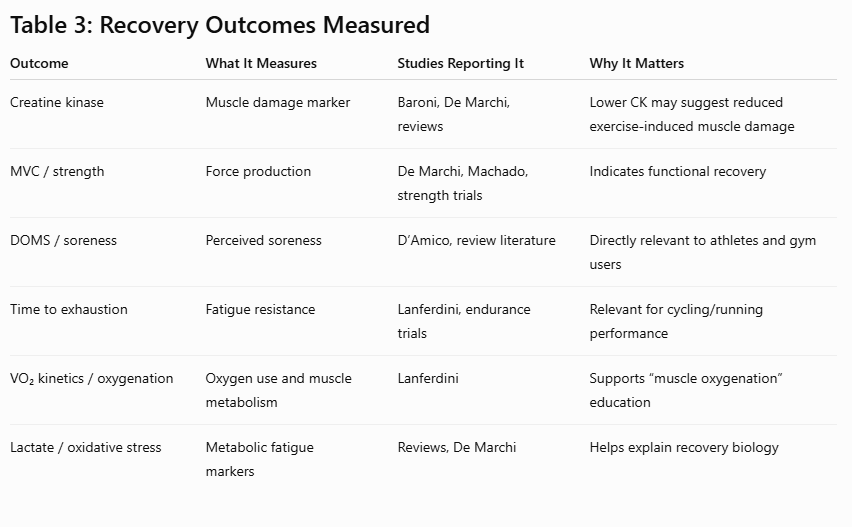
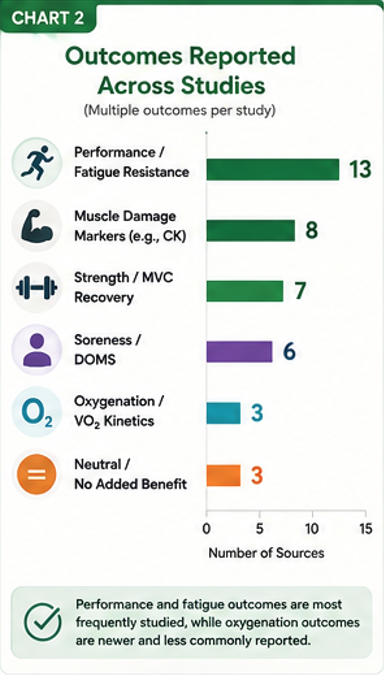
Muscle recovery is not one single outcome. Studies often measure multiple markers.
Common outcomes include:
Muscle soreness
Creatine kinase
Maximal voluntary contraction
Time to exhaustion
Lactate
Oxidative stress
VO₂ kinetics
Muscle oxygenation
Perceived recovery
Does Red Light Therapy Reduce Muscle Soreness?
Some human trials and reviews suggest PBMT may reduce post-exercise soreness or markers associated with delayed onset muscle soreness.
In one randomized, double-blind, placebo-controlled trial, De Marchi et al. compared PBMT, cryotherapy, combination therapies, and placebo after a high-intensity fatigue protocol. The PBMT-related groups showed better MVC recovery and lower CK or oxidative damage markers than placebo, and the authors concluded phototherapy was more effective than cryotherapy for muscle recovery in that protocol.
However, not every study shows added benefit. In a 2022 randomized placebo-controlled trial in trained men, PBM added during a six-week combined sprint and squat program did not produce additional benefits compared with placebo or control.
This is why the most accurate claim is:
Red light therapy may support muscle recovery in some exercise settings, but outcomes depend heavily on protocol, dose, timing, and training status.
Does Red Light Therapy Improve Athletic Performance?
Several human studies suggest PBMT may improve fatigue resistance or performance.
In trained cyclists, PBMT applied before three successive time-to-exhaustion tests increased performance in the first and second tests by about 10–12%, improved VO₂ and deoxyhemoglobin kinetics, and increased peripheral muscle oxygenation in the first and second exhaustion tests.
In high-level rugby players, PBMT was studied during an anaerobic field test and was reported to improve performance and recovery outcomes.
Best Wavelengths for Muscle Recovery
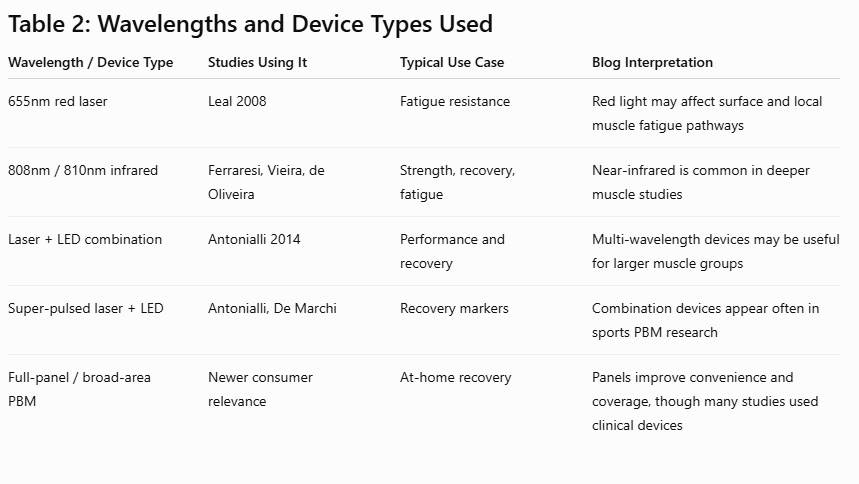
Many muscle-focused PBMT studies use near-infrared light because deeper penetration is important when targeting muscle tissue.
Commonly studied wavelength categories include:
655nm red light
808nm near-infrared
810nm near-infrared
Mixed red + infrared LED/laser systems
Super-pulsed laser + LED combinations
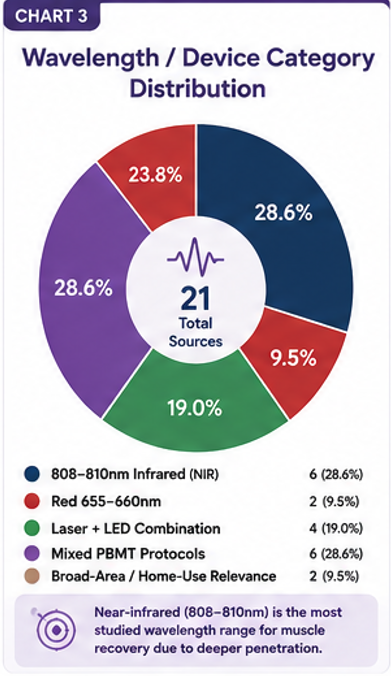
For at-home users, a red light therapy panel that includes both red and near-infrared wavelengths may be more versatile than a red-only device.
When Should You Use Red Light Therapy for Recovery?
Human studies use several timing strategies:
Before exercise
After exercise
During a training program
Before vs after comparison protocols
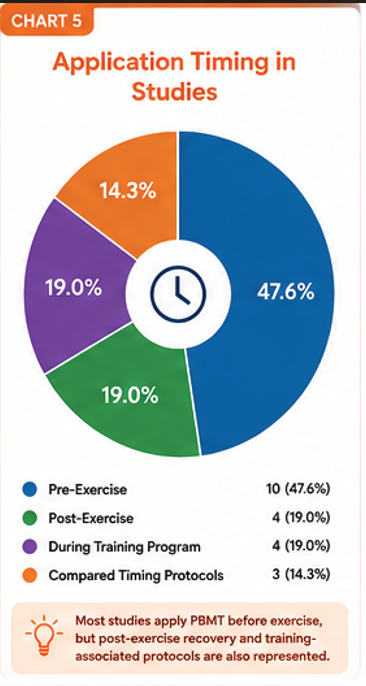
Most performance-oriented studies apply PBMT before exercise, while recovery-oriented users often use red light therapy after training.
For real-world home use, many active adults use red light therapy:
After strength training
After endurance workouts
On rest days
Before demanding training sessions
As part of a mobility or recovery routine
Evidence-Based At-Home Recovery Routine
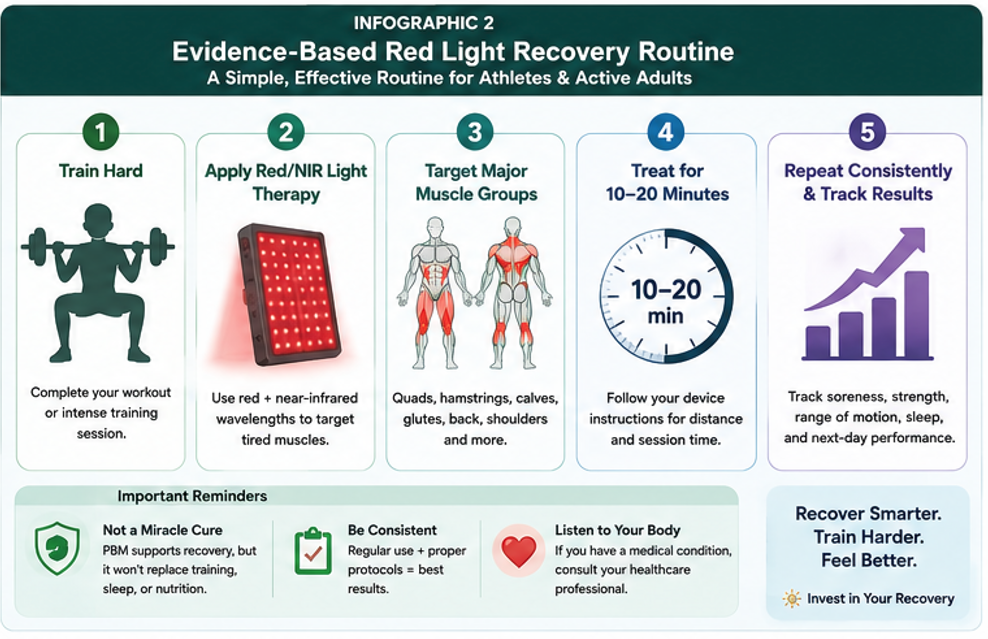
A practical recovery routine may include:
Target the trained muscle group.
Use red + near-infrared light.
Treat for 10–20 minutes depending on device instructions.
Use consistently after hard sessions.
Track soreness, performance, sleep, and mobility.
Always follow your device’s official guidance and consult your medical professional.
Red Light Therapy Panel vs Small Handheld Device for Muscles
For muscle recovery, coverage matters.
A small handheld device may be useful for a localized area, but larger panels are more practical for:
Quads
Hamstrings
Glutes
Calves
Back
Shoulders
Full-body recovery routines
This is where a high-output red light therapy panel becomes more useful for athletes and active households.
How to Choose the Best Red Light Therapy Panel for Muscle Recovery
Look for:
1. Red + Near-Infrared Wavelengths
Choose a panel with red and NIR wavelengths, especially near-infrared in the 808–850nm range.
2. Adequate Coverage
Muscle recovery often requires treating large areas. A panel saves time compared with tiny spot devices.
3. Transparent Specifications
Look for published wavelength, irradiance, treatment distance, and safety guidance.
4. Consistent Home Use
A device you can use regularly is more valuable than an expensive clinic session you rarely schedule.
5. Safety and Support
Choose a brand with clear instructions, warranty, customer education, and responsive support.
Who Should Be Cautious?
Ask a healthcare professional before use if you:
Have a serious medical condition
Use photosensitizing medications
Have a history of light sensitivity
Are pregnant
Have unexplained pain, swelling, or injury
Have an acute injury that needs diagnosis
Red light therapy should not replace medical care, physical therapy, proper recovery, sleep, or nutrition.
Our Recommendation
For muscle recovery, choose a panel that gives you:
Broad muscle coverage
Red + near-infrared wavelengths
Clear dosing instructions
High-quality LEDs
Consistent treatment convenience
Ready to Upgrade Your Recovery Routine?
Shop Professional Red Light Therapy Panels
FAQ
Does red light therapy help muscle recovery?
Human studies suggest PBMT may support muscle recovery, fatigue resistance, soreness reduction, and performance in some protocols, but results vary.
Is red light therapy better before or after exercise?
Many performance studies use PBMT before exercise, while recovery users often apply it after workouts. Some studies compare timing directly.
What wavelength is best for muscle recovery?
Near-infrared wavelengths around 808–850nm are common in muscle-focused studies because NIR penetrates deeper than visible red light.
Can red light therapy reduce soreness?
Some studies report reduced soreness or improved recovery markers, but not all studies show benefit.
Is a red light panel good for athletes?
A panel can be useful because it covers larger muscle groups more efficiently than handheld devices.
For Additional Reading:
Check out our most popular blogs on red light therapy to save you time and money on your next purchase with Medford Red Light Therapy:
Scientific References
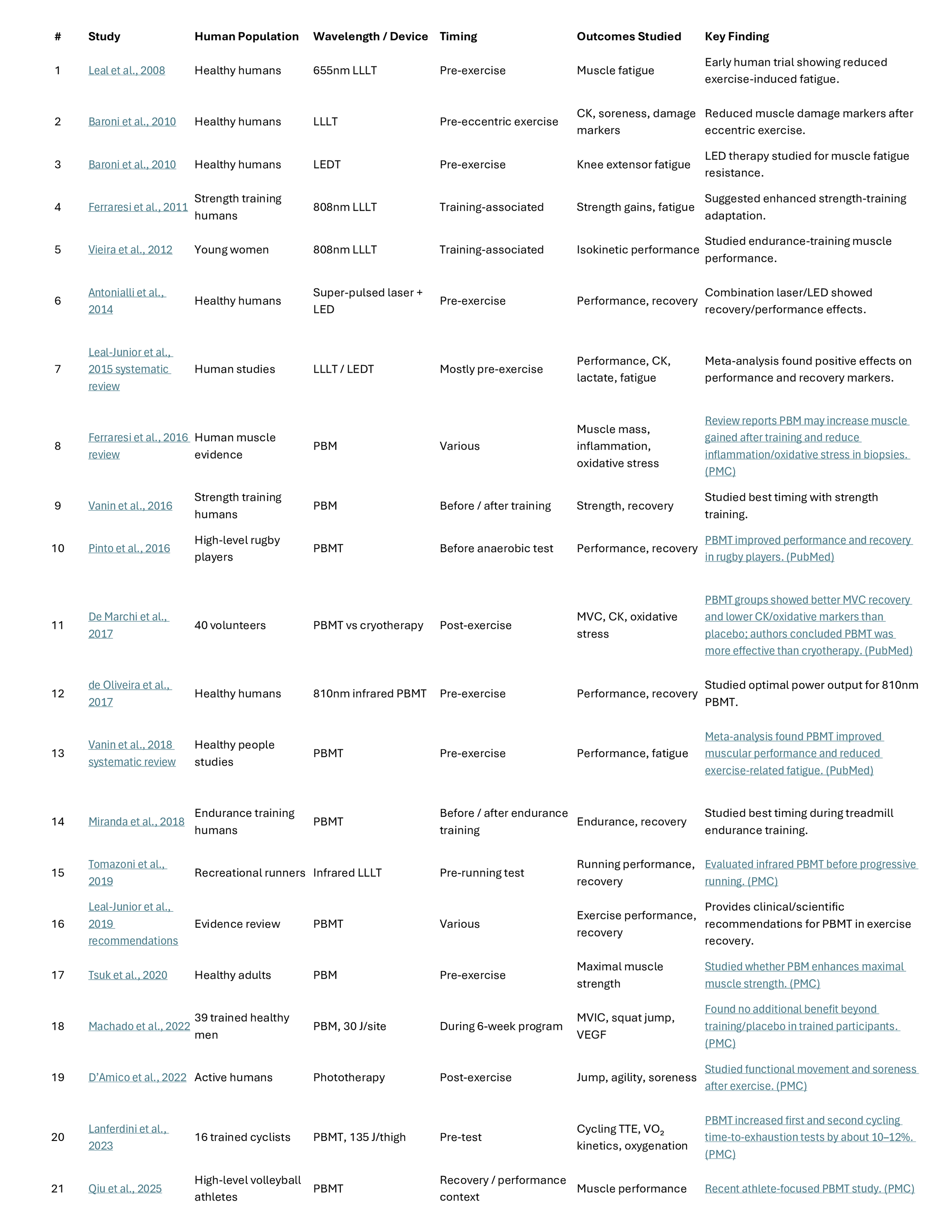
Leal ECP, Lopes-Martins RAB, Dalan F, et al. Effect of 655-nm low-level laser therapy on exercise-induced skeletal muscle fatigue in humans. Photomedicine and Laser Surgery. 2008;26(5):419–424.
Baroni BM, Leal Junior ECP, De Marchi T, Lopes AL, Salvador M, Vaz MA. Low level laser therapy before eccentric exercise reduces muscle damage markers in humans. European Journal of Applied Physiology. 2010;110(4):789–796.
Baroni BM, Leal ECP, Geremia JM, Diefenthaeler F, Vaz MA. Effect of light-emitting diodes therapy on knee extensor muscle fatigue. Photomedicine and Laser Surgery. 2010;28(5):653–658.
Ferraresi C, de Brito Oliveira T, de Oliveira Zafalon L, et al. Effects of low-level laser therapy (808 nm) on physical strength training in humans. Lasers in Medical Science. 2011;26(3):349–358.
De Brito Vieira WH, Ferraresi C, De Andrade Perez SE, Baldissera V, Parizotto NA. Effects of low-level laser therapy (808 nm) on isokinetic muscle performance of young women submitted to endurance training. Lasers in Medical Science. 2012;27(2):497–504.
Antonialli FC, De Marchi T, Tomazoni SS, et al. Phototherapy in skeletal muscle performance and recovery after exercise: effect of combination of super-pulsed laser and light-emitting diodes. Lasers in Medical Science. 2014;29(6):1967–1976.
Leal-Junior ECP, Vanin AA, Miranda EF, de Carvalho PTC, Dal Corso S, Bjordal JM. Effect of phototherapy on exercise performance and markers of exercise recovery: a systematic review with meta-analysis. Lasers in Medical Science. 2015;30(2):925–939.
Ferraresi C, Huang YY, Hamblin MR. Photobiomodulation in human muscle tissue. Photomedicine and Laser Surgery. 2016.
Vanin AA, Miranda EF, Machado CSM, et al. What is the best moment to apply phototherapy when associated to a strength training program? Lasers in Medical Science. 2016;31(8):1555–1564.
Pinto HD, et al. Photobiomodulation therapy improves performance and recovery of high-level rugby players. 2016.
De Marchi T, et al. Does photobiomodulation therapy is better than cryotherapy in muscle recovery after a high-intensity exercise? Lasers in Medical Science. 2017;32(2):429–437.
de Oliveira AR, Vanin AA, Tomazoni SS, et al. Pre-exercise infrared photobiomodulation therapy (810 nm) in skeletal muscle performance and postexercise recovery in humans. Photomedicine and Laser Surgery. 2017;35(11):595–603.
Vanin AA, Verhagen E, Barboza SD, Costa LOP, Leal-Junior ECP. Photobiomodulation therapy for muscular performance and fatigue reduction in healthy people: systematic review and meta-analysis. Lasers in Medical Science. 2018;33(1):181–214.
Miranda EF, Tomazoni SS, de Paiva PRV, et al. Best moment to apply PBMT with treadmill endurance training. Lasers in Medical Science. 2018;33(4):719–727.
Tomazoni SS, et al. Infrared low-level laser therapy before progressive running test. 2019.
Leal-Junior ECP, Lopes-Martins RAB, Bjordal JM. Clinical and scientific recommendations for PBMT in exercise performance and post-exercise recovery. Brazilian Journal of Physical Therapy. 2019;23(1):71–75.
Tsuk S, et al. Does photobiomodulation therapy enhance maximal muscle strength? 2020.
Machado AF, et al. Photobiomodulation therapy applied during an exercise-training program does not promote additional effects in trained individuals. Brazilian Journal of Physical Therapy. 2022.
D’Amico A, et al. Influence of phototherapy on recovery from exercise-induced muscle damage. 2022. PBMT
Lanferdini FJ, et al. Effects of PBMT on successive cycling time-to-exhaustion tests. 2023.
Qiu D, et al. Effect of photobiomodulation therapy on muscle performance and recovery in high-level volleyball athletes. 2025. (PMC)
Disclaimer: The Medford Red Light Therapy website is designed and intended for general informational purposes only and does not constitute the practice of medicine, nursing or other professional health care services, including the giving of medical advice, and no doctor/patient relationship is formed. The use of information on this website is at the user’s own risk. Results may vary by individual. The content of this website is not intended to be a substitute for professional medical advice, diagnosis, or treatment. Users should not disregard or delay in obtaining medical advice for any medical condition they may have and should seek the assistance of their health care professionals for any such conditions.
