Red Light Therapy for Skin Health
What Human Studies Show About Wrinkles, Acne, Healing, and Skin Rejuvenation
Red light therapy has become one of the most talked-about tools in modern skincare.
From wrinkle-focused LED facials to at-home red light panels, it is often promoted for smoother skin, better tone, fewer breakouts, faster healing, and healthier aging. But not every online claim is equally supported by science.
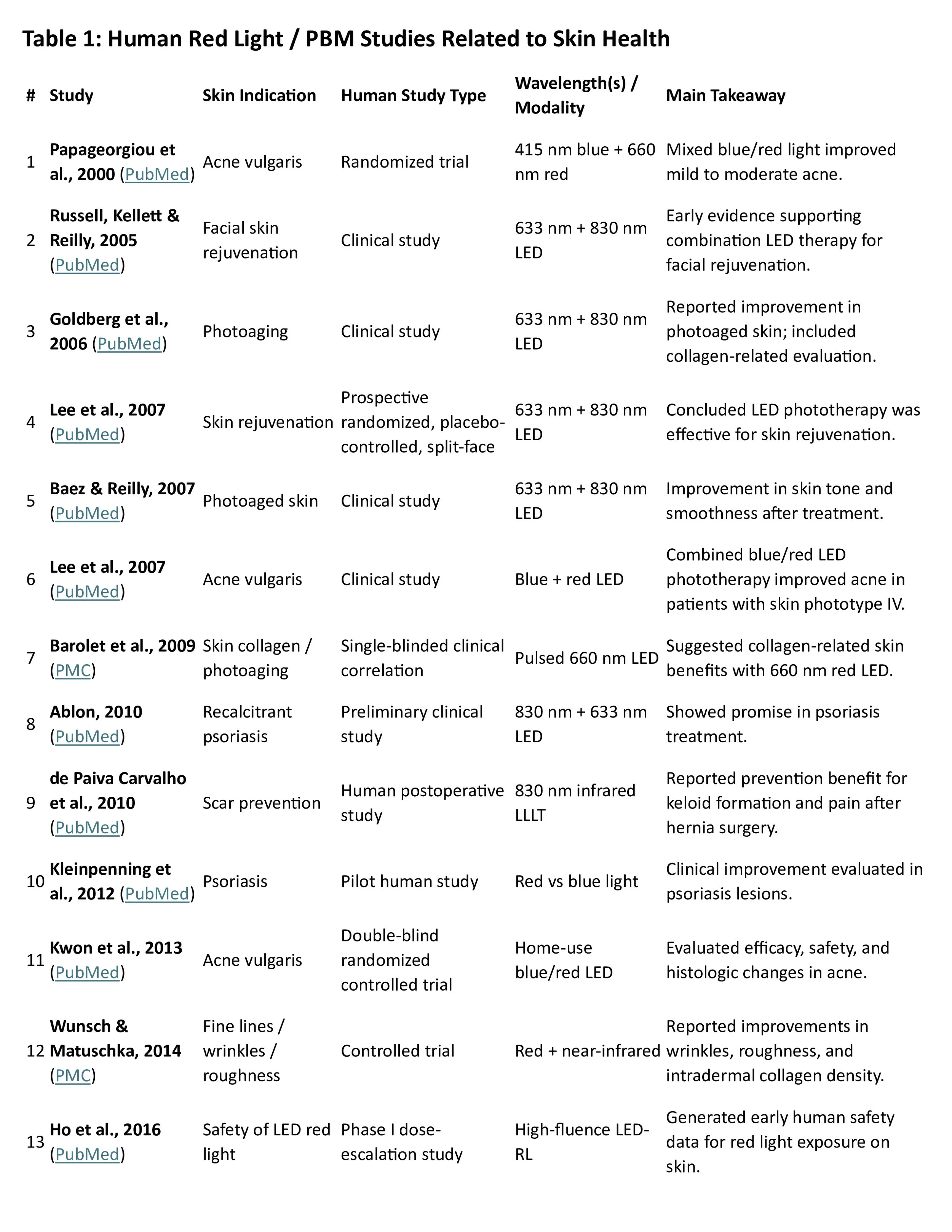
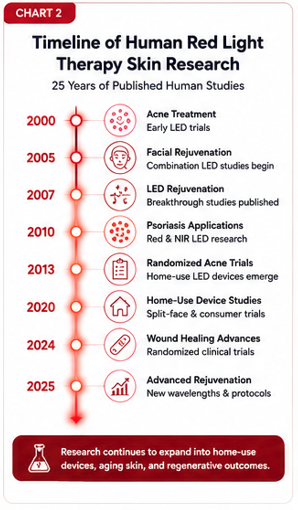
To separate the hype from the evidence, we reviewed identified human clinical studies on red light therapy and skin health spanning 2000 through 2025. Across these studies, the strongest consumer-facing evidence clusters around photoaging / skin rejuvenation, while acne, wound healing, scarring, and psoriasis also have human data—though the quality and consistency of evidence vary by condition.
Quick Takeaways
Human studies suggest red light therapy may help improve wrinkles, fine lines, skin texture, and visible photoaging
There is also human evidence for acne support, scar management, and wound healing
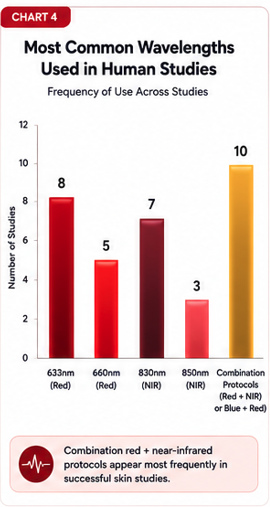
Frequently studied wavelengths include 633 nm, 660 nm, 830 nm, 850 nm, and red + near-infrared combinations
Several newer studies support the use of home-use LED devices for facial rejuvenation
Results are typically gradual, not immediate
Safety data are encouraging, but expectations should stay realistic and medically responsible
What Is Red Light Therapy?
Red light therapy, also called photobiomodulation (PBM), uses specific wavelengths of visible red light and sometimes near-infrared light to influence biological processes in the skin.
Researchers believe these wavelengths may support:
cellular energy production
fibroblast activity
collagen-related processes
inflammation regulation
tissue repair and wound healing
In dermatology, red light and related LED modalities have been studied for photoaging, acne, scars, wound healing, and inflammatory skin conditions.
How Red Light Therapy May Help Skin
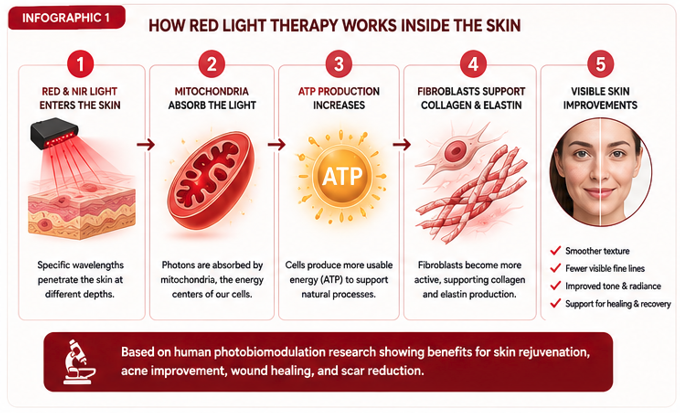
The proposed mechanism is straightforward:
Red / Near-Infrared Light → Mitochondria → ATP Support → Fibroblast Activity → Collagen Support → Healthier-Looking Skin
This mechanism is one reason red light therapy is commonly associated with skin rejuvenation and recovery-focused skincare. Several reviews describe PBM as a promising non-invasive approach for skin rejuvenation, scar reduction, acne, and wound healing, though they also emphasize the need for protocol standardization and more high-quality trials.
What are the Benefits of Using Red Light Therapy for Skin Health?
Short answer — yes: red light therapy (photobiomodulation) can benefit skin health, but the size of the benefit depends on wavelength, dose, treatment frequency, and the specific condition. Key, evidence-backed effects are:
Skin Health: stimulates fibroblasts and increases collagen and elastin production, which can reduce fine lines and improve skin texture and elasticity; it also supports wound healing and may help certain inflammatory skin conditions.
Mechanism and Safety Summary: light in red (≈630–660 nm) and near‑infrared (≈800–850+ nm) is absorbed by mitochondria-driven chromophores, boosting cellular energy and modulating inflammation; therapy is generally noninvasive and well tolerated but is not a miracle cure and requires appropriate dosing.
Practical takeaways:
Wavelength Matters: shorter red wavelengths are effective for skin-surface effects; near‑infrared penetrates deeper for muscle/tendon.
Dose & Consistency Matter: many trials used repeated sessions (multiple times/week) over weeks to months to show measurable skin or performance changes.
Limitations: study quality and protocols vary; some trials show mixed or underdosed results, so individual outcomes can differ. Always combine RLT with standard care (sun protection, rehab, etc.). (medicalnewstoday.com)
What the Human Research Shows
1) Red Light Therapy for Wrinkles and Photoaging
This is the best-supported cosmetic application in the human literature we identified.
Multiple human studies on facial rejuvenation report improvements in:
fine lines
wrinkle appearance
skin tone
smoothness
roughness
collagen-related outcomes
Early studies using 633 nm + 830 nm LED helped establish the photoaging evidence base, while more recent studies—such as the 637/854 nm home-use split-face study and newer 630/850 nm home-use research—suggest that consumer-friendly devices can also support facial rejuvenation.
2) Red Light Therapy for Acne
The acne evidence is meaningful but more mixed.
Human trials show that:
blue + red LED combinations may improve acne lesions
red light may perform similarly to blue light in some mild-to-moderate acne settings
red light may have fewer adverse reactions than blue light in at least one randomized study
However, systematic reviews on acne light therapy note that evidence quality is variable and long-term data are limited. That means acne is a reasonable use case to discuss, but not one to oversell.
3) Red Light Therapy for Wound Healing and Scarring
A growing number of human studies support red light and near-infrared light for:
post-surgical scarring
wound healing
diabetic foot ulcers
postoperative swelling and pain
This is especially relevant for “skin recovery” framing. Human data show promising results, though clinical context matters and wound care should remain medically supervised when appropriate.
4) Psoriasis and Other Dermatologic Conditions
There are also human psoriasis studies, including work with 830/633 nm LED and red-vs-blue light comparisons. These studies suggest potential utility, though psoriasis treatment claims should remain conservative and medically framed.
Which Wavelengths Are Most Relevant for Skin?
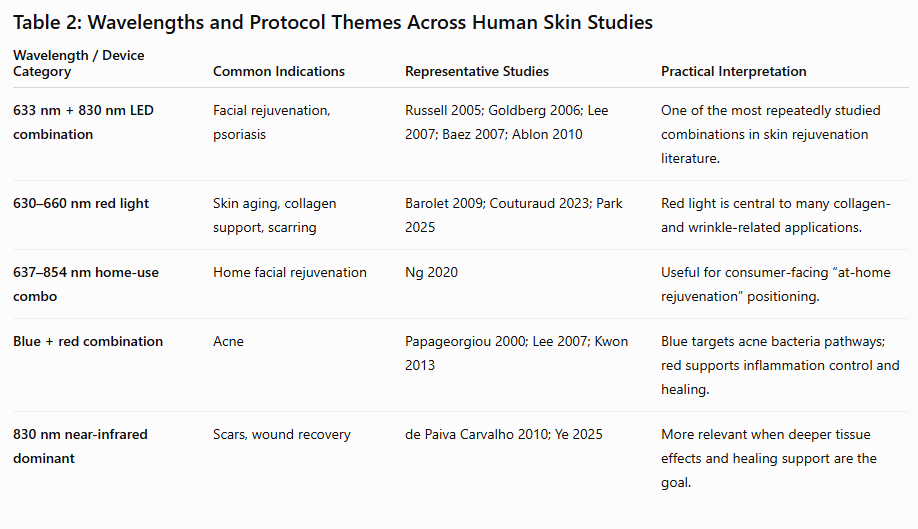
Based on the identified studies, the most common wavelength patterns include:
633 nm + 830 nm
630–660 nm red
637/854 nm
630/850 nm
blue + red combinations for acne
These are not interchangeable in all use cases. For example:
red light is especially relevant for photoaging and visible skin rejuvenation
blue + red is more common in acne protocols
near-infrared often shows up in healing, scarring, and combination rejuvenation protocols
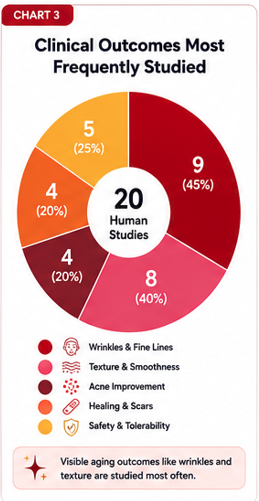
Which Skin Outcomes Are Studied Most Often?
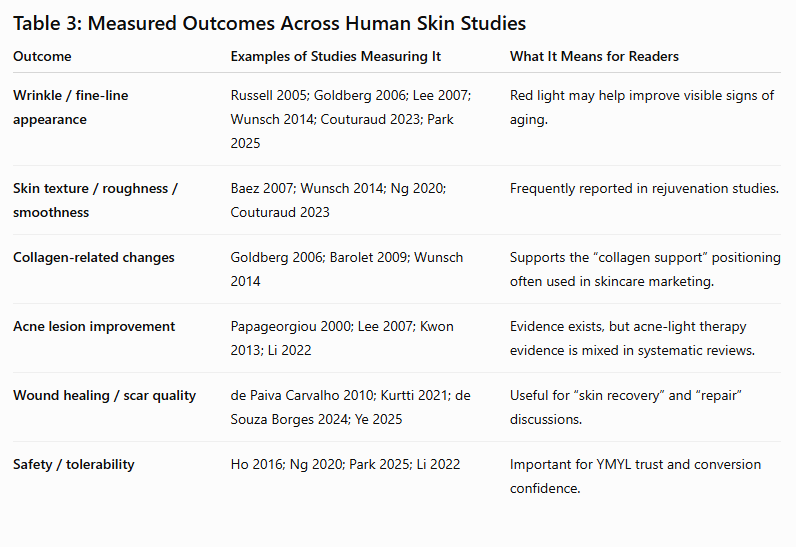
Human skin PBM research most often measures:
wrinkle appearance
skin texture
collagen-related markers
acne lesion counts
scar or wound healing metrics
tolerability and safety
How Long Does Red Light Therapy Take to Work?
Red light therapy is usually not an overnight treatment.
Many skin studies use:
repeated sessions
multi-week protocols
follow-up timeframes of 4–12 weeks or more
This matters commercially. If your website sells panels, one of the most trustworthy conversion angles is to explain that consistent use matters more than miracle promises. That aligns better with both medical authority signals and Google’s people-first content expectations.
Clinic Treatments vs At-Home Red Light Panels
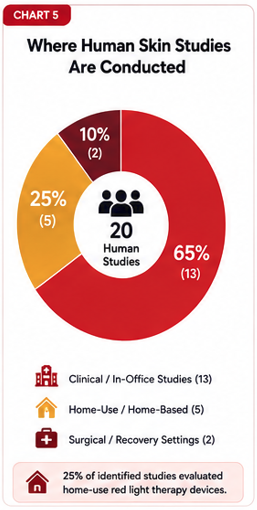
One of the most useful consumer takeaways from this research is that home-use devices are now represented in the literature, especially for facial rejuvenation. That gives you a strong bridge from scientific evidence to product consideration.
Benefits of Home Red Light Therapy Panels
convenience
consistency
no appointment barriers
better long-term value than repeated office visits
wider treatment coverage for face, neck, chest, and body
A Practical Red Light Routine for Skin Health
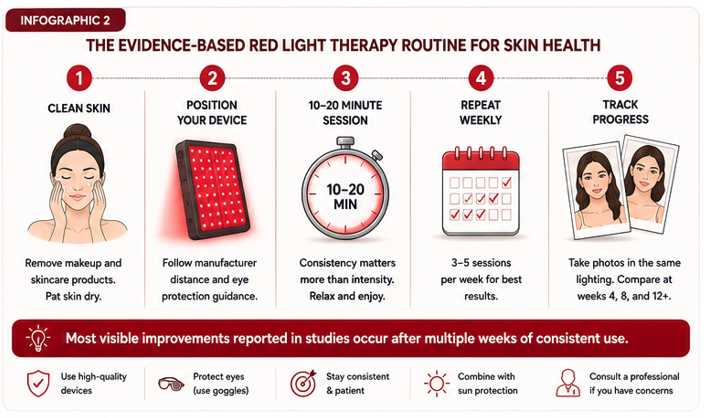
A reasonable, evidence-informed routine looks like this:
Clean, dry skin
Use a red light or red + NIR device with transparent specs
Follow the manufacturer’s distance and time guidance
Use consistently, often several times per week
Track progress with photos under the same lighting
Continue sunscreen use and standard skincare
How to Choose the Best Red Light Therapy Panel for Skin
If your goal is skin health, look for:
1. Evidence-Aligned Wavelengths
Prioritize devices that clearly disclose wavelengths such as:
630–660 nm red
830–850 nm near-infrared
2. Coverage Area
A larger panel lets users treat:
face
neck
chest
hands
broader skin surfaces
3. Transparent Specifications
Look for:
wavelength listing
treatment distance guidance
session timing
irradiance / output transparency
warranty and support
4. Safe, Consistent Use
A home device is only useful if it is easy enough to use consistently.
Is Red Light Therapy Safe for Skin?
Human safety data are encouraging, and several clinical studies describe red LED treatments as safe, well-tolerated, or painless. But safety still depends on appropriate use, treatment goals, and individual factors.
Readers should speak with a qualified healthcare professional before use if they:
have an active skin disease needing diagnosis
take photosensitizing medications
have a history of light sensitivity
are pregnant
are recovering from a medical procedure
have concerns about suspicious skin lesions
Our Bottom-Line Evidence Summary
Based on the human studies identified:
Best-supported use:
Photoaging / skin rejuvenation
Promising but more mixed:
Acne
Strong practical interest with growing human data:
Wound healing / scar support
More specialized dermatology use:
Psoriasis and procedure recovery
That means the strongest conversion-focused message for a red light panel brand is not:
“Red light therapy fixes everything.”
It’s:
“A high-quality red light panel may support healthier-looking skin, smoother texture, visible rejuvenation, and skin recovery when used consistently and appropriately.”
Ready to Upgrade Your Skin Routine?
If you want a practical way to bring research-backed red light therapy into your home, a high-quality panel can help you build a more consistent routine for:
skin rejuvenation
fine lines and wrinkles
smoother skin texture
post-workout or post-procedure skin recovery
full-face and body wellness routines
Shop Professional Red Light Therapy Panels
FAQ
Does red light therapy really help skin?
Human studies suggest it may help with skin rejuvenation, texture, wrinkles, acne, and healing-related outcomes, though evidence strength varies by use case.
What wavelength is best for skin?
Frequently studied wavelengths include 633 nm, 660 nm, 830 nm, 850 nm, and red + near-infrared combinations.
How long until I see results?
Many users and studies work on timelines of several weeks, often around 4–12 weeks.
Can I use red light therapy at home?
Yes—several human studies include home-use devices, especially for facial rejuvenation.
Is red light therapy good for acne?
It may help, especially in red + blue protocols, but the evidence is more mixed than for photoaging.
For Additional Reading:
Check out our most popular blogs on red light therapy to save you time and money on your next purchase with Medford Red Light Therapy:
Scientific References:
Papageorgiou P, Katsambas A, Chu A. Phototherapy with blue (415 nm) and red (660 nm) light in the treatment of acne vulgaris. 2000.
Russell BA, Kellett N, Reilly LR. A study to determine the efficacy of combination LED light therapy (633 nm and 830 nm) in facial skin rejuvenation. 2005.
Goldberg DJ, Amin S, Russell BA, Phelps R, Kellett N, Reilly LR. Combined 633-nm and 830-nm LED treatment of photoaging skin. 2006.
Lee SY, et al. Clinical, profilometric, histologic, ultrastructural, and biochemical evaluations of LED phototherapy for skin rejuvenation. 2007.
Baez F, Reilly LR. The use of light-emitting diode therapy in the treatment of photoaged skin. 2007.
Lee SY, et al. Blue and red light combination LED phototherapy for acne vulgaris in patients with skin phototype IV. 2007.
Barolet D, et al. Regulation of skin collagen metabolism in vitro using a pulsed 660 nm LED light source: clinical correlation with a single-blinded study. 2009.
Ablon G. Combination 830-nm and 633-nm light-emitting diode phototherapy shows promise in the treatment of recalcitrant psoriasis. 2010.
de Paiva Carvalho RL, et al. Effects of low-level laser therapy on pain and scar formation after inguinal hernia surgery. 2010.
Kleinpenning MM, et al. Efficacy of blue light vs. red light in the treatment of psoriasis. 2012.
Kwon HH, et al. The clinical and histological effect of home-use, combination blue-red LED phototherapy for mild-to-moderate acne vulgaris in Korean patients: a double-blind, randomized controlled trial. 2013.
Wunsch A, Matuschka KA. A controlled trial to determine the efficacy of red and near-infrared light treatment in reduction of fine lines, wrinkles, roughness, and intradermal collagen density increase. 2014.
Ho D, et al. A single-blind, dose escalation, phase I study of high-fluence red LED light on human skin. 2016.
Ng JNC, Wanitphakdeedecha R, Yan C. Efficacy of home-use light-emitting diode device at 637 and 854-nm for facial rejuvenation: a split-face pilot study. 2020.
Kurtti A, et al. Light emitting diode-red light for reduction of post-surgical scarring. 2021.
Li J, et al. Comparison of red light and blue light therapies for mild-to-moderate acne vulgaris: a randomized controlled clinical study. 2022.
Couturaud V, et al. Reverse skin aging signs by red light photobiomodulation. 2023.
de Souza Borges NC, et al. Photobiomodulation using red and infrared spectrum light-emitting diode for the healing of diabetic foot ulcers: a controlled randomized clinical trial. 2024.
Park SH, et al. Clinical study to evaluate the efficacy and safety of home-used LED and IRED phototherapies for skin rejuvenation. 2025.
Ye H, et al. Clinical efficacy of 830 nm LED photobiomodulation for postoperative wound healing. 2025.
Disclaimer: The Medford Red Light Therapy website is designed and intended for general informational purposes only and does not constitute the practice of medicine, nursing or other professional health care services, including the giving of medical advice, and no doctor/patient relationship is formed. The use of information on this website is at the user’s own risk. Results may vary by individual. The content of this website is not intended to be a substitute for professional medical advice, diagnosis, or treatment. Users should not disregard or delay in obtaining medical advice for any medical condition they may have and should seek the assistance of their health care professionals for any such conditions.
