Red Light Therapy for Eye Health
Red Light Therapy for Eye Health: What Human Studies Actually Show
Red light therapy is often discussed for skin, recovery, pain, and wellness—but one of the fastest-growing areas of research is eye health.
Human studies have investigated red light or photobiomodulation for:
Dry age-related macular degeneration
Childhood myopia control
Diabetic macular edema
Retinal function
Retinitis pigmentosa
Eye safety and exposure limits
But this topic requires extra caution.
The eye is highly sensitive tissue. Red light used in ophthalmology studies is not the same as casually shining a consumer red light panel into your eyes.
This guide reviews the human evidence, explains where the science is strongest, highlights safety concerns, and clarifies what red light panel users should and should not do.
Key Findings From Our Human Study Review
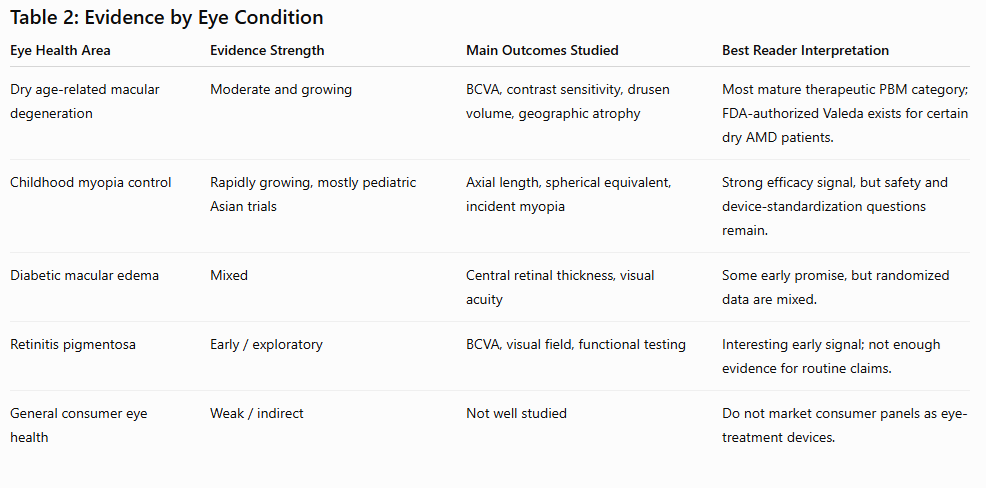
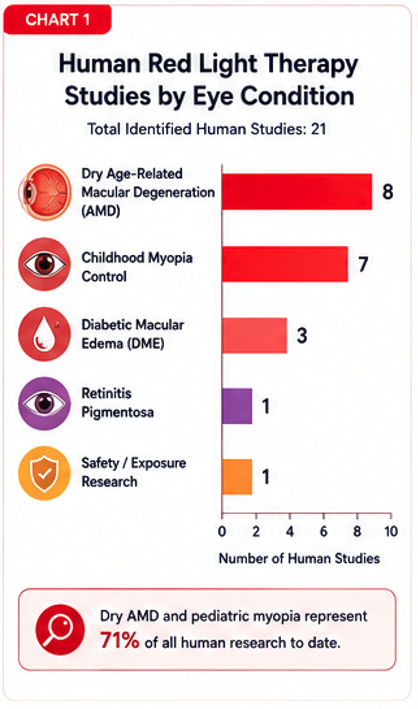
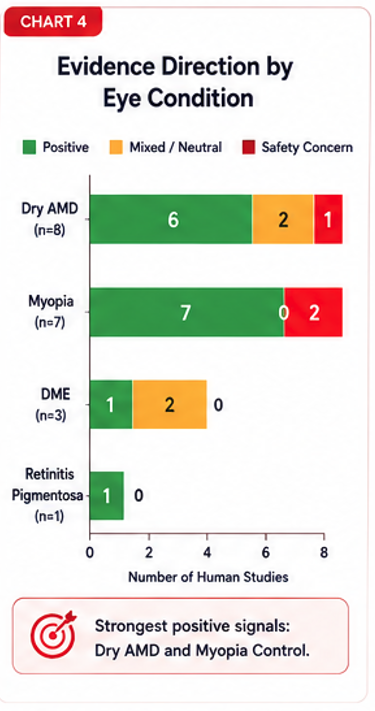
The strongest human evidence clusters around dry age-related macular degeneration and pediatric myopia control.
The FDA authorized marketing of the Valeda Light Delivery System in November 2024 to help improve vision in certain dry AMD patients.
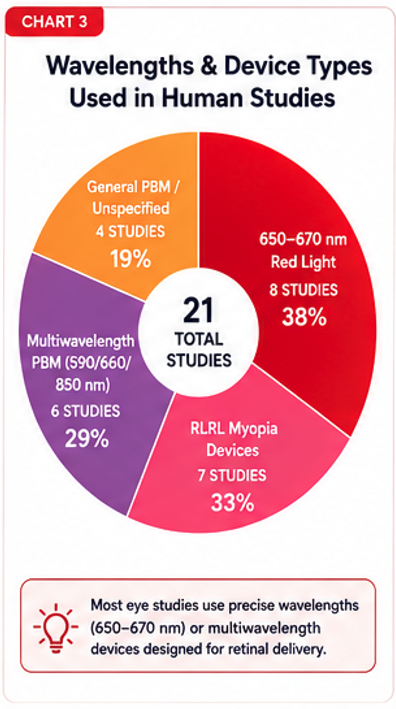
Valeda uses 590 nm, 660 nm, and 850 nm wavelengths and is intended for use by eye-care professionals—not casual home panel use.
Repeated low-level red light therapy has shown strong efficacy signals for childhood myopia in multiple trials, but safety and device-standardization concerns remain.
Evidence for diabetic macular edema is mixed.
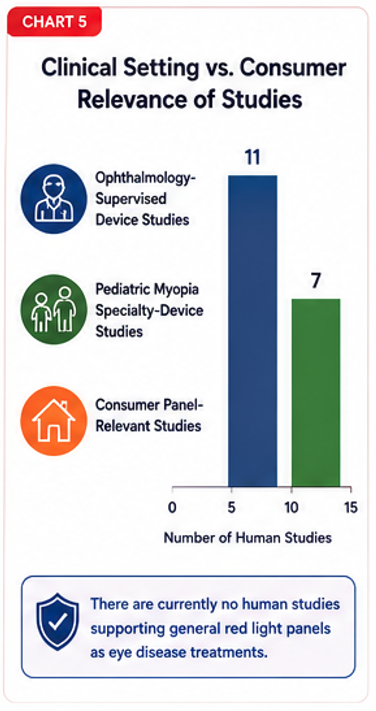
There is not enough evidence to claim that general red light therapy panels treat eye diseases.
Eye protection and medical supervision are essential.
What Is Red Light Therapy as Related to Eye Health?
Red light therapy for eye health usually refers to photobiomodulation, or PBM.
In ophthalmology, PBM uses specific wavelengths of light to target retinal tissue, retinal pigment epithelial cells, mitochondria, inflammation pathways, and oxidative stress mechanisms.
The theory is that carefully delivered light may support cellular energy production and retinal function.
However, this must be distinguished from ordinary red light therapy panels.
Important Distinction
Ophthalmic PBM devices are designed, dosed, and monitored for the eye. Consumer red light panels are not eye disease treatment devices.
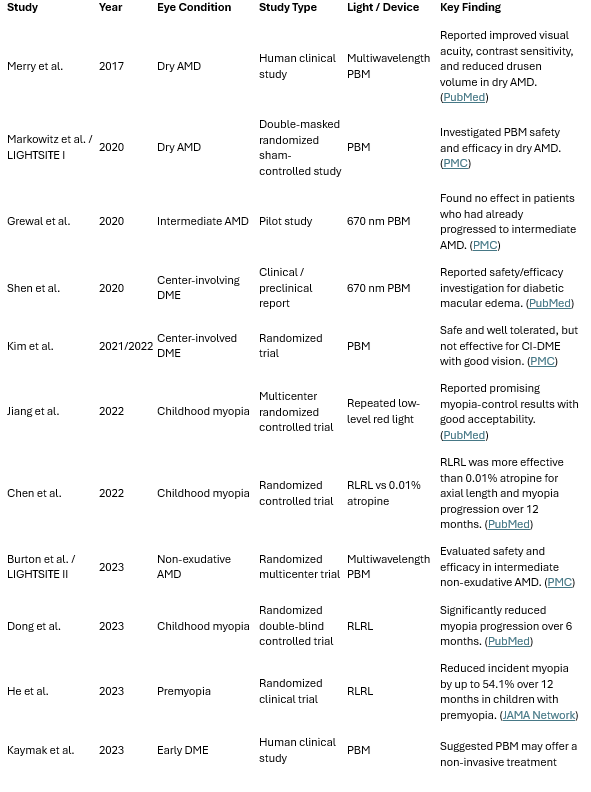
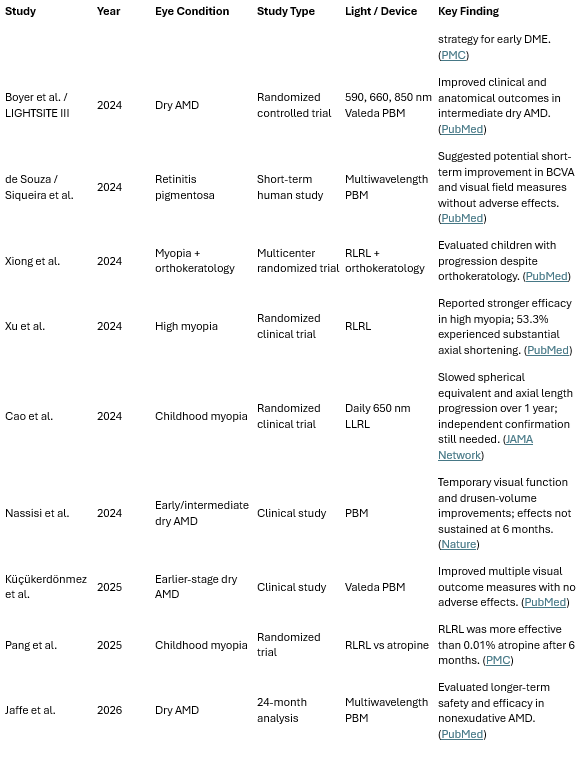
Table 1: Human Eye Health Study Catalogue
Where Is the Evidence Strongest?
1. Dry Age-Related Macular Degeneration
Dry age-related macular degeneration, or dry AMD, is currently the most mature therapeutic eye-health category for PBM.
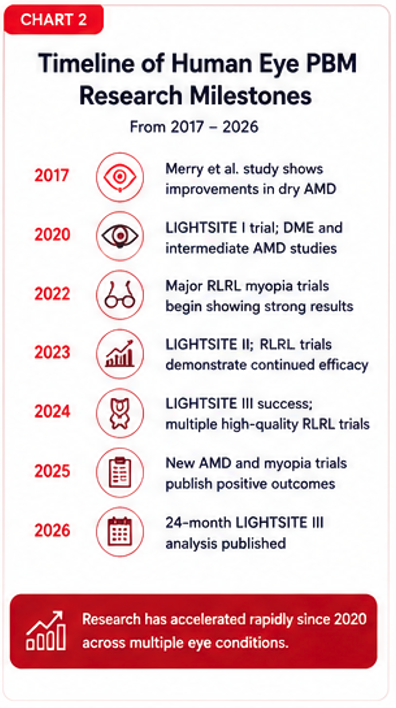
Several human studies have evaluated multiwavelength PBM for dry AMD, including LIGHTSITE I, LIGHTSITE II, and LIGHTSITE III.
LIGHTSITE III was a randomized controlled trial of multiwavelength PBM in nonexudative dry AMD using the Valeda Light Delivery System. Subjects received 590 nm, 660 nm, and 850 nm treatment or sham treatment. The study reported improved clinical and anatomical outcomes in intermediate dry AMD.
The FDA authorized marketing of Valeda in November 2024 to help improve vision in certain dry AMD patients. The agency described it as the first therapeutic option for adult patients with dry AMD.
That does not mean every red light device treats AMD.
Valeda is an ophthalmic device used by eye-care professionals under specific indications.
2. Childhood Myopia Control
Repeated low-level red light therapy, often called RLRL, has become a major research area in pediatric myopia.
Human trials have reported reductions in axial elongation and myopia progression.
In a 2022 multicenter randomized controlled trial, Jiang et al. concluded that RLRL was a promising alternative treatment for myopia control in children.
In another randomized trial, Chen et al. reported that RLRL was more effective than 0.01% atropine eye drops over 12 months.
A JAMA Network Open randomized clinical trial in children with premyopia found reduced incident myopia over 12 months with RLRL intervention.
However, this category also carries safety concerns. A 2024 analysis reported that some red-light myopia instruments approached or exceeded maximum permissible exposure limits.
That means pediatric eye-directed red light should only be considered with qualified eye-care guidance.
3. Diabetic Macular Edema
The evidence for diabetic macular edema is mixed.
Shen et al. investigated 670 nm PBM for center-involving diabetic macular edema.
A randomized trial by Kim et al. found PBM was safe and well tolerated, but not effective for center-involved diabetic macular edema in eyes with good vision.
This is an example where the evidence does not support strong consumer claims.
4. Retinitis Pigmentosa
Human evidence for retinitis pigmentosa is early.
A 2024 short-term study suggested multiwavelength PBM may improve BCVA and visual field measures without adverse effects, but this should be considered exploratory.
More controlled trials are needed before making clinical claims.
How Might Red Light Affect the Eye?
The proposed mechanism involves mitochondrial function.
Retinal cells are energy-intensive. PBM researchers believe selected wavelengths may interact with mitochondrial pathways, cellular metabolism, oxidative stress, and inflammation.
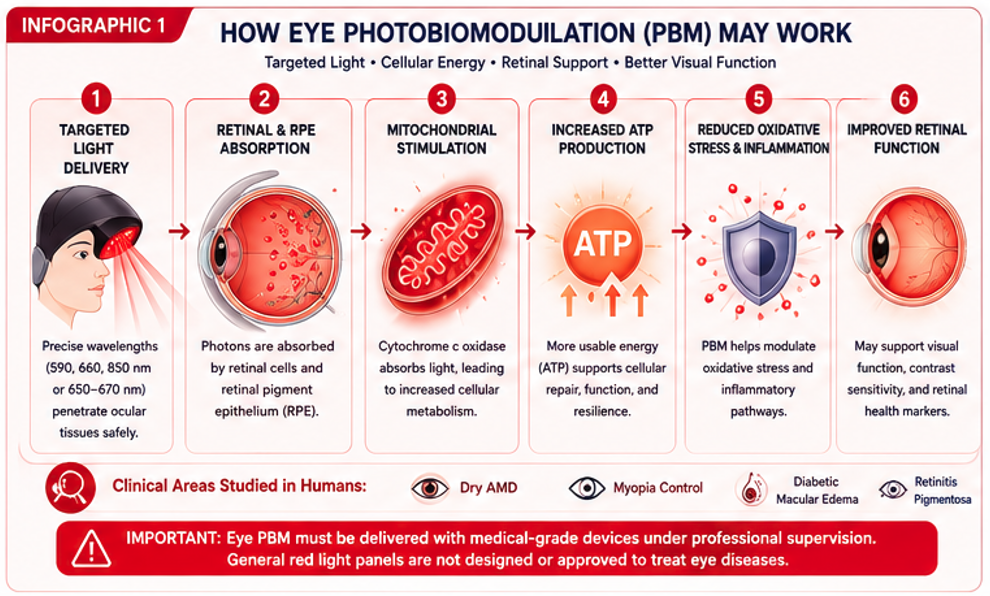
How Eye Photobiomodulation May Work
Targeted light → retina / retinal pigment epithelium → mitochondria → ATP and oxidative-stress pathways → visual function / retinal support markers
Safety Reminder
Red light therapy for eye health is not risk-free.
The eye can be damaged by excessive or improperly delivered light. Safety depends on wavelength, power, beam profile, exposure duration, pupil size, device calibration, and user behavior.
A 2024 safety paper reported that two low-level red-light devices for myopia control approached or exceeded maximum permissible exposure under some exposure assumptions.
For consumer panel users, the rule is simple:
Do Not Stare Into Red Light Therapy LEDs
Use eye protection. Follow device instructions. Do not attempt to treat eye disease with a general wellness panel.
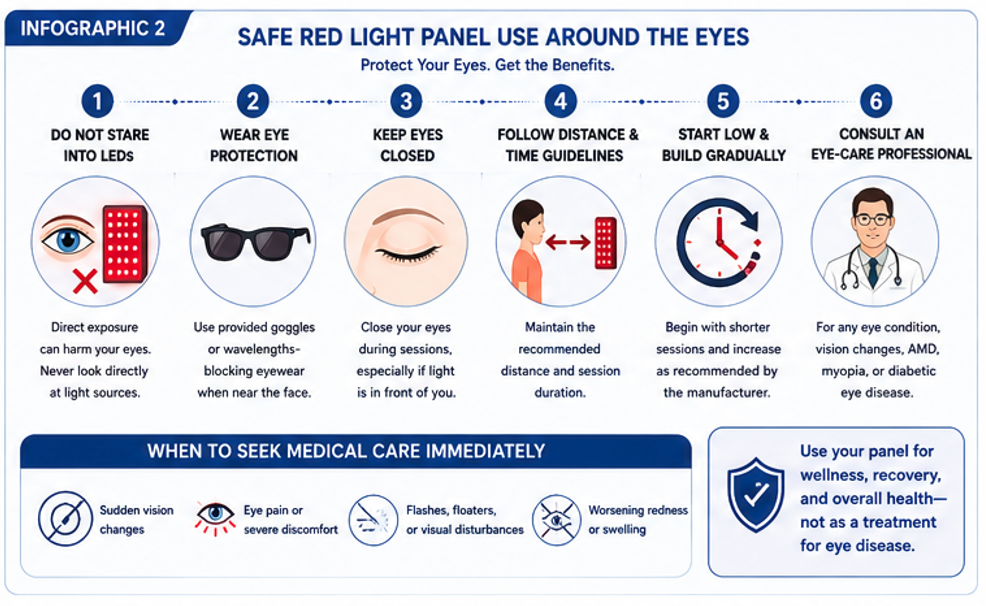
Safe Red Light Panel Use Around the Eyes
Do not stare into LEDs → wear eye protection → keep eyes closed if instructed → follow distance/time guidance → consult an eye-care professional for eye disease
Can a Red Light Therapy Panel Help Eye Health?
There is currently no good evidence that a general red light therapy panel should be used to treat eye disease.
That does not mean panels have no place in a wellness routine.
A high-quality panel may support broader wellness goals such as:
Skin health
Muscle recovery
Joint comfort
Relaxation routines
General photobiomodulation exposure outside the eyes
But for the eyes specifically, the safest product position is:
Use eye protection and consult an eye-care professional for eye disease, vision loss, AMD, diabetic eye disease, or myopia treatment.
How to Choose a Red Light Panel Safely
When shopping for a panel, look for:
1. Clear Eye Safety Guidance
The brand should explicitly explain whether eye protection is recommended.
2. Transparent Wavelengths
Look for clearly disclosed red and near-infrared wavelengths.
3. Irradiance and Distance Guidance
Avoid brands that hide output data or encourage excessive exposure.
4. Safety Accessories
Protective eyewear should be available or included.
5. Conservative Medical Claims
Avoid any brand claiming its general panel cures AMD, myopia, glaucoma, cataracts, diabetic retinopathy, or vision loss.
FAQ
Is red light therapy good for eye health?
Some forms of red light or photobiomodulation have been studied for dry AMD, childhood myopia, and diabetic macular edema. These are specialized medical or ophthalmic applications, not general consumer panel use.
Can I shine red light into my eyes?
No. Do not stare into red light therapy LEDs or attempt to self-treat eye disease with a general red light panel.
Is red light therapy FDA approved for dry AMD?
The FDA authorized marketing of LumiThera’s Valeda Light Delivery System in November 2024 to help improve vision in certain dry AMD patients.
What wavelengths are used in dry AMD PBM studies?
The Valeda system uses 590 nm, 660 nm, and 850 nm wavelengths.
Does red light therapy help myopia?
Repeated low-level red light therapy has shown promising myopia-control effects in children in multiple clinical studies, but it should only be considered under professional eye-care supervision.
Should I wear goggles with a red light panel?
Yes, especially if the device is bright, near the face, or if the manufacturer recommends eye protection.
Additional Reading: Check out our most popular blogs on red light therapy to save you time and money on your next purchase with Medford Red Light Therapy:
Scientific References:
Merry GF, Munk MR, Dotson RS, Walker MG, Devenyi RG. Photobiomodulation reduces drusen volume and improves visual acuity and contrast sensitivity in dry age-related macular degeneration. Acta Ophthalmologica. 2017.
Markowitz SN, Devenyi RG, Munk MR, et al. A double-masked, randomized, sham-controlled, single-center study with photobiomodulation for the treatment of dry age-related macular degeneration. Retina. 2020.
Grewal MK, et al. A pilot study evaluating the effects of 670 nm photobiomodulation in patients with intermediate age-related macular degeneration. 2020.
Shen W, et al. Preclinical and clinical studies of photobiomodulation therapy for diabetic macular edema. 2020.
Kim JE, et al. A randomized trial of photobiomodulation therapy for center-involved diabetic macular edema with good visual acuity. 2021/2022.
Jiang Y, Zhu Z, Tan X, et al. Effect of repeated low-level red-light therapy for myopia control in children: a multicenter randomized controlled trial. Ophthalmology. 2022.
Chen Y, et al. Efficacy comparison of repeated low-level red light and low-dose atropine for myopia control. 2022.
Burton B, et al. LIGHTSITE II randomized multicenter trial: evaluation of multiwavelength photobiomodulation in non-exudative age-related macular degeneration. 2023.
Dong J, Zhu Z, Xu H, He M. Myopia control effect of repeated low-level red-light therapy in Chinese children. Ophthalmology. 2023.
He X, Wang J, Zhu Z, et al. Effect of repeated low-level red light on myopia prevention among children in China with premyopia. JAMA Network Open. 2023.
Boyer D, et al. LIGHTSITE III: 13-month efficacy and safety evaluation of multiwavelength photobiomodulation in nonexudative age-related macular degeneration. Retina. 2024.
Xiong R, et al. Myopia control effect of repeated low-level red-light therapy combined with orthokeratology. Ophthalmology. 2024.
Xu Y, et al. Repeated low-level red light therapy for myopia control in high myopia children and adolescents. Ophthalmology. 2024.
Cao K, et al. Daily low-level red light for spherical equivalent error and axial length in children with myopia. JAMA Ophthalmology. 2024.
Ostrin LA, Schill AW. Red light instruments for myopia exceed safety limits. Ophthalmic and Physiological Optics. 2024.
Küçükerdönmez C, et al. Multiwavelength photobiomodulation improves multiple aspects of visual function in earlier stage dry AMD. 2025.
Pang X, et al. Repeated low-level red light versus 0.01% topical atropine for myopia control. 2025.
Jaffe GJ, et al. LIGHTSITE III 24-month analysis of multiwavelength photobiomodulation in dry AMD. 2026.
Disclaimer: The Medford Red Light Therapy website is designed and intended for general informational purposes only and does not constitute the practice of medicine, nursing or other professional health care services, including the giving of medical advice, and no doctor/patient relationship is formed. The use of information on this website is at the user’s own risk. Results may vary by individual. The content of this website is not intended to be a substitute for professional medical advice, diagnosis, or treatment. Users should not disregard or delay in obtaining medical advice for any medical condition they may have and should seek the assistance of their health care professionals for any such conditions.
