Red Light Therapy for Skin, Hair, Pain & Recovery: What the Latest Science Really Says

Red Light Therapy Is Everywhere — But Does It Actually Work?
From dermatology clinics to pro sports recovery rooms, red light therapy has exploded in popularity. Celebrities use it for glowing skin. Athletes use it for recovery. Wellness clinics promote it for inflammation, pain, sleep, and circulation.
But with so many claims online, one question matters most:
What does the science actually say about red light therapy?
A recent feature from NPR highlighted both the growing excitement and the ongoing scientific debate around red light therapy (RLT). While some uses are supported by promising evidence, others still need more large-scale research.
This guide breaks down:
What red light therapy is
How it works
The benefits with the strongest evidence
What medical experts say
How to choose the right red light therapy panel
Common mistakes to avoid
How to maximize results safely at home
If you're considering investing in a red light therapy panel, this article will help you make an informed decision.
What Is Red Light Therapy?
Red light therapy (RLT), also called photobiomodulation, uses specific wavelengths of red and near-infrared (NIR) light to stimulate cellular energy production.
The most studied wavelengths typically include:
630–670nm red light
810–850nm near-infrared light
These wavelengths penetrate the skin and are believed to interact with mitochondria — the energy-producing structures inside cells.
The proposed mechanism centers on increased production of ATP (adenosine triphosphate), which may help support:
Tissue repair
Circulation
Collagen production
Muscle recovery
Cellular regeneration
Unlike UV light, red light therapy does not tan or burn the skin when used properly.
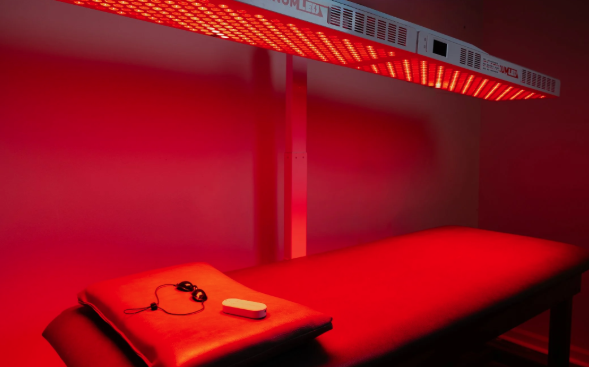
How Red Light Therapy Works
Scientists believe red and near-infrared light interact with a mitochondrial enzyme called cytochrome c oxidase. This may help cells produce energy more efficiently and reduce oxidative stress.
Potential biological effects include:
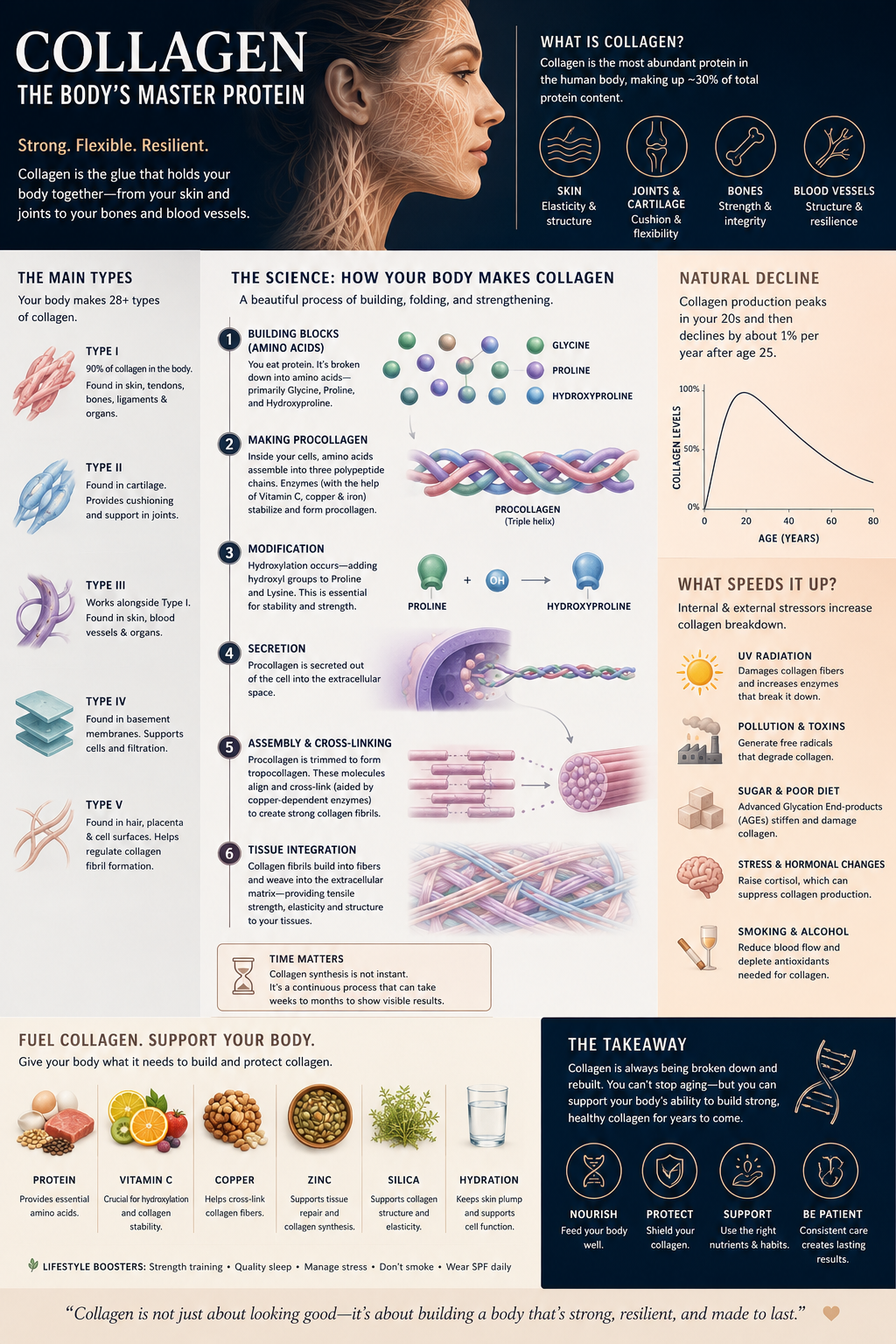
Increased collagen synthesis
Reduced inflammatory markers
Enhanced circulation
Improved tissue oxygenation
Faster muscle recovery
Cellular repair support
Researchers continue studying the long-term clinical effects, but several applications already show promising evidence.
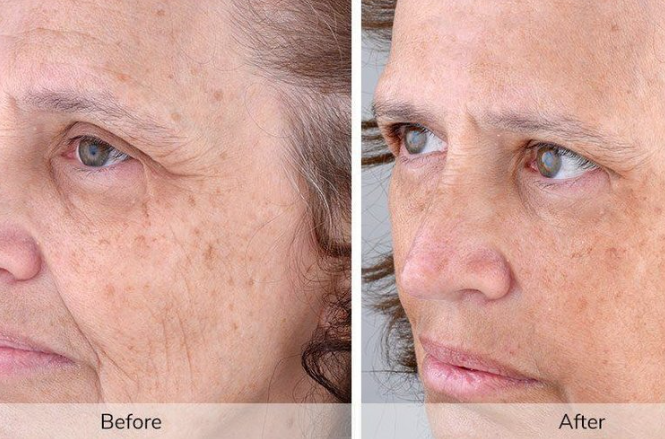
The Most Evidence-Backed Benefits of Red Light Therapy
1. Red Light Therapy for Skin Health & Anti-Aging
One of the strongest areas of evidence is skin rejuvenation.
Studies suggest red light therapy may help:
Reduce fine lines and wrinkles
Improve skin texture
Support collagen production
Reduce redness and inflammation
Improve overall skin tone
Dermatologists often use LED light therapy in-office for cosmetic skin treatments because it is non-invasive and requires little downtime.
Why It May Help Skin
Red wavelengths may stimulate fibroblasts, the cells responsible for collagen and elastin production.
Over time, this can contribute to:
Firmer-looking skin
Improved elasticity
Reduced appearance of aging
2. Red Light Therapy for Hair Growth
Hair restoration is another rapidly growing category.
Research suggests red light therapy may help:
Stimulate dormant hair follicles
Improve scalp circulation
Extend the growth phase of hair
Increase hair density in some users
Low-level light therapy devices have even received FDA clearance for androgenetic alopecia (pattern hair loss).
Best Candidates
People experiencing:
Early-stage hair thinning
Pattern hair loss
Stress-related shedding
Important Note
Results are usually gradual and may require:
Consistent use
Several months of treatment
Combination with other therapies
3. Muscle Recovery & Athletic Performance
Professional athletes and recovery clinics increasingly use near infrared light therapy for performance and recovery.
Potential benefits may include:
Reduced post-workout soreness
Faster muscle recovery
Improved circulation
Reduced exercise-related fatigue
Some studies suggest pre-workout red light therapy may even improve muscular endurance.
Why Athletes Use Full Body Panels
Large panels allow:
Greater coverage
Higher treatment efficiency
Full-body exposure
Faster sessions
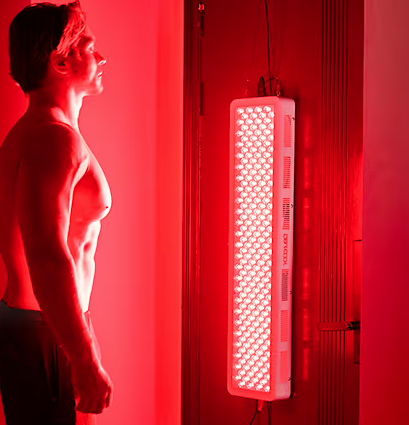
This is one reason many consumers upgrade from handheld devices to full-body red light therapy panels.

4. Pain Relief & Inflammation Support
Pain management is one of the most researched areas in photobiomodulation.
Evidence suggests red light therapy may help support:
Joint discomfort
Muscle soreness
Exercise recovery
Chronic inflammation
Stiffness and mobility
Many users report improvement in:
Neck pain
Back pain
Knee discomfort
Tendon irritation
Important Medical Disclaimer
Red light therapy is not a cure for chronic disease and should not replace medical treatment. Always consult a qualified healthcare professional for persistent pain or medical conditions.
5. Sleep & Circadian Rhythm Support
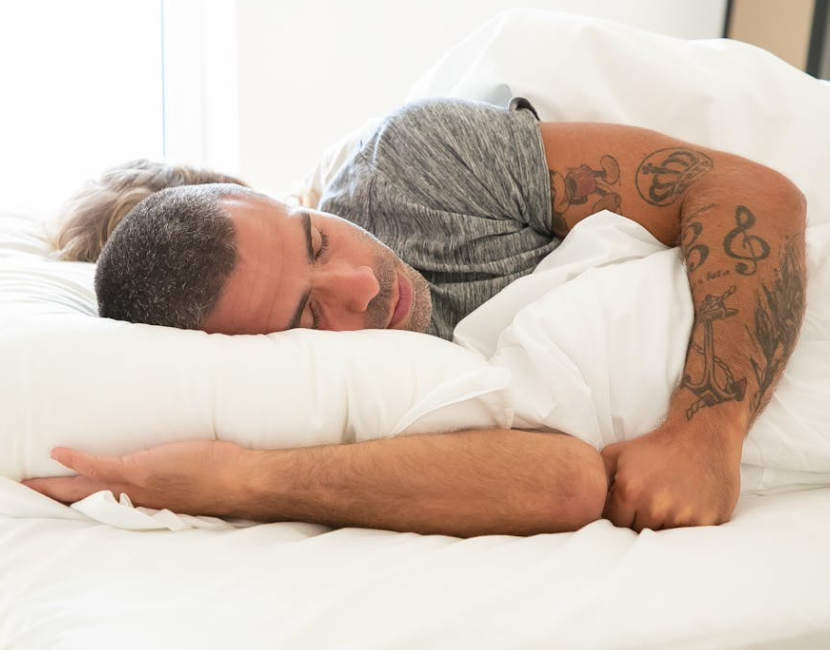
Emerging evidence suggests red light exposure at night may be less disruptive to melatonin production than blue light.
Some users report improvements in:
Relaxation
Sleep quality
Evening wind-down routines
Research is still developing, but many people incorporate red light therapy into evening wellness habits.
What Medical Experts Say About Red Light Therapy
Most experts agree on three key points:
1. Some Uses Have Legitimate Scientific Support
Skin rejuvenation, wound healing, and hair growth currently have some of the strongest evidence.
2. Not Every Claim Is Proven
Claims about dramatic fat loss, hormone optimization, or miracle healing are often exaggerated.
3. Device Quality Matters
Many low-cost devices:
Use weak irradiance
Lack verified wavelengths
Deliver inconsistent results
This is why choosing a high-quality red light therapy panel matters.
How to Choose the Best Red Light Therapy Panel
Not all devices are created equal.
Here’s what to look for when shopping for a red light therapy panel:
1. Clinically Studied Wavelengths
Look for:
660nm red light
850nm near infrared light
These are among the most commonly studied wavelengths.
2. High Irradiance
A stronger device can deliver more therapeutic light energy in less time.
3. Full Body Coverage
Larger panels provide:
More convenience
Better consistency
Faster sessions
4. Low EMF & Flicker
Higher-quality panels often prioritize:
Reduced electromagnetic fields
Flicker mitigation
Better build quality
5. Third-Party Testing
Look for transparent specifications and testing data.

Common Red Light Therapy Mistakes
Using the Device Too Far Away
Distance dramatically affects light intensity.
Inconsistent Use
Results often require:
3–5 sessions per week
Several weeks of consistency
Buying Underpowered Devices
Tiny devices with low irradiance and mismatched wavelengths may not deliver enough energy for meaningful results.
Expecting Overnight Results
Most benefits develop gradually over time. A growing body of research shows that most users start to experience results 2-4 weeks after consistent, regular use.
How Often Should You Use Red Light Therapy?
General wellness protocols often include:
10–20 minute sessions
3–5 times weekly
However, ideal protocols depend on:
Device strength
Treatment area
Personal goals
Medical conditions
Always follow manufacturer guidance.
Who Should Avoid Red Light Therapy?
Consult a healthcare professional before using red light therapy if you:
Are pregnant
Have epilepsy or photosensitivity
Use photosensitizing medications
Have active skin cancer concerns
Have serious medical conditions
Eye protection may also be recommended for certain devices.
Why Full Body Red Light Therapy Is Growing So Fast
Consumers increasingly prefer full-body panels because they allow:
Faster treatment times
Greater convenience
More consistent exposure
Multi-purpose wellness routines
Rather than treating one small area at a time, larger systems support a more comprehensive approach.

Is Red Light Therapy Worth It?
For many users, the answer may be yes — especially for:
Skin rejuvenation
Recovery support
Hair health
Wellness routines
Inflammation management
But expectations matter.
Red light therapy is not magic. It works best as:
A consistent wellness tool
Part of a healthy lifestyle
A long-term recovery strategy
The strongest results typically come from:
High-quality devices
Consistent use
Evidence-based protocols
Ready to Experience Red Light Therapy at Home?
Upgrade Your Wellness Routine with a Professional-Grade Red Light Therapy Panel
Whether your goals are:
Healthier skin
Better recovery
Hair support
Pain management
Full-body wellness
A high-quality red light therapy panel can help you bring clinically inspired light therapy into your home.
Explore Our Best-Selling Red Light Therapy Panels Today
Full-body panel options
Clinically inspired wavelengths
High irradiance output
Designed for home wellness routines
Shop Professional Red Light Therapy Panels Now
Frequently Asked Questions
Does red light therapy actually work?
Research supports several uses of red light therapy, especially for skin health, recovery, and hair growth, though some claims still require more evidence.
How long does red light therapy take to work?
Many users report visible changes after several weeks of consistent use.
Is red light therapy safe?
Red light therapy is generally considered safe when used properly, though certain medical conditions require caution.
What’s the difference between red light and near infrared light?
Red light primarily affects surface tissues, while near infrared light penetrates deeper into muscles and joints.
Can I use red light therapy every day?
Many devices are designed for regular use, but treatment frequency depends on device strength and intended purpose.
For Additional Reading:
Check out our most popular blogs on red light therapy to save you time and money on your next purchase with Medford Red Light Therapy:
Scientific References:
Fang S. C., Huang C. J., Yang T. T., Tsai P. S. Heart Rate Variability and Daytime Functioning in Insomniacs and Normal Sleepers: Preliminary Results. Journal of Psychosomatic Research . 2008;65(1):23–30. doi: 10.1016/j.jpsychores.2008.02.003.
Lecca L. I., Setzu D., Del Rio A., Campagna M., Cocco P., Meloni M. Indexes of Cardiac Autonomic Profile Detected With Short Term Holter ECG in Health Care Shift Workers: A Cross Sectional Study. La Medicina del Lavoro . 2019;110(6):437–445. doi: 10.23749/mdl.v110i6.8048.
de Freitas L. F., Hamblin M. R. Proposed Mechanisms of Photobiomodulation or Low-Level Light Therapy. IEEE Journal of Selected Topics in Quantum Electronics . 2016;22(3):348–364. doi: 10.1109/JSTQE.2016.2561201.
Maiello M., Losiewicz O. M., Bui E., et al. Transcranial Photobiomodulation With Near-Infrared Light for Generalized Anxiety Disorder: A Pilot Study. Photobiomodulation, Photomedicine, and Laser Surgery . 2019;37(10):644–650. doi: 10.1089/photob.2019.4677.
Lopes-Martins RA, Marcos RL, Leonardo PS, Prianti AC, Jr, Muscara MN, Aimbire F, Frigo L, Iversen VV, Bjordal JM. Effect of low-level laser (Ga-Al-As 655 nm) on skeletal muscle fatigue induced by electrical stimulation in rats. J Appl Physiol (1985) 2006;101(1):283–288. doi: 10.1152/japplphysiol.01318.2005.
Liu XG, Zhou YJ, Liu TC, Yuan JQ. Effects of low-level laser irradiation on rat skeletal muscle injury after eccentric exercise. Photomed Laser Surg. 2009;27(6):863–869. doi: 10.1089/pho.2008.2443.
Sussai DA, de Carvalho PT, Dourado DM, Belchior AC, dos Reis FA, Pereira DM. Low-level laser therapy attenuates creatine kinase levels and apoptosis during forced swimming in rats. Lasers Med Sci. 2010;25(1):115–120. doi: 10.1007/s10103-009-0697-9.
Leal EC, Junior, Lopes-Martins RA, de Almeida P, Ramos L, Iversen VV, Bjordal JM. Effect of low-level laser therapy (GaAs 904 nm) in skeletal muscle fatigue and biochemical markers of muscle damage in rats. Eur J Appl Physiol. 2010;108(6):1083–1088. doi: 10.1007/s00421-009-1321-1.
de Almeida P, Lopes-Martins RA, Tomazoni SS, Silva JA, Jr, de de Carvalho PT, Bjordal JM, Leal EC., Junior Low-level laser therapy improves skeletal muscle performance, decreases skeletal muscle damage and modulates mRNA expression of COX-1 and COX-2 in a dose-dependent manner. Photochem Photobiol. 2011;87(5):1159–1163. doi: 10.1111/j.1751-1097.2011.00968.x.
Santos LA, Marcos RL, Tomazoni SS, Vanin AA, Antonialli FC, dos Grandinetti VS, Albuquerque-Pontes GM, de Paiva PR, Lopes-Martins RA, de de Carvalho PT, Bjordal JM, Leal EC., Junior Effects of pre-irradiation of low-level laser therapy with different doses and wavelengths in skeletal muscle performance, fatigue, and skeletal muscle damage induced by tetanic contractions in rats. Lasers Med Sci. 2014;29(5):1617–1626. doi: 10.1007/s10103-014-1560-1.
Douris P, Southard V, Ferrigi R, Grauer J, Katz D, Nascimento C, Podbielski P. Effect of phototherapy on delayed onset muscle soreness. Photomed Laser Surg. 2006;24(3):377–382. doi: 10.1089/pho.2006.24.377.
Chung PS, Kim YC, Chung MS, Jung SO, Ree CK. The effect of low-power laser on the murine hair growth. J Korean Soc Plastic Reconstruct Surg. 2004;31:1–8.
Leavitt M, Charles G, Heyman E, Michaels D. HairMax LaserComb laser phototherapy device in the treatment of male androgenetic alopecia: A randomized, double-blind, sham device-controlled, multicentre trial. Clin Drug Invest. 2009;29:283–292.
Yamazaki M, Miura Y, Tsuboi R, Ogawa H. Linear polarized infrared irradiation using Super Lizer is an effective treatment for multiple-type alopecia areata. Intl J Dermatol. 2003;42:738–740.
Shukla S, Sahu K, Verma Y, Rao KD, Dube A, Gupta PK. Effect of helium-neon laser irradiation on hair follicle growth cycle of Swiss albino mice. Skin Pharmacol and Physiol. 2010;23:79–85.
Satino JL, Markou M. Hair regrowth and increased hair tensile strength using the HairMax LaserComb for low-level laser therapy. Int J Cosmet Surg Aesth Dermatol. 2003;5:113–117.
Trelles MA, Mayayo E, Cisneros JL. Tratamiento de la alopecia areata con laser HeNe. Investigacion Y Clinica Laser. 1984;1:15–17.
Lanzafame RJ, Blanche RR, Bodian AB, Chiacchierini RP, Fernandez-Obregon Kazmirek ER. The growth of human scalp hair mediated by visible red light laser and LED sources in males. Lasers Surg Med. 2013;45(8):487–495.
Avci P, Gupta GK, Clark J, Wikonkal N, Hamblin MR. Low-Level Laser (Light) Therapy (LLLT) for treatment of hair loss. Lasers Surg Med. 2014;46:144–151.
Passarella S, Casamassima E, Molinari S, Pastore D, Quagliariello E, Catalano IM, Cingolani A. Increase of proton electrochemical potential and ATP synthesis in rat liver mitochondria irradiated in vitro by helium-neon laser. FEBS Lett. 1984;175(1):95–99.
Scott A. J., Monk T. H., Brink L. L. Shiftwork as a Risk Factor for Depression: A Pilot Study. International Journal of Occupational and Environmental Health . 1997;3(Supplement 2):S2–S9.
Weng C. Y., Lin T. K., Chen C. W., Lin C. L., Chang H. R. Psychosocial Risk Factors and Cardiac Rehabilitation. Journal of Internal Medicine of Taiwan . 2015;26(1):1–12.
Huang H. P., Chuang T. K. Effects of Different Time Periods on Heart Rate Variability. International Journal of TCM Aromatherap . 2018;2(1):59–71. doi: 10.6763/IJTCMA.201805_2(1).0005.
Burch J. B., Alexander M., Balte P., et al. Shift Work and Heart Rate Variability Coherence: Pilot Study Among Nurses. Applied Psychophysiology and Biofeedback . 2019;44(1):21–30. doi: 10.1007/s10484-018-9419-z.
Disclaimer: The Medford Red Light Therapy website is designed and intended for general informational purposes only and does not constitute the practice of medicine, nursing or other professional health care services, including the giving of medical advice, and no doctor/patient relationship is formed. The use of information on this website is at the user’s own risk. Results may vary by individual. The content of this website is not intended to be a substitute for professional medical advice, diagnosis, or treatment. Users should not disregard or delay in obtaining medical advice for any medical condition they may have and should seek the assistance of their health care professionals for any such conditions.
